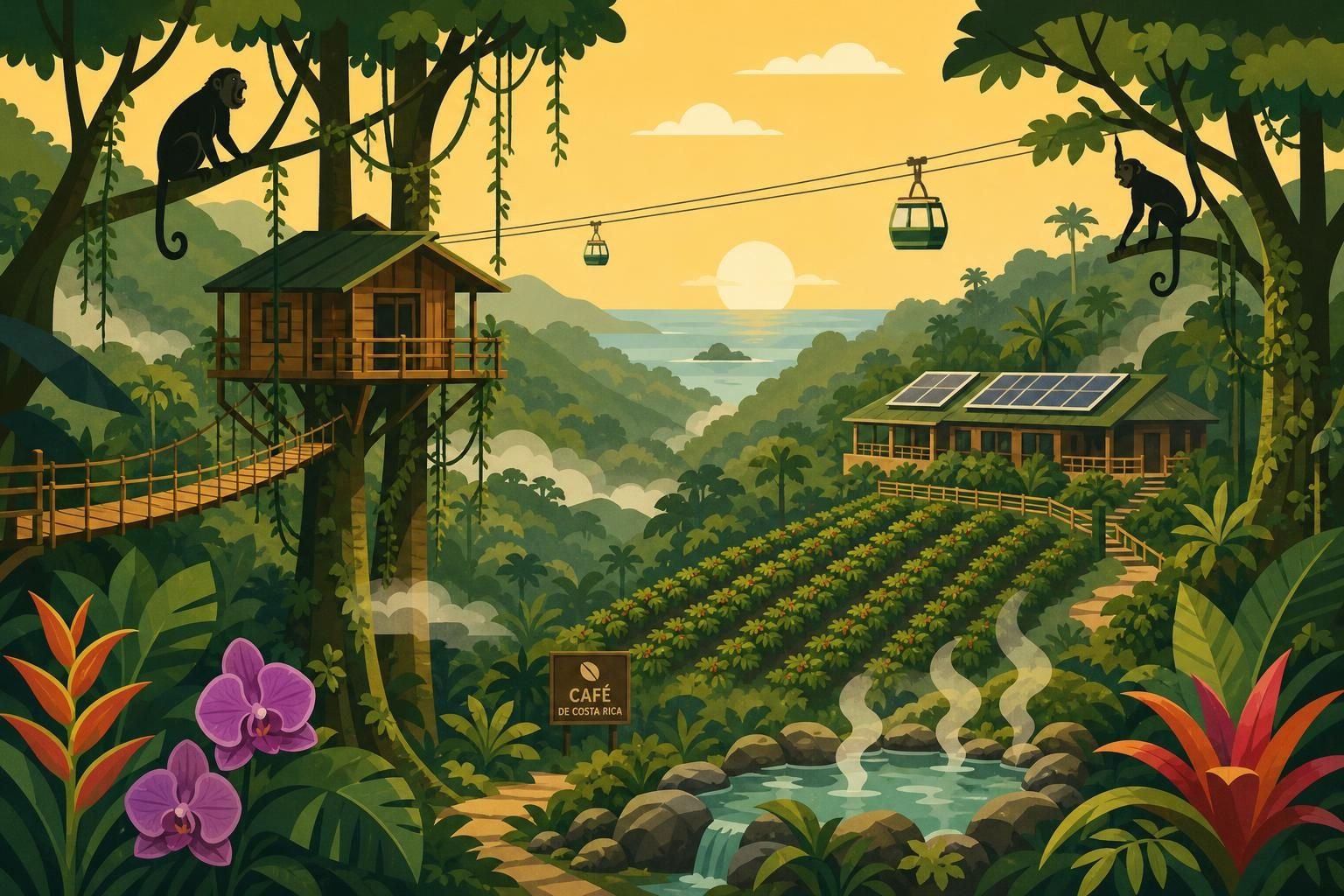
The most memorable places to stay in Costa Rica fall into four groups: lodges you reach by raft, boat or small plane; coffee farm inns and working farm stays; treehouses and tented camps; and homes inside working eco villages. Which of these unusual accommodations in Costa Rica suits you depends less on the room than on three things most lists of hotels in Costa Rica leave out: how you actually get there, which season suits that coast, and whether the “eco” label means anything.
This guide groups the best-documented unusual stays by the trip you want, gives each a “best for” and a “skip it if,” and adds road and season advice from Off Grid Destinations’ founders, who have lived off-grid in Costa Rica since 2012.
The short version:
- Choose the trip first, then the place to stay: a remote lodge for wildlife and real distance, a farm inn for a calm base near San José, a treehouse or tented camp for the canopy or a volcano, an eco village for a look at community life.
- Some lodges have no road at all. You reach Pacuare Lodge by raft, by 4×4 plus a cable gondola, or by helicopter, and Tortuga Lodge by boat or a 25-30 minute flight.
- The Pacific side is driest from December to March and wettest in September and October. The Caribbean has no well-defined dry season, but February-March and September-October are relatively dry there (Visit Costa Rica).
- The official eco label is the ICT’s Certification for Sustainable Tourism (CST). Use it as a starting point, then ask about power, water, waste and local staff.
- “A relatively short distance on Google Maps doesn’t necessarily mean a short journey,” the founders warn. Ask your host about the road, arrive in daylight and never cross a flooded river.
Unique Places to Stay in Costa Rica at a Glance

Twelve options cover the range, from a river lodge with no road and a cloud forest lodge to a converted Boeing 727 and a casita in an eco village about 45 minutes from the airport. Read the “How you get there” column first: it decides more about your trip than the room does.
| Stay | Type | Region | How you get there | Best for | Skip it if |
|---|---|---|---|---|---|
| Pacuare Lodge | River eco-lodge, 20 bungalows in a 340-hectare protected area | Pacuare River, near Siquirres | Raft in; or road to Santa Marta, 4×4 on a gravel track, then a river gondola; or helicopter | An arrival that is part of the adventure | You want to drive in and out on your own schedule |
| Tortuga Lodge | River lodge, 29 rooms, its own private nature reserve | Tortuguero, Caribbean coast | Boat from the Caño Blanco dock (book the shared boat two business days ahead) or a 25-30 minute flight; no road | Canals and wildlife with transfers arranged for you | You want to park at your door |
| Lapa Rios | Rainforest eco-lodge on a 1,000-acre private reserve | Cabo Matapalo, Osa Peninsula | 50-minute flight to Puerto Jiménez plus a 45-minute drive, or about 7 hours by road | Wildlife, where rainforest meets the ocean | You dislike both small planes and long drives |
| Finca Rosa Blanca | Organic coffee farm and inn, 14 villas, suites and studios | Santa Bárbara de Heredia, near San José | By car | A first or last night, coffee and birding | You want beach or deep jungle |
| Casitas Tenorio | Casitas on a working farm | Bijagua, near Tenorio Volcano and Río Celeste | By car; ask the host about the final stretch | Families and Río Celeste hikes | You want hotel-style service |
| Rancho Pacifico | Adults-only villas and treehouses on a hillside | Above Uvita, South Pacific | By road up the hillside; ask whether you need a 4×4 | Couples who want a polished canopy stay | You’re traveling with children |
| Tree House Lodge | Oceanfront houses on about 10 acres, one built around a tree | Punta Uva, inside the Gandoca-Manzanillo Wildlife Refuge | By road down the southern Caribbean coast | Caribbean beach days with a treehouse twist | You can only travel in December, the Caribbean’s wettest month |
| Nayara Tented Camp | Tents, each with a private plunge pool fed by hot springs | Arenal | By road | Volcano views and a soak at the end of the day | You want real camping |
| El Silencio Lodge & Spa | Cloud forest lodge, 24 rooms; two Michelin Keys | Bajos del Toro, north of the Central Valley | By road; ask the lodge about the mountain road in the rainy season | Cloud forest and quiet | You want beach time on the same base |
| Rio Perdido | Hotel with 20 bungalows and thermal waters; two Michelin Keys | San Bernardo de Bagaces, Guanacaste | By road, just over an hour from Liberia’s Daniel Oduber Quirós airport | Hot river soaks within reach of the Guanacaste coast | You want rainforest wildlife on the doorstep |
| 727 Fuselage Home, Costa Verde | Suite built inside a Boeing 727 fuselage | Manuel Antonio, Central Pacific | By road | A stay that is a story in itself | You want quiet seclusion |
| Eco village stays | Casitas, homes and bell tents inside working communities | San Mateo hills, Central Valley | By car, about 45 minutes from Juan Santamaría airport to Alegría Village | Trying community life, or scouting a move | You want a restaurant and room service on site |
The pattern is clear: the hardest stays to reach give the deepest escape, and the easiest work best as the first or last night of a trip.
What These Stays Cost
Few of these lodges publish nightly rates; most quote by date through their booking engines, and prices change by season. Three signals help you place them. The Michelin Guide’s hotel distinction marks the top end: Pacuare Lodge, El Silencio and Rio Perdido hold two Michelin Keys, and Lapa Rios and Rancho Pacifico hold one. Remote lodges often sell packages: Lapa Rios, for example, offers a Full Experience package or bed and breakfast. Farm stays such as Casitas Tenorio run as B&Bs, and eco-village casitas are rented directly from their owners, which usually puts them well below the lodges.
Compare the total rather than the room price: the room, the meals (where there is no town nearby, the lodge may be your only option) and any transfer you can’t skip, such as a boat, gondola or small plane.
Remote Jungle and Rainforest Lodges: Pacuare, Tortuguero and the Osa Peninsula
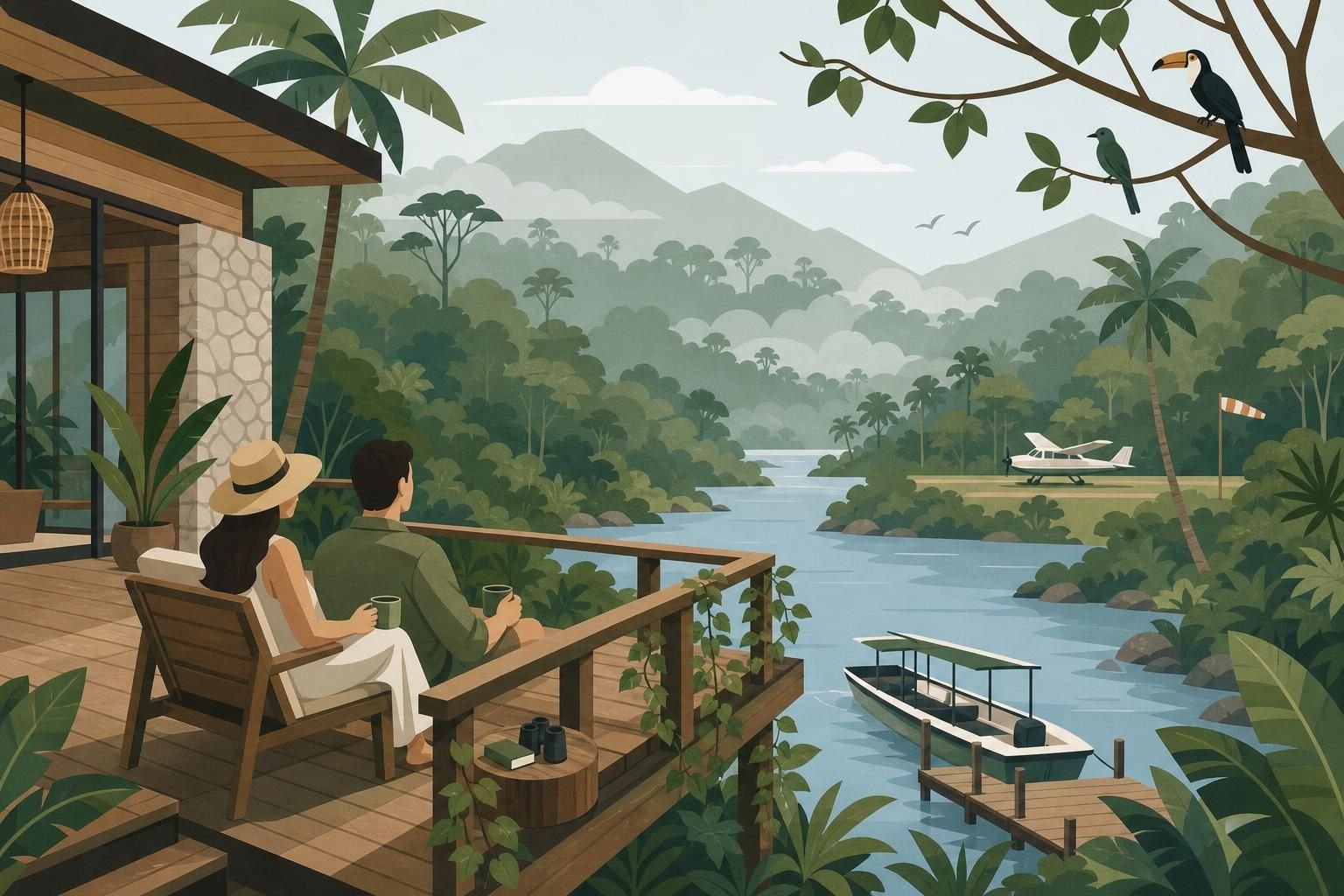
For wildlife and real distance from the crowds, book a lodge with no road to the door: Pacuare Lodge, Tortuga Lodge or Lapa Rios. The trade-off is control. Rivers, boat times and flight schedules set your pace, so plan at least two or three nights, pack light and expect limited connectivity.
Pacuare Lodge: Raft In or Cross by Gondola
Pacuare Lodge has 20 bungalows inside a 340-hectare protected area, and its own FAQ is blunt: there are no roads to the lodge. You raft down the Pacuare River; or travel to Santa Marta, ride a 4×4 along the last six kilometers of gravel road and cross the river by hanging gondola; or arrive by helicopter, which lands on a beach beside the lodge. Private charter flights to Guápiles airport are also offered. The architecture draws on Cabécar Indigenous culture.
Best for: active travelers who want the arrival to be part of the trip. If you have never rafted, ask about the gondola route before you book.
Tortuga Lodge: Boat Into Tortuguero
Tortuga Lodge has 29 rooms on the Tortuguero River and no road access. You arrive by boat from the Caño Blanco dock, where the shared boat must be booked two business days ahead, or by a 25-30 minute flight. It is the only hotel in Tortuguero with its own private nature reserve, so you get trails and wildlife beyond what you see from a tour boat.
Best for: travelers who want canals and wildlife and prefer arranged transfers to self-driving. Ask the lodge where your transfer starts, so you know how much driving is still on you. The Caribbean Coast guide covers the wider region.
Lapa Rios: Where the Osa Rainforest Meets the Ocean
Lapa Rios sits on a 1,000-acre private reserve at Cabo Matapalo on the Osa Peninsula, the same peninsula as Corcovado National Park. The quick route is a 50-minute flight to Puerto Jiménez plus a 45-minute drive; by private road transfer from San José airport, the lodge says to allow about 7 hours in total. It is a rainforest eco-lodge rather than a treehouse, even though some lists file it that way.
Best for: serious wildlife travelers who want rainforest and ocean in one place. Fly in if your trip is short. Our Osa Peninsula guide explains the area around it.
A Lowland Alternative in the Northern Plains
For a rainforest lodge away from the coasts, Off Grid Destinations lists Laguna Lagarto Ecolodge, a lodge on a rainforest reserve near Boca Tapada in the northern lowlands. Ask the lodge about the road in before you set a driving day.
The Founders on Getting There
Remote lodges often take most of a day to reach, and the drive to the dock or airstrip is where plans go wrong. “Some of the most beautiful places are reached by steep dirt roads, river crossings or tracks that can become extremely challenging after heavy rainfall,” the founders say. “A road that’s perfectly manageable in the dry season might require a proper 4×4 during the rainy season, or become temporarily inaccessible altogether.”
Coffee Farm Inns, Boutique B&Bs and Working Farm Stays
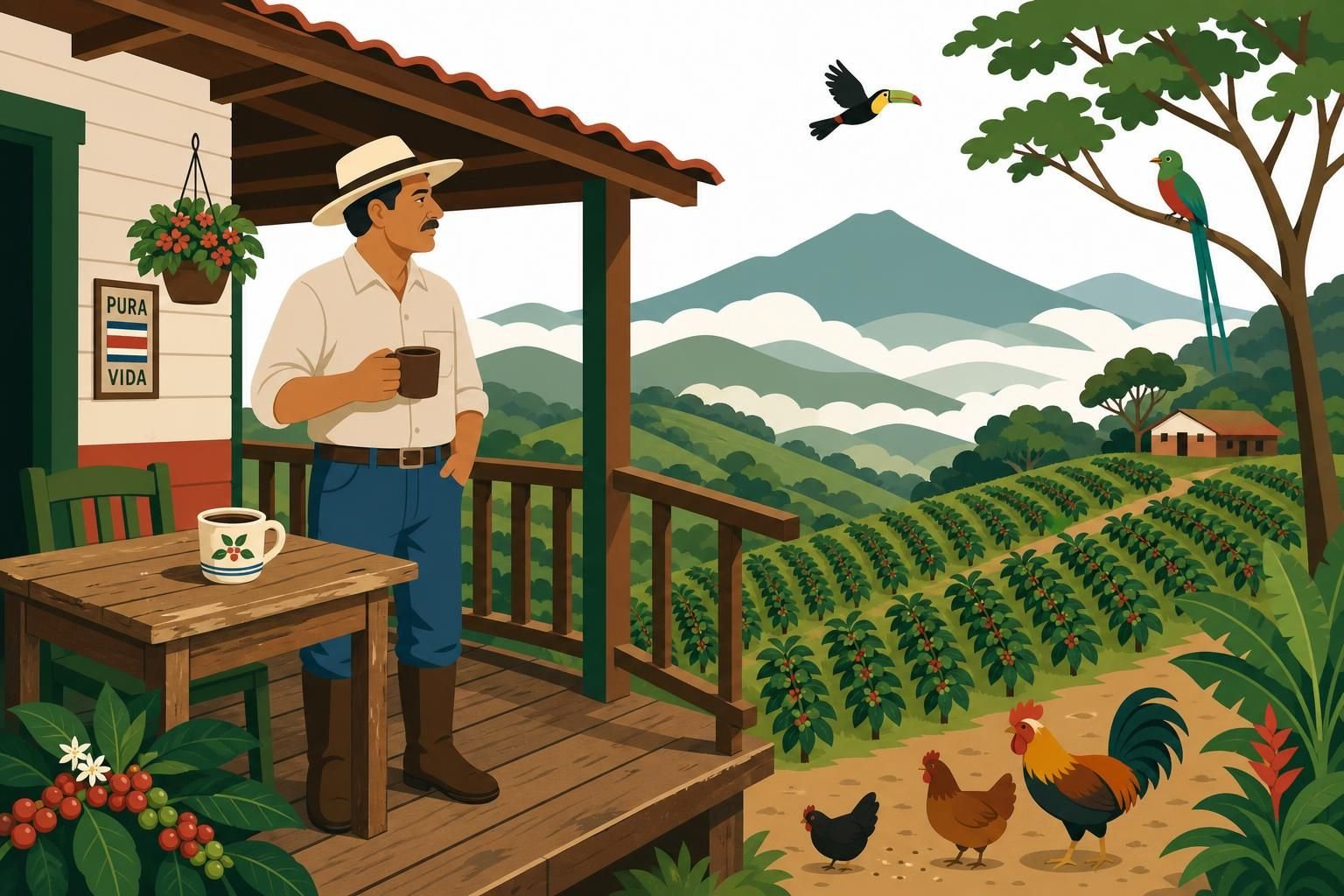
Farm stays are the calm option. You reach them by car, they fit easily at the start or end of a trip, and you see how rural Costa Rica grows its food and coffee. They suit families and anyone who wants fewer transfers; they won’t give you the isolation of a river lodge.
Finca Rosa Blanca: A Coffee Farm Inn Near San José
Finca Rosa Blanca is an organic coffee farm and inn in Santa Bárbara de Heredia with 14 villas, suites and studios. The inn reports more than 137 bird species on the farm, which makes even a one-night stay worthwhile for birders.
Best for: your first or last night in the Central Valley, Costa Rican coffee and birding. It is a small, boutique-scale place to stay, not a resort.
Casitas Tenorio: A Working Farm Near Río Celeste
Casitas Tenorio rents casitas on a working farm in Bijagua, close to Tenorio Volcano and the sky-blue Río Celeste. It lists Bandera Azul Ecológica and the ICT among its certifications, which gives you something concrete to check.
Best for: families and hikers. See the Río Celeste guide for the area.
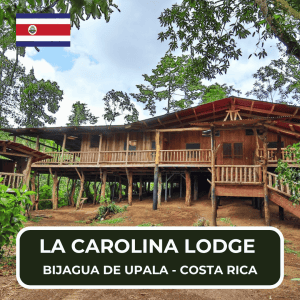
Bijagua has other rural lodges too; our profile of La Carolina Lodge covers one of them.
Smaller Farm Stays
Farm stays also come in smaller formats. On the Nicoya Peninsula, The Beehives farm cabins sit at The ARK near Santa Teresa.
In the hills west of the Central Valley, Casa La Serena is a three-bedroom finca house with a pool in Turrubares, a whole-house option for groups.
What Makes a Farm Stay Worth It
A good farm stay feeds money back into the area around it. “Employing local people, purchasing locally produced food and services, and protecting the surrounding wildlife and natural environment all make a difference,” the founders say. Ask who works there and where breakfast comes from; a real farm answers without hesitating.
Cloud Forest, Guanacaste Hot River and Nicoya Beach Stays
For cool mountain air or a soak in a hot river, look north of the Central Valley and inland in Guanacaste; for a simpler off-grid base near the Nicoya beaches, look at small casitas rather than resorts. These stays are reached by road, which makes them easier to combine with a coast or volcano trip.
El Silencio Lodge & Spa: Cloud Forest in Bajos del Toro
El Silencio sits in the cloud forest of Bajos del Toro, with 24 rooms, and holds two Michelin Keys. Guests can contribute to the lodge’s work to preserve the cloud forest around it. It sits deep in mountain country, so plan to arrive in daylight.
Best for: travelers who want cool cloud forest and a quiet base. Our Bajos del Toro guide covers the valley.
Rio Perdido: A Hot River in Guanacaste
Rio Perdido has 20 bungalows 4 km south of San Bernardo de Bagaces, near the gorges of two rivers, and the Michelin Guide awards it two Michelin Keys. It is just over an hour’s drive from Daniel Oduber Quirós International Airport in Liberia, so it pairs well with a beach stay on the Guanacaste coast.
Best for: hot-spring soaks and canyon scenery in Guanacaste. See the Guanacaste guide for the region.
Off-Grid on the Nicoya Peninsula
For something smaller near the Nicoya beaches, Off Grid Destinations lists Casita Selva, an off-grid jungle casita near San Juanillo. Further south, the farm cabins at The ARK near Santa Teresa (above) put you within reach of the southern Nicoya coast.
Treehouses, Tented Camps and Quirky Stays: Uvita, La Fortuna and Manuel Antonio

Treehouses and tented camps put you in the canopy or in front of a volcano without real camping. The best-documented range runs from adults-only treehouses above Uvita to oceanfront tree houses on the Caribbean and tented suites with hot-spring plunge pools at Arenal. What varies most is how elevated the “treehouse” really is and how you get to it.
Rancho Pacifico: Adults-Only Treehouses Above Uvita
Rancho Pacifico has adults-only villas and treehouses on a hillside above Uvita, and the Michelin Guide lists it with one Michelin Key, its distinction for hotels. The hillside setting means a climb, so ask about the road and your vehicle before you book.
Best for: couples who want a canopy stay with the polish of a boutique hotel. The South Pacific guide covers the coast below it.
Tree House Lodge: Caribbean Beach Inside a Wildlife Refuge
Tree House Lodge at Punta Uva has oceanfront houses on about 10 acres inside the Gandoca-Manzanillo Wildlife Refuge, one of them built around a tree. Fodor’s reports five leaves under the CST; ask the lodge which level it holds now and when it was issued.
Best for: travelers who want beach days on the Caribbean side near Puerto Viejo with a treehouse in the same trip. Time it for the Caribbean’s drier spells (see the season table below).
Nayara Tented Camp: Hot Springs at Arenal
At Nayara Tented Camp in the Arenal area, each tent has its own plunge pool fed by hot springs. It is the soft-adventure choice: hike around the Arenal Volcano area by day, soak at night.
Best for: comfort with a tent feel. The La Fortuna guide covers what else is nearby.
Quirky Stays: Sleep in a Boeing 727
Costa Rica’s best-known repurposed stay is the 727 Fuselage Home at Costa Verde in Manuel Antonio: a suite built inside a Boeing 727 fuselage, fully equipped, on the Central Pacific coast. Costa Verde does not publish a nightly rate; you check dates through its booking page.
Best for: a night or two that becomes the story of the trip. Skip it if you want seclusion in nature; this is a hotel suite in a beach town, so pair it with a quieter stay elsewhere.
More Treehouse and Glamping Profiles on OGD
Off Grid Destinations has separate profiles of individual stays in this category:
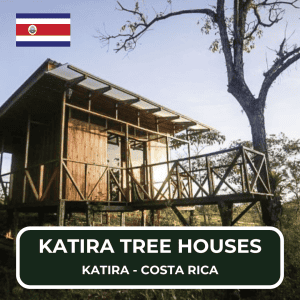
- Katira Tree Houses, near Río Celeste
- Pura Selva Eco Tree House, near Tamarindo in Guanacaste
- Campo Alegre glamping, in Cartago
- Rafiki Safari Lodge, a tented lodge near the Savegre River
How to Check a “Treehouse” Before You Book
The word is used loosely. Before you book, confirm three things:
- Height: is the room actually raised in or around trees, or is it a cabin on stilts in a garden?
- The path: steep steps, a slippery trail or a long walk with luggage matters after dark and in rain.
- The basics: screens, hot water and power at night, which vary widely in canopy rooms.
Why bother? As the founders put it, at stays like these “you’re not just visiting Costa Rica, you’re immersing yourself in the environment.”
Stay Inside a Working Eco Village

The option the big ranking lists skip is renting a casita or home inside a working eco village, where people live year-round. The cluster in the San Mateo hills is the easiest to reach: Alegría Village is about 45 minutes from Juan Santamaría airport, which makes it one of the few unusual stays that works for a first night.
Where You Can Stay
Three communities sit close together in the San Mateo area: Alegría Village, La Ecovilla and Collectivo Tacotal. They differ in size and style, from a 145-lot neighborhood with an HOA to a consensus-run collective of about 25 families.
Rentals inside them range from tiny casitas to family homes and bell tents. A few examples listed on Off Grid Destinations:
- Casita La Raíz, a casita in Alegría Village
- Casa Calabaza, a handcrafted eco home in La Ecovilla
- Cabina Macadamia, a standalone eco casita in Tacotal
- Bell-tent glamping with river access, also in Tacotal
Outside San Mateo, the Sustainability Center of Costa Rica in Guacimal, below Monteverde, rents two cabins whose proceeds fund its programs.
Browse all stays on Off Grid Destinations for current options, and contact each host directly about dates, access and what’s included.
What You Can Learn There
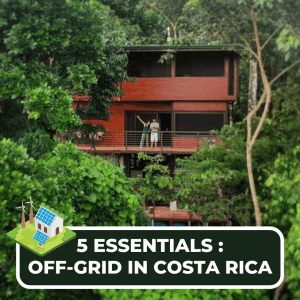
A stay like this shows how people actually handle power, water and food day to day. The founders know the trade-offs firsthand: “Having lived completely off-grid myself, using solar power and a gravity-fed spring water system, I know that living sustainably involves practical decisions, compromises and ongoing effort.”
Renting a home in a village doesn’t always mean joining village life, so ask before you book:
- Can guests use shared spaces or join community activities?
- Are there house rules or a minimum stay?
- Is there a tour or any hosted time, or is it a private rental only?
- How does this home get its power and water?
Best for: curious travelers and anyone thinking about a move. If you are, read how to join an eco community before you visit. Skip it if you want an infinity pool, a spa and room service; choose it for the setting and the questions it answers.
Pick the Right Season for Each Coast
Go to the Pacific side between December and March, and to the Caribbean in February-March or September-October, when the Pacific is at its wettest. The founders’ rule of thumb: “It really depends on which part of Costa Rica you’re visiting, because the Pacific and Caribbean sides have very different weather patterns.”
The table uses Visit Costa Rica’s official climate guidance from the ICT, with the founders’ notes for remote stays.
| Region | Driest months | Wettest months | Stays in this guide | What it means for you |
|---|---|---|---|---|
| Pacific side (Guanacaste, Nicoya Peninsula, Uvita, Osa Peninsula) | December to March; a short drier spell (the veranillo) in July-August | September and October | Lapa Rios, Rancho Pacifico, The ARK | April is a transition month and May to October is rainy. For remote Osa stays, the founders would avoid September and October if access is a concern. |
| Caribbean side (Tortuguero, Punta Uva, Puerto Viejo) | No well-defined dry season; relatively dry in February-March and September-October | December and July | Tortuga Lodge, Tree House Lodge | The best September-October choice while the Pacific is at its wettest. Plan for some rain at any time. |
The Pacific dry season is peak time for most visitors, so book those months early. If your dates fall in autumn, the founders point the other way: “Interestingly, September and October are often some of the better months to visit the Caribbean coast, where the weather patterns are almost the opposite.”
The official climate page splits the country by Pacific and Caribbean side. For inland stays such as Arenal, Bijagua and the San Mateo hills, ask your host how the current season affects the road in.
Should You Rule Out the Rainy Season?
No. “Personally, I wouldn’t completely rule out the rainy season,” the founders say. “Costa Rica is incredibly beautiful when everything is green, the waterfalls are flowing and the wildlife is active.” The condition: “You just need to choose your destination carefully, be flexible and remember that you’re visiting a tropical rainforest.”
How to Judge Eco Claims Before You Book
Check for the ICT’s Certification for Sustainable Tourism (CST) first, then ask concrete questions about power, water, waste, materials and local staff: specific answers beat labels. As the founders put it, being eco “is about how a property operates, not how many times the word ‘sustainable’ appears on its website.”
Step 1: Check the CST
- Who runs it: the Instituto Costarricense de Turismo (ICT), Costa Rica’s tourism board. Check the program on the ICT’s own website rather than trusting a badge on a hotel page.
- What it assesses: the ICT’s CST standard covers four areas: business management; social, economic and cultural impact; environmental impact; and specific indicators by type of business.
- The levels: the ICT’s page now describes two levels, Basic and Elite. Older travel guides describe CST results in leaves, as Fodor’s does for Tree House Lodge, so ask which level a property holds, when it was issued and whether it is still valid.
- Other labels: some stays list more than one; Casitas Tenorio lists Bandera Azul Ecológica alongside the ICT.
- No certificate: a small rental without the CST isn’t automatically a bad choice. It just has to answer the questions below more fully.
Step 2: Ask These Questions
The founders look at “renewable energy, responsible water management, waste treatment, the materials used in construction and how much the property disturbs the surrounding environment.” Turned into questions:
- Energy: Where does the power come from: solar, hydro, the grid? Is there a generator?
- Water: Where does the water come from, and is it safe to drink?
- Waste: How is wastewater treated, and what happens to trash?
- Materials and land: What was it built with, and how much forest was cleared?
- People: Do you employ people from the area and buy local food?
- Limits: What can’t you do yet, and what are you working on?
Step 3: Listen for Honesty
The last question tells you the most. “Not every property can be completely self-sufficient or have zero environmental impact, and that’s absolutely fine,” the founders say. “I’d much rather stay somewhere making a genuine effort and being transparent about its limitations than somewhere calling itself an eco-lodge simply because it’s surrounded by trees.” A host who claims perfection is a warning sign; one who walks you through trade-offs is a good one.
Costa Rica Travel Tips Before You Book a Remote Stay
Ask the questions a standard hotel would answer for you, starting with the road. The founders name the thing guests underestimate most: “Definitely the roads, and just how quickly conditions can change!”
- Confirm the last stretch. Raft, boat, 4×4 or a walk with luggage? Ask your host directly about road conditions, vehicle needs and arrival times.
- Book boats and flights early. The shared boat from Caño Blanco to Tortuga Lodge, for example, must be booked two business days ahead.
- Don’t trust map times. Add generous margin to anything Google Maps tells you, especially on dirt roads in the rainy season.
- Arrive in daylight. In the founders’ words: “never attempt to cross a flooded river.”
- Ask about power and water. Does power run all night? Is there hot water, and can you drink from the tap?
- Check signal and internet. If you need to work or stay in touch, ask before you book, and compare an eSIM or a local SIM for the trip.
- Ask about meals. With no town nearby, find out if meals are included or if you need to bring food.
- Pack for small craft and wildlife. Boats and small planes may limit bags, and you’ll want rain gear and repellent; our Costa Rica packing list covers the rest.
“A little preparation goes a long way,” the founders say. “Getting stuck halfway up a muddy mountain isn’t quite the adventure most people had in mind!”
FAQ
What is the most unique place to stay in Costa Rica?
It depends on the trip. For the hardest-to-reach experience, choose a lodge with no road access, such as Pacuare Lodge (raft in, or 4×4 plus a cable gondola) or Tortuga Lodge (boat or small plane). For something few travelers try, rent a home inside a working eco village in the San Mateo hills, about 45 minutes from Juan Santamaría airport.
Are there treehouses in Costa Rica?
Yes, from adults-only treehouses at Rancho Pacifico above Uvita to an oceanfront house built around a tree at Tree House Lodge on the Caribbean. For something stranger still, the 727 Fuselage Home at Costa Verde in Manuel Antonio is a suite inside a Boeing 727. Check how high any “treehouse” really is and what the path to it is like after dark.
When is the best time to stay in Costa Rica?
On the Pacific side, December to March is the dry season; September and October are the wettest months. The Caribbean side has no well-defined dry season but is relatively dry in February-March and September-October, according to Visit Costa Rica. That makes the Caribbean the better choice for autumn trips.
Do I need a 4×4 to reach unique stays in Costa Rica?
For some, yes, especially in the rainy season, when a road that is fine in the dry months can need a proper 4×4 or close for a while. For lodges reached by boat or plane, the car matters less, but you still have to reach the dock or airstrip. Ask your host about the exact route and vehicle before you travel.
How can I tell if an eco-lodge in Costa Rica is really eco?
Start with the Certification for Sustainable Tourism (CST), run by the ICT, and ask which level the property holds and when it was issued. Then ask where the power and water come from, how wastewater is treated and whether staff and food are local. Specific, honest answers, including about limits, matter more than the word “eco.”
Which Unique Stay Should You Book?
Choose the trip first, then check access and season before you book:
- Wildlife and a real escape: a no-road lodge such as Pacuare, Tortuga or Lapa Rios, timed for that coast’s drier months.
- Comfort with a story: a treehouse at Rancho Pacifico, a tent at Nayara, a hot river at Rio Perdido or the 727 at Costa Verde.
- An easy first or last night: Finca Rosa Blanca, or a casita in an eco village 45 minutes from the airport.
Sources
- Pacuare Lodge (2026)
- Lapa Rios (2026)
- Tortuga Lodge (2026)
- Finca Rosa Blanca (2026)
- Casitas Tenorio (2026)
- Michelin Guide (2026)
- Fodor's (2026)
- Scott Dunn (2026)
- Visit Costa Rica (ICT) (2026)
- Instituto Costarricense de Turismo (2026)
- Alegría Village (2026)
Researched and fact-checked by the Off Grid Destinations editorial team. Facts last checked November 13, 2026. Laws, taxes and prices change: confirm current figures with the source or a local professional.