Costa Rica’s eco communities differ less in scenery than in three things that shape daily life: how you own your home, who makes the decisions, and whether the community already exists or is still mostly a plan. This guide compares the main eco villages and intentional communities across the country on exactly those points, with 2026 costs from each community’s own published figures, and shows you how to try one before you commit.
It also draws on first-hand input from Off Grid Destinations’ founders, who have lived off-grid in Costa Rica since 2012: about a decade in a remote rainforest community in the south, and now on a coffee farm in the hills of San Mateo, about 10 minutes from Alegría Village. They have friends there, have stayed in several homes and help with property management, so read their view of that community with that link in mind.
Key takeaways
- The biggest choice is the model, not the place: titled private lots with an HOA (Alegría Village, St. Michael’s), resident-elected committees with majority votes (La Ecovilla, Ecovilla San Mateo), collective land run by consensus (Collectivo Tacotal), or learning centers you can live and work in (Rancho Mastatal, PachaMama, Tierramor).
- Established communities are the safer first purchase. Forming projects give you more say but carry more risk: roads, water and titles may not exist yet.
- Published asking prices run from about $160,000 to $300,000 for a lot, plus roughly $1,500 to $1,600 per square meter to build (Nanku Ecovillage’s estimate for Nosara). Property tax is 0.25% a year of registered value.
- Foreigners can buy titled property on essentially the same terms as citizens. The 200-meter coastal maritime zone is the main exception.
- Rent inside the community first. Most communities offer rentals or guest stays, and a guided multi-community tour runs in the San Mateo area in January 2027.
Eco Communities in Costa Rica at a Glance
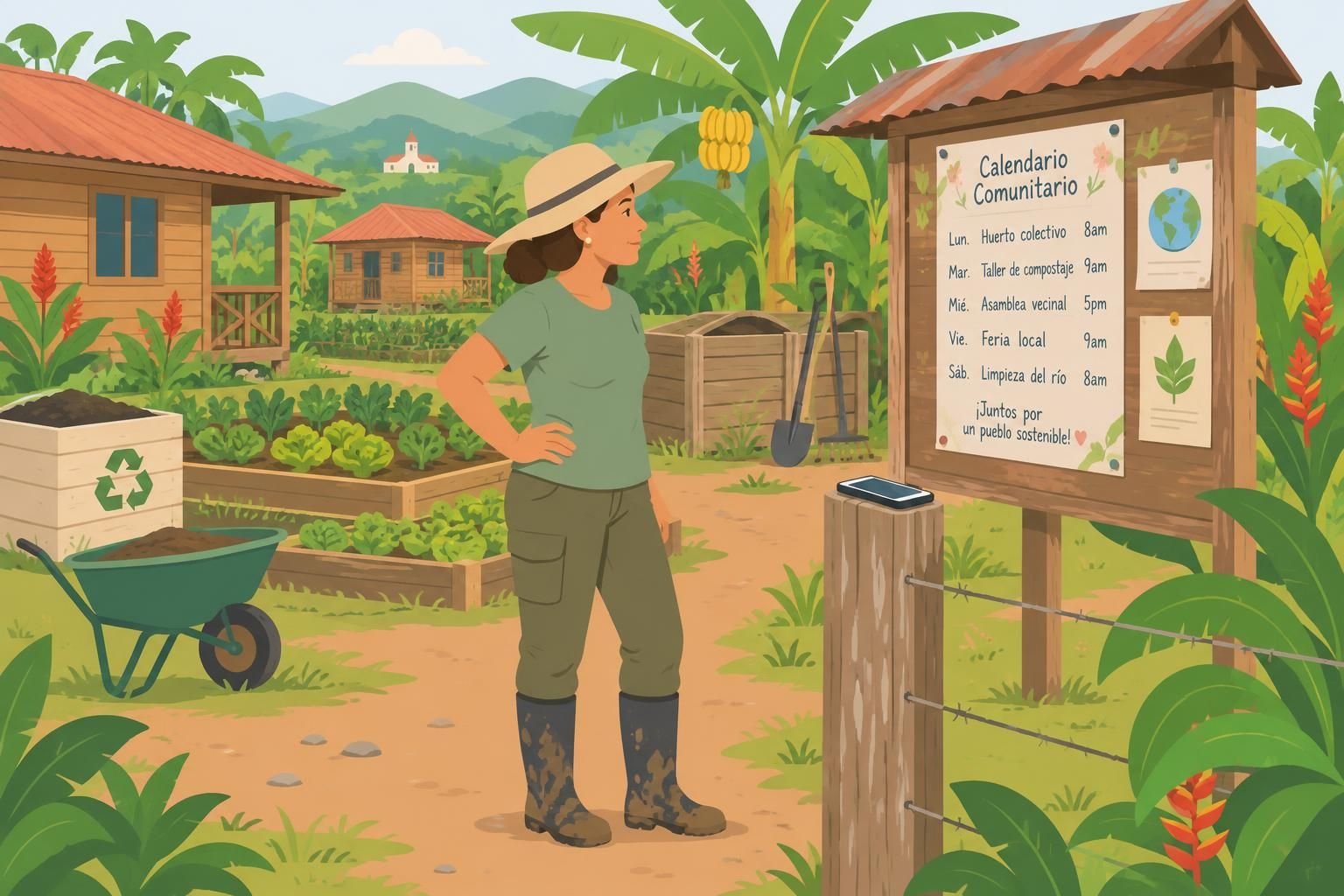
The main eco and intentional communities in Costa Rica fall into five areas: the San Mateo hills west of the Central Valley, the Nicoya Peninsula, the Central and Southern Pacific, the mountains around Puriscal and Monteverde, and the southern Caribbean coast. The table compares them on the points that matter most; figures come from each community’s own site or directory listing unless noted.
| Community | Area | How you own and decide | Stage | Best for |
|---|---|---|---|---|
| Alegría Village | San Mateo, Alajuela | Titled private lots; HOA $50-550 a month | Established; 145-lot masterplan | Families and remote workers who want shared amenities and an easy drive to the airport |
| La Ecovilla (Original) | San Mateo, Alajuela | Private homes; elected committees, majority vote | Established; residents since 2012 | Buyers who want a proven community with a long track record |
| Ecovilla San Mateo | San Mateo, Alajuela | Private homes; neighborhood HOAs, committees; one-time join fee | Forming; first residents 2025 | Buyers who want new construction and a say in how a place grows |
| Collectivo Tacotal | San Mateo, Alajuela | Land bought collectively in 2007; consensus | Established; about 25 families | People who want deep involvement and fewer formal amenities |
| Nanku Ecovillage | Nosara, Guanacaste | Lots for sale, $160,000-300,000; small resident leadership group | Forming; founded 2022, 50 lots planned | Families who want the coast and Nosara’s schools |
| Tierramor | Nosara foothills | Regenerative farm with planned homesites; terms not published | Early; residencies and events now | People who want to start with a residency on a working farm |
| PachaMama | San Juanillo, Guanacaste | Private homes; retreats, volunteer program | Established | Retreat and spiritual-practice seekers |
| Pura Tierra | Nicoya Peninsula | Members own their land outright; about 50 members | Established | Off-grid homesteaders; volunteers and work exchange |
| St. Michael’s | Hills above Parrita | Titled lots plus a collectively run food forest | Established; residents since about 2009 | Buyers who want permaculture near the Central Pacific coast |
| Rancho Mastatal | Mastatal, Puriscal | Education center, farm and ecolodge (a private company) | Established; since 2001 | Learning permaculture before you buy anywhere |
| Sustainability Center of Costa Rica | Guacimal, below Monteverde | Community organization forming an intentional community | Forming; founded 2014 | Education-minded people drawn to the Buen Vivir idea |
| Ecovillage at SEED | Cahuita, Limón (Caribbean) | Private lots of about half a hectare; property owners association | Established; residents since 2009, 17 lot-owning families | Seasonal residents who want space and quiet on the Caribbean side |
If you have one trip, go to San Mateo: four communities with four different models sit side by side along the Machuca River, which makes it the easiest place in the country to compare them in person. You can browse every eco and intentional community profile on Off Grid Destinations for more detail on each.
Which Eco Village Model Fits You: Ownership, Rules and Stage
Choose the model first and the place second. Three questions decide whether you will thrive in an eco village community: what you actually own, how decisions are made, and how much already exists on the ground.
Ownership and fees
| Model | Examples | What you get | Watch out for |
|---|---|---|---|
| Titled private lot plus HOA | Alegría Village, St. Michael’s, La Ecovilla | Your own registered lot and home, shared land and services paid through fees | What the fee covers, how it has risen, and the rules you sign up to |
| Private homes plus join fee | Ecovilla San Mateo | Your own home in a neighborhood with its own HOA | A one-time join fee or share purchase on top of the property price |
| Collective land | Collectivo Tacotal | A share in land held together, with a voice in every major decision | Less individual control; leaving or selling depends on the group |
| Residency or volunteer first | Rancho Mastatal, Tierramor, PachaMama, Pura Tierra, Punta Mona | A way to live and work inside a community before buying anything | You own nothing; terms change with the program |
Alegría Village publishes the clearest fee breakdown of these communities: its FAQ puts the HOA at $50 to $550 a month depending on lot size, covering electric and fiber-optic infrastructure, water, trash and compost collection, a weekly basket of farm produce, upkeep of common areas and roads, and security. Use that list as a benchmark when you compare other communities’ fees, which are often not published at all.
Most Costa Rica eco communities are not fully off-grid. OGD’s profiles of Alegría and Ecovilla San Mateo, for example, list the national grid plus home solar. If off-grid power matters to you, ask about each home, and read how intentional communities handle shared energy systems.
On titled lots versus condominiums and what to check in the paperwork, our buyer’s guide to eco village homes for sale in Costa Rica goes deeper.
Governance and daily life
Decision-making ranges from formal to fully shared. La Ecovilla and Ecovilla San Mateo both describe themselves in the Foundation for Intentional Community directory as representative: members elect leaders, decisions pass by majority vote, and committees handle topics such as permaculture and architecture (La Ecovilla listing, Ecovilla San Mateo listing). Alegría runs an HOA with resident “Earth Steward” groups. Tacotal works by consensus, which gives everyone a voice and takes the most patience.
Who lives there full time changes daily life as much as the rules do. Alegría says every home is occupied, by an owner or a renter, so the village stays active year-round. Elsewhere, ask how many homes sit empty for half the year. Most communities also expect some shared work: garden days, committee seats or meetings.
Recommendation: before you buy, read the community rules and the minutes of the last few meetings. They show what people actually argue about, what you will owe in time and money, and whether you would enjoy being in the room.
Established or still forming
Established communities are the better first buy for most people; forming projects suit people who want to help build something and can carry the risk.
| Established | Forming | |
|---|---|---|
| Examples | La Ecovilla (2012), Collectivo Tacotal (2007), St. Michael’s (about 2009), Alegría Village (2018) | Nanku Ecovillage (2022), Ecovilla San Mateo (first residents 2025), Tierramor, Sustainability Center |
| Upside | Roads, water and titles exist; you can see what daily life is like | More say in design and culture; earlier choice of lots |
| Downside | Less room to shape the culture; fewer lots left | Roads, water and services may still be plans |
With any forming project, sort everything you are shown into four groups: operating now, under construction, funded but not started, and proposed. Only the first group is certain.
What Community Living in Costa Rica Is Really Like
Community living here rewards people who are flexible and handle problems themselves, and frustrates people who expect everything to be organized for them. That is the short version from Off Grid Destinations’ founders, who have lived in or alongside eco communities in Costa Rica since 2012.
On the difference between communities, they contrast their decade in a remote rainforest community in the south, which was “remote, rugged and required a great deal of self-sufficiency,” with Alegría Village in San Mateo, which offers “a more accessible lifestyle, with shared facilities” and “a stronger social infrastructure.” Both connect people with nature, they say, “but the level of independence and day-to-day responsibilities can be very different.”
What newcomers underestimate most is the people side:
“Sharing similar values doesn’t mean everyone will agree on everything! Community politics, maintenance, financial contributions and differing expectations are realities people sometimes overlook.” (Off Grid Destinations’ founders)
Their advice is to rent before buying, because “the reality of daily life can be very different from the initial romantic impression.” The people who thrive, in their experience, are “adaptable, self-reliant, open-minded and willing to compromise”; the ones who leave tend to struggle with shared decision-making. In remote communities especially, “you need to be comfortable solving problems yourself.”
Weather is part of the deal too. In the San Mateo hills, the rainy season brings heavy afternoon downpours, slippery roads, drainage issues and occasional power outages. “You quickly learn to work around the weather rather than against it,” they say, and they love the rainy season for how lush and green everything becomes. Plan errands for the morning and keep a backup for power and internet if you work online.
The Eco Village Cluster in the Hills of San Mateo

The hills of San Mateo, Alajuela, hold Costa Rica’s densest group of eco communities: Alegría Village, La Ecovilla, Ecovilla San Mateo and Collectivo Tacotal, all near the Machuca River. Alegría puts the drive from Juan Santamaría International Airport at about 45 minutes, on roads it describes as smooth all the way. See our San Mateo destination guide for the town itself.
Alegría Village
Alegría is the most amenity-rich of the four. Its own site describes 70 hectares (170 acres) and over 135 neighbors from 32 countries, each on private land, sharing a community center, pool, yoga shala, coworking hub, permaculture farm, food forests and trails, with water from on-site springs and creeks. The masterplan has 145 lots, and foreigners can buy fee simple on a tourist visa. Best for families and remote workers who want structure and services; less suited to anyone who wants to live without rules or fees. More on the Alegría Village community page.
La Ecovilla
La Ecovilla is the pioneer: a former cattle farm of 42 acres (about 17 hectares) turned into an edible forest, with residents since 2012. Its directory listing says more than 40 families built homes there, and you join by buying or renting a house; the wider Ecovilla says it represents more than 60 nationalities. Decisions go through elected committees and majority votes. Best for buyers who want a community with over a decade of history and a working governance system. See the La Ecovilla community page.
Ecovilla San Mateo
Ecovilla San Mateo is the newest and largest: La Ecovilla’s expansion onto 220 hectares of a former petting zoo crossed by the Machuca River, started in 2023 (some directories list 200 hectares). It plans about 300 families in six neighborhoods, residents began moving in in 2025, and joining involves a one-time join fee or share purchase on top of the home. Best for people who want new construction and a say in a growing place; ask exactly what is built today. See the Ecovilla San Mateo profile.
Collectivo Tacotal
Tacotal is one of Costa Rica’s oldest intentional communities and the most collective of the four. Its members bought the land together in 2007, and about 25 families now decide by consensus; the Global Ecovillage Network lists the farm at 25 hectares bordered by the Machuca River. It is smaller, quieter and less structured than its neighbors by design. Best for people who want deep involvement over amenities. See the Collectivo Tacotal profile.
Eco Communities on the Nicoya Peninsula and in Nosara

The Nicoya Peninsula trades San Mateo’s airport access for the coast, surf and established expat towns, at higher land prices and with longer drives. Beach buyers need one extra legal check: the first 50 meters from the high-tide line are public, and the next 150 meters are usually concession land rather than titled property, which a foreigner generally cannot hold a majority of without five years of legal residency, according to law firm ECIJA (July 2026). Confirm any lot is titled and outside that zone.
Nanku Ecovillage
Nanku is a forming community 10 minutes from Nosara center and 15 minutes from the beach. Founded in 2022 on 54 acres with 50 lots planned, it lists lots at $160,000 to $300,000 and construction at around $1,500 to $1,600 per square meter. A small resident leadership group runs it, with new residents since early 2025. Best for families who want the coast and Nosara’s schools. See the Nanku Ecovillage profile.
Tierramor and PachaMama
Tierramor is a regenerative farm in the Nosara foothills, about 15 minutes from the beaches of Ostional, that is developing a farm village with future homesites. For now the way in is a residency (dates run from December 2026 into May 2027) or its workshops and gatherings; it does not publish lot terms.
PachaMama, near San Juanillo, began on 500 acres of former cattle grassland that its community has largely reforested. It has private homes, guest accommodation, restaurants, retreats and a volunteer program, and suits people drawn to retreat and spiritual practice. See our San Juanillo guide for the area.
Pura Tierra and The ARK
Pura Tierra is an off-grid land project on the peninsula where members own their land outright; the Global Ecovillage Network lists about 50 members and welcomes volunteers and work exchange. Further south, near Santa Teresa, The ARK is a small hillside farm community with cabins and ocean-view stays, an easy way to try community life near the beach. Our Nicoya Peninsula guide covers the region.
Intentional Communities on the Pacific Slopes and in the Mountains
Outside San Mateo and Nicoya, the communities worth knowing are a mix of established permaculture villages and learning centers, plus a new cluster forming in the Diamante Valley above Dominical.
St. Michael’s Sustainable Community
St. Michael’s sits in the hills inland from Parrita and Esterillos, a few miles from the Central Pacific. Planned from 2008 with residents since about 2009, it combines individually titled home lots with a collectively run area of gardens and food forest on about 100 acres, with springs, rainwater storage and solar. Several homes are natural builds, including Earthship-style and living-roof designs. Best for buyers who want titled land, permaculture and the coast within reach. See the St. Michael’s community profile.
The Diamante Valley cluster
A newer group of projects is forming in the Diamante Valley in the hills above Dominical. Ecovillage Tours’ February 2027 Diamante Valley tour visits Florestral, RISE, Ecomaste, Diamante Bridge Collective, HOLOS and Qasa. These are early-stage projects, so treat everything as forming and apply the four-group check above. Our Dominical guide covers the coast below.
Rancho Mastatal
Rancho Mastatal, in the farming village of Mastatal in Puriscal, is the best place in the country to learn before you live. Running since 2001, it is an education center, working permaculture farm, ecolodge and community on more than 300 acres, including a private wildlife refuge. It offers workshops, internships, guest stays and a two-week Permaculture Design Certificate; its site said in November 2026 that the coming year would be the first in over a decade without its year-long apprenticeship.
Sustainability Center of Costa Rica
The Sustainability Center, in Guacimal below Monteverde, was founded in 2014 and is forming an intentional community on 2.5 hectares in the Bellbird Biological Corridor, built around Buen Vivir (“good living”). Two cabins on site fund its programs. Best for education-minded people who want a small, mission-led group. See the Sustainability Center profile and our Guacimal guide.
Eco Communities on the Caribbean Coast
The southern Caribbean has fewer eco communities than the Pacific side, and they are more remote: expect a longer drive from San José, a wetter climate and a smaller expat base, in exchange for space, forest and a quieter pace. Our Caribbean Coast guide covers the region.
Ecovillage at SEED
The Ecovillage at SEED sits in the Talamanca foothills in Cahuita, Limón, on a property of about 150 hectares (370 acres) that it describes as “a bit remote” by design. According to its Global Ecovillage Network listing, residents have lived there since 2009, 17 families own or co-own lots of about half a hectare each, and members form a property owners association. Most residents come on weekends or seasonally, and it lists itself as open to new members, with a few lots still offered and some for resale. Best for buyers who want a large lot and a quiet, part-time base; less suited to anyone who wants a busy year-round village.
Punta Mona
Punta Mona, near Manzanillo, is a long-running off-grid permaculture farm and educational retreat center with more than 300 tropical tree varieties and over 150 medicinal plants. It is a place to learn off-grid tropical living rather than to buy a home, so use it to test the Caribbean side before you choose where to settle. Published figures for its size differ between sources, so confirm current details with the center.
What Living in an Eco Village in Costa Rica Costs
Expect $160,000 to $300,000 for a lot in a coastal eco village, more for a finished home, plus monthly fees and a low annual property tax. The figures below are asking prices or the communities’ own estimates, not sale prices.
| Cost | What to expect | Source |
|---|---|---|
| Lot, Nosara | $160,000-300,000 | Nanku Ecovillage, 2026 |
| Lot, San Mateo | $199,000-285,000 (one example: Alegría Village) | OGD listings, November 2026 |
| Lot, Caribbean | About half a hectare per member lot at SEED; some lots for resale, prices not published | GEN listing |
| Home, San Mateo | $260,000-900,000 (one example: Alegría Village) | OGD listings, November 2026 |
| Home, Central Pacific | $325,000 for a furnished one-bedroom eco villa (St. Michael’s) | OGD listing, November 2026 |
| Building | About $1,500-1,600 per m² | Nanku Ecovillage estimate for Nosara |
| HOA | $50-550 a month by lot size (Alegría); Ecovilla San Mateo charges a one-time join fee, amount not published | Alegría FAQ; FIC directory |
| Property tax | 0.25% a year of registered value | Ley 7509 |
A quick build example: a modest 100 m² home at Nanku’s estimate costs $150,000 to $160,000 to build, on top of the lot. Add permits, site work and a contingency.
For monthly living costs, Nanku publishes a detailed estimate for a household in Nosara: electricity $250-700, internet $80-120, water $60, food around $2,500, private school $700-2,000 per child, and $4,000-5,500 a month to rent a house while you build. Inland San Mateo usually costs less to rent, but get current figures from residents rather than brochures. Browse land for sale to compare current asking prices.
How Expats Can Visit Before They Commit
Stay inside or next to a community for at least a few nights, in both seasons if you can, before you sign anything. These steps work for most people:
- Shortlist by model. Pick two or three communities whose ownership and governance fit you, then plan the trip around them.
- Book a stay inside. Several communities have rentals or guest homes, including Alegría Village, La Ecovilla, Tacotal and The ARK. Browse eco stays and community rentals.
- Give it time. Alegría recommends at least 2 days and 1 night, enough to see the neighboring communities too. A week tells you far more.
- Take a guided tour. Ecovillage Tours runs a Machuca Valley tour on January 16-24, 2027 visiting St. Michael’s, Dos Colinas, Alegría Village, Collectivo Tacotal, La Ecovilla Original and Ecovilla San Mateo. Off Grid Destinations has an affiliate partnership with Ecovillage Tours.
- Learn first if you are new to it. A course at Rancho Mastatal or a residency at Tierramor shows you whether you enjoy the work.
- Talk to residents without the sales team. Ask what they would change and who has left recently, and why.
For a wider checklist on choosing and joining, see how to join an eco community.
Questions to Ask Before You Join
The questions that protect you are about title, water, money and decisions, and the answers should come in writing. Off Grid Destinations’ founders put it simply: “distinguish between what’s already built and what’s simply promised. Speak with residents, not just developers, and always use an independent lawyer.”
Land, water and money
- Is my lot individually titled, or a condominium unit or a share in collective land?
- What is the HOA or join fee, what does it cover, and how has it changed in the last three years?
- Where does the water come from, and is there a legal supply (AyA, a local ASADA or a concession) with a written availability letter? Our guide to the water letter and other land checks explains why this decides whether you can build.
- How does resale work, and does the community approve buyers?
- What is the developer’s track record and financial position?
People and rules
- Who decides, how, and what happens when people disagree?
- What are the rules on building, short-term rentals, pets and shared work?
- How many residents live there full time?
- Can I read the minutes of recent meetings?
Access and services
- What exists today, and what is promised with dates?
- Is the road passable year-round, and who maintains it?
- How far are the nearest clinic, school and grocery store?
FAQ
Can foreigners buy into an eco community in Costa Rica?
Yes. Foreigners have essentially the same property rights as citizens and do not need residency to buy titled property. Alegría Village, for example, says you can buy fee simple on a tourist visa. The exception is the coastal maritime zone, so have an independent lawyer check title and location.
How much does it cost to live in an eco village in Costa Rica?
Published asking prices run from about $160,000 to $300,000 for a lot in Nosara and from about $260,000 for a finished home in the San Mateo communities, plus around $1,500 to $1,600 per square meter if you build. Monthly fees vary widely and many communities do not publish them, so ask for the last three years’ figures in writing. Property tax is 0.25% a year of registered value.
Can you rent before you buy?
Usually, yes, and it is the best first step. La Ecovilla says you can join by buying or renting a house, Alegría’s homes are all occupied by owners or renters, and several communities have guest stays. Renting for a few months, ideally including part of the rainy season, shows you daily life no tour can.
Which eco communities are closest to San José?
The San Mateo cluster is closest: Alegría Village, La Ecovilla, Ecovilla San Mateo and Collectivo Tacotal, west of the Central Valley. Alegría puts the drive from Juan Santamaría International Airport at about 45 minutes and says no four-wheel drive is needed.
Are eco communities in Costa Rica off-grid?
Most are not fully off-grid. Larger communities such as Alegría and Ecovilla San Mateo use the national grid plus home solar, while smaller projects such as Pura Tierra are built around off-grid living. Ask about power, water and internet home by home.
The Short Version
Decide how you want to own and decide before you choose a view: titled lots with an HOA if you want structure, committees or consensus if you want a voice, a residency if you want to learn first. Favor established communities for a first purchase, rent inside before you buy, and get title and water checked by an independent lawyer. In the founders’ words, “community living can be incredibly rewarding, but it isn’t for everyone.” Start with the community profiles and plan one trip that covers several.
Sources
- Alegría Village (2026)
- Alegría Village FAQ (2026)
- Alegría Village (2026)
- Nanku Ecovillage (2026)
- CommunityFinders (2023) (October 2023)
- Global Ecovillage Network (2026)
- PachaMama (2026)
- ECIJA (July 2026)
- Ley 7509 (law in force)
- ecoversity.org
Researched and fact-checked by the Off Grid Destinations editorial team. Facts last checked November 13, 2026. Laws, taxes and prices change: confirm current figures with the source or a local professional.