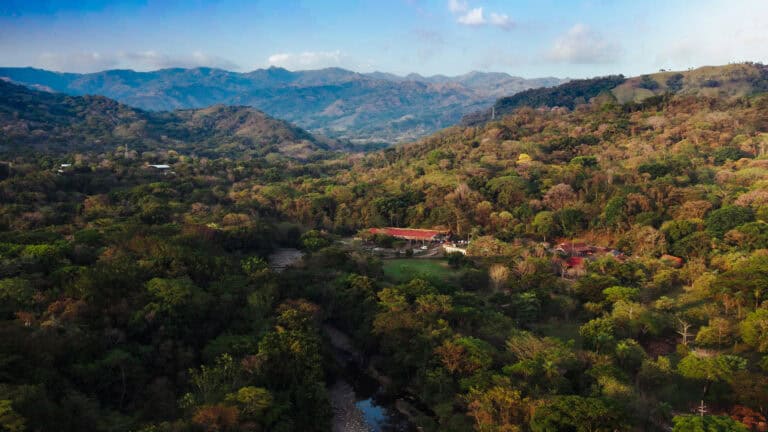
One of Costa Rica's oldest intentional communities — 60 acres of forest and farmland along the Rio Machuca, collectively owned since 2007 and run entirely by consensus. Smaller, quieter, and less structured than its neighbours by design.
Community stays & properties
Off Grid Destinations is a marketplace connecting you with independently owned homes, rentals, and properties in Collectivo Tacotal — managed directly by their owners.
Community facts
Colectivo Tacotal doesn't have a yoga shala or a saltwater pool. It doesn't have a marketing team or a masterplan. What it has is 60 acres of forest and fertile land along the Rio Machuca, a group of people who collectively purchased it in 2007, and nearly two decades of figuring out how to live on it together.
That's not a weakness. For the people Tacotal attracts — those who find the more polished eco-developments a little too structured, a little too curated — it's exactly the point. This is intentional community in its most genuine form: land held in common, decisions made by consensus, lives built slowly and with care.
Cabina Macadamia: Standalone Eco Casita in Tacotal
from $900/month
San José & Central Valley · Costa Rica
Cuarto Mono: Private Room on a Permaculture Farm in Tacotal
from $650/month
San José & Central Valley · Costa Rica
Glamping at Finca: Bell Tent with River Access in Tacotal
San José & Central Valley · Costa Rica
Camping at Finca: Eco Tent Stay in Tacotal
San José & Central Valley · Costa Rica
Community Yoga Session
A shared movement practice open to residents and visitors.
Seasonal Gathering
A shared meal or celebration marking the season.
Verified community representatives can:
The property covers roughly 60 acres of Pacific-slope tropical forest in the hills of San Mateo, Alajuela, sitting at around 600 metres above sea level. The Rio Machuca — the same crystal-clear river that borders La Ecovilla and runs near Alegría Village — forms Tacotal's eastern boundary. It's swimmable, quartz-filled, and the kind of river that makes afternoons disappear. The surrounding land includes secondary forest, fruit trees, gardens, and trails through wildlife habitat.
The climate sits between the two extremes Costa Rica is known for — warm days, cooler evenings, two clear seasons (dry December to April, rainy May to November), and none of the coastal heat that makes outdoor living uncomfortable for half the year.
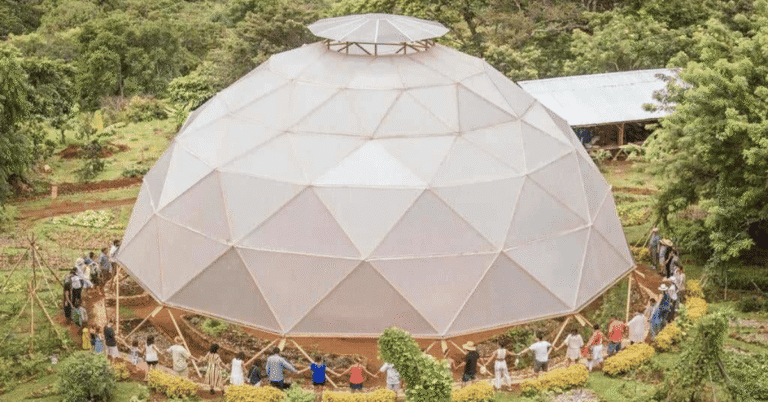
Tacotal operates by consensus. All members — whether full-time residents or those who live elsewhere and visit — gather on the land annually to make decisions about development, new members, shared agreements, and the direction of the community. There is no HOA, no management company, no top-down structure. Responsibility for the land is shared between everyone who holds a stake in it.
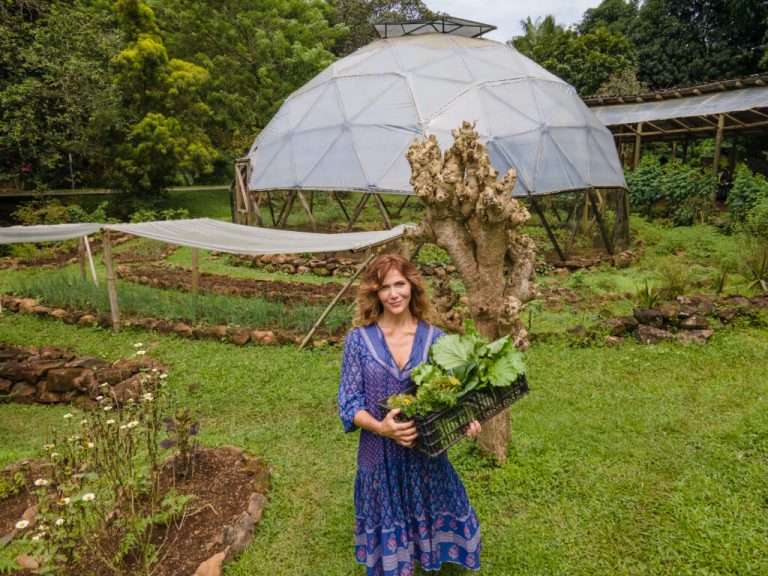
Residents come primarily from the US, Costa Rica, and Mexico, with a shared interest in permaculture, music, ecological stewardship, and intentional living. The community actively welcomes volunteers and students who want hands-on experience with organic agriculture and permaculture in a real working forest environment.
Tacotal made history in 2010 by hosting Costa Rica's first national gathering of intentional community projects — bringing together communes from across the country and helping establish what is now an active Latin American EcoVillage Network. It is one of the longest-running intentional communities in the San Mateo area.
Tacotal sits within what has quietly become one of Central America's most active eco-community clusters. La Ecovilla — internationally recognised and Netflix-featured — and Alegría Village are both nearby along the same river valley, as is Ecovilla San Mateo. All are listed on Off Grid Destinations. Tacotal is the oldest and most informal of the group — the right fit for those who want genuine community life without the structure of a planned development.
Browse available stays and properties below.
Browse all available stays, properties, and land listings at Collectivo Tacotal.
Are you connected with this community? Request an update →