Province / Region

Explore Osa Peninsula

Find unique stays, off-grid homes, properties for sale, communities, and local experiences in Osa Peninsula, Costa Rica.

At a glance

Stays 6
Properties for sale
Land listings 1
Communities 1

About Osa Peninsula

The Osa Peninsula occupies the far southwestern corner of Costa Rica's Pacific coast — a landmass that juts into the Pacific with the Golfo Dulce on its eastern side and Corcovado National Park across much of its interior. Established in 1975, Corcovado protects approximately 424 square kilometres of lowland tropical rainforest, one of the most biologically rich forest systems in the Americas. The peninsula is remote by deliberate design: most of it is only accessible by boat, small plane, or unpaved road — and much of the coastline is within or adjacent to protected land.

Drake Bay, on the northern Pacific coast, is the main gateway from the sea — a sheltered anchorage reached by boat from Sierpe or small plane from San José. Puerto Jiménez, on the Gulf Dulce coast opposite the peninsula, functions as the main service town: the southern terminus for the road from Palmar Norte, the base for Corcovado permits, and a small but functional community with an airstrip. Cabo Matapalo marks the southern tip: a point of land with private nature reserves, prolific scarlet macaw populations, and lodges known for wildlife density. The Golfo Dulce itself — the fjord-like gulf separating the peninsula from the Osa mainland — is a warm, protected body of water that supports humpback whale nursing behaviour and is one of the few tropical fjords in the world.

For Off Grid Destinations, the Osa Peninsula represents the deep end of off-grid living in Costa Rica. Properties here are largely eco lodges, jungle homesteads, and conservation parcels with limited road access, off-grid power, and rainwater systems. The combination of proximity to Corcovado's buffer zones, the active coastal ecology of the Golfo Dulce, and the genuine remoteness of the southern Pacific makes this one of the most compelling destinations for buyers prioritising biodiversity and nature access over infrastructure.

Osa Peninsula is best for deep rainforest property, conservation-focused eco lodges, stays with direct wildlife access, and those willing to trade infrastructure convenience for a genuinely off-grid Pacific coast.


Stays
Select dates
Guests
Community

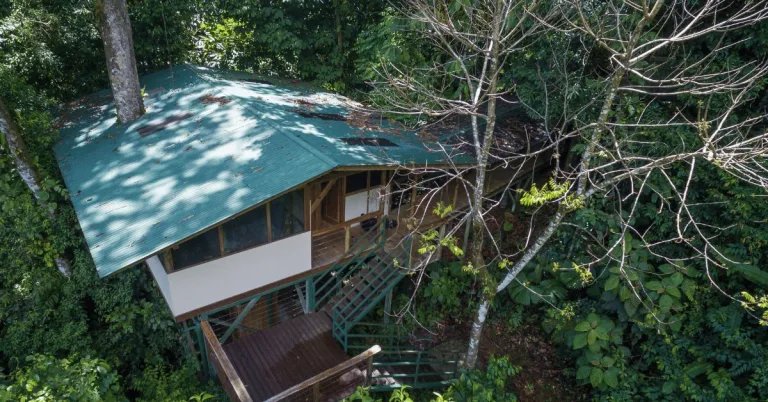
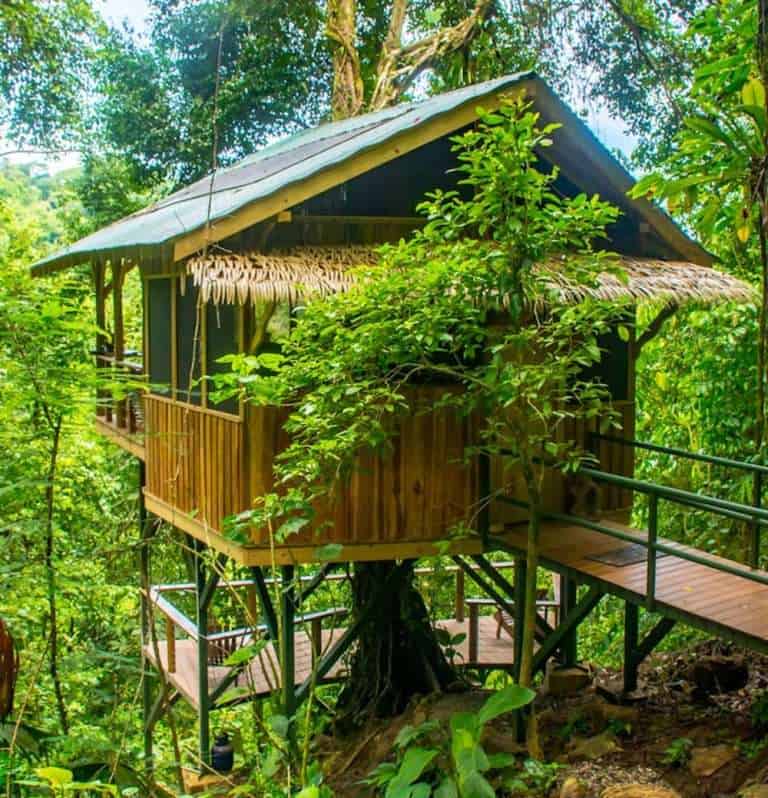
Places to stay in Osa Peninsula

Browse all stays →

What to confirm before booking in Osa Peninsula

Before enquiring, confirm road access, parking, internet, water, power setup, distance to town or beach, current pricing, cancellation terms, and whether the stay suits your comfort level, group size, and travel plans.

FAQs about Osa Peninsula

The fastest route is a domestic flight from San José to Puerto Jiménez (approximately 45 minutes) or Drake Bay (approximately 30–35 minutes). By road: drive to Palmar Norte (4.5 hours from San José) then continue to Puerto Jiménez (another hour). Drake Bay is accessible by boat from Sierpe — take the road or bus to Sierpe, then a 90-minute river-and-sea boat transfer. There is no road access to Drake Bay itself.

Corcovado is Costa Rica's largest national park on the Osa Peninsula, covering approximately 424 square kilometres. It is managed by SINAC and protects lowland tropical rainforest, wetlands, and coastline. Entry requires a permit and a licensed guide; overnights are limited by quota. The park's trail system connects the La Leona, San Pedrillo, Los Patos, and Sirena ranger stations — Sirena is the biological heart of the park, only accessible by trail, boat, or small plane.

December through April is the dry season and the easiest time for trails and road access. The green season (May–November) brings heavy rainfall — some roads flood, boat crossings can be rough, and Corcovado trail conditions require more preparation. Many lodges and eco properties operate year-round; some close for September and October.

The Osa Peninsula is one of the few places in Costa Rica where all four native monkey species are present: howler, white-faced capuchin, spider, and squirrel monkey. Scarlet macaws are common along the coast near Cabo Matapalo. Tapirs, peccaries, and coatis are seen on Corcovado trails. Humpback whales visit the Golfo Dulce during two annual migration seasons (July–October, December–March). Sea turtles nest on several beaches.

Explore Osa Peninsula off-grid

Browse unique stays, eco communities, properties for sale, and land listings across Osa Peninsula.

Connected with a community or property here? Request an update →