How to Join an Eco Community: What to Look For
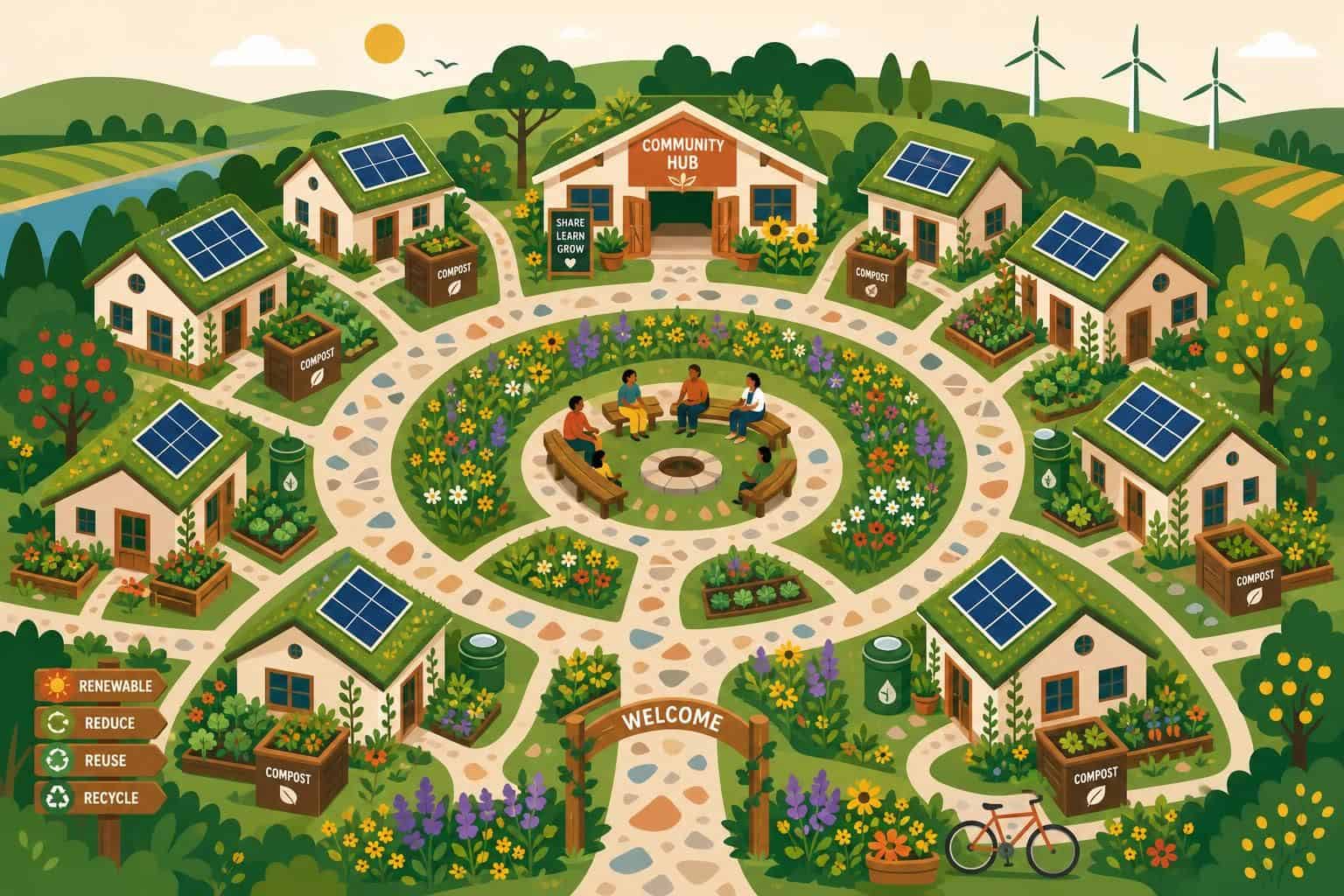
Many people want to live more sustainably but aren’t sure where to actually begin. Intentional communities offer one concrete answer: places that have already built working models for reducing environmental impact through shared resources. 1 These aren’t theoretical experiments. They’re functioning settlements where sustainability is baked into daily life.
Finding the right eco community takes some homework. Prospective members need to evaluate governance structures, visit in person, and understand how daily life actually works before making the leap.
This guide covers what to look for when exploring eco communities and off-grid living options — from assessing values alignment to understanding membership costs. 2
Key Takeaways
- Eco communities reduce carbon footprints through shared resources, with the Global Ecovillage Network connecting roughly 10,000 communities worldwide using sustainable practices.
- Prospective members must evaluate governance structures, values alignment, location, climate, and amenities before joining to ensure long-term compatibility.
- Online platforms like IC.org, ICmatch.org, and Worldpackers help people find intentional communities and test community living through volunteer work exchanges.
- Costs vary widely from free volunteer positions to several thousand dollars for equity investments, with grants available for affordable housing initiatives.
- Completing at least a five-day trial stay before committing gives prospective residents a realistic picture of daily life in an intentional community.
What Is an Eco Community?
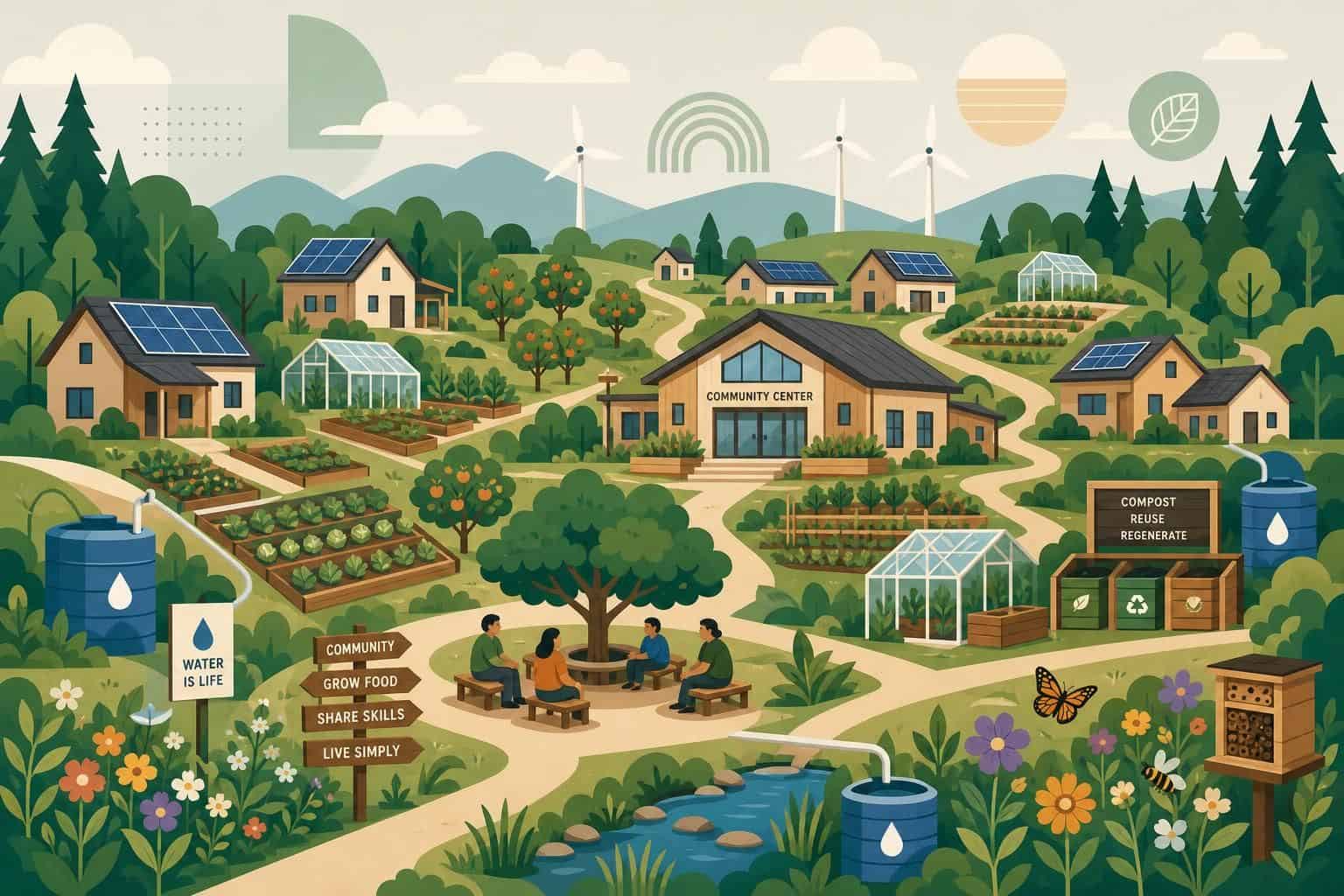
An eco community — also called an ecovillage or intentional community — operates on principles of sustainability and collective responsibility. The Global Ecovillage Network (GEN) connects roughly 10,000 communities worldwide and provides a widely used framework for what these settlements represent. 1 According to 2025 data from the Foundation for Intentional Community (FIC), over 3,500 intentional communities are currently operating across the United States — making this a widespread housing alternative rather than a niche concept.
Ecovillages use local participatory design to regenerate social and natural environments simultaneously. Members take an active role in decision-making that shapes both daily life and long-term goals.
Related on OGD:Explore stays inside eco communities →
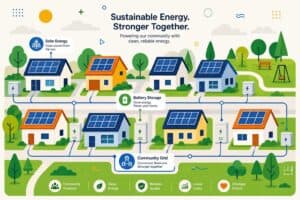
These communities embrace whole-systems design, meaning every choice is considered in relation to the larger ecosystem. Renewable energy powers many ecovillages. Residents often grow food through agrihood models or traditional agriculture, and cooperative culture forms the backbone of communal living arrangements.
What Makes Intentional Communities Different
Intentional communities differ from standard neighborhoods because residents choose to live together around shared values. People select ecovillages specifically to reduce their ecological footprint and practice sustainability in a community setting.
Examples like Earthaven Ecovillage, Dancing Rabbit Ecovillage, and Auroville demonstrate how diverse these settlements can be. Some are fully off-grid communities with complete energy independence. Others operate as urban ecovillages within city limits, showing that sustainable living fits many environments. Cohousing arrangements allow residents to maintain private spaces while sharing common areas and resources.
The Power of Shared Resources and Knowledge
The strength of these communities lies in their collaborative approach to problem-solving and resource management. Residents access shared skills, tools, and knowledge that would cost significantly more to replicate individually — sharing vehicles, equipment, and expertise rather than each household purchasing duplicates.
Key Benefits of Joining an Eco Community
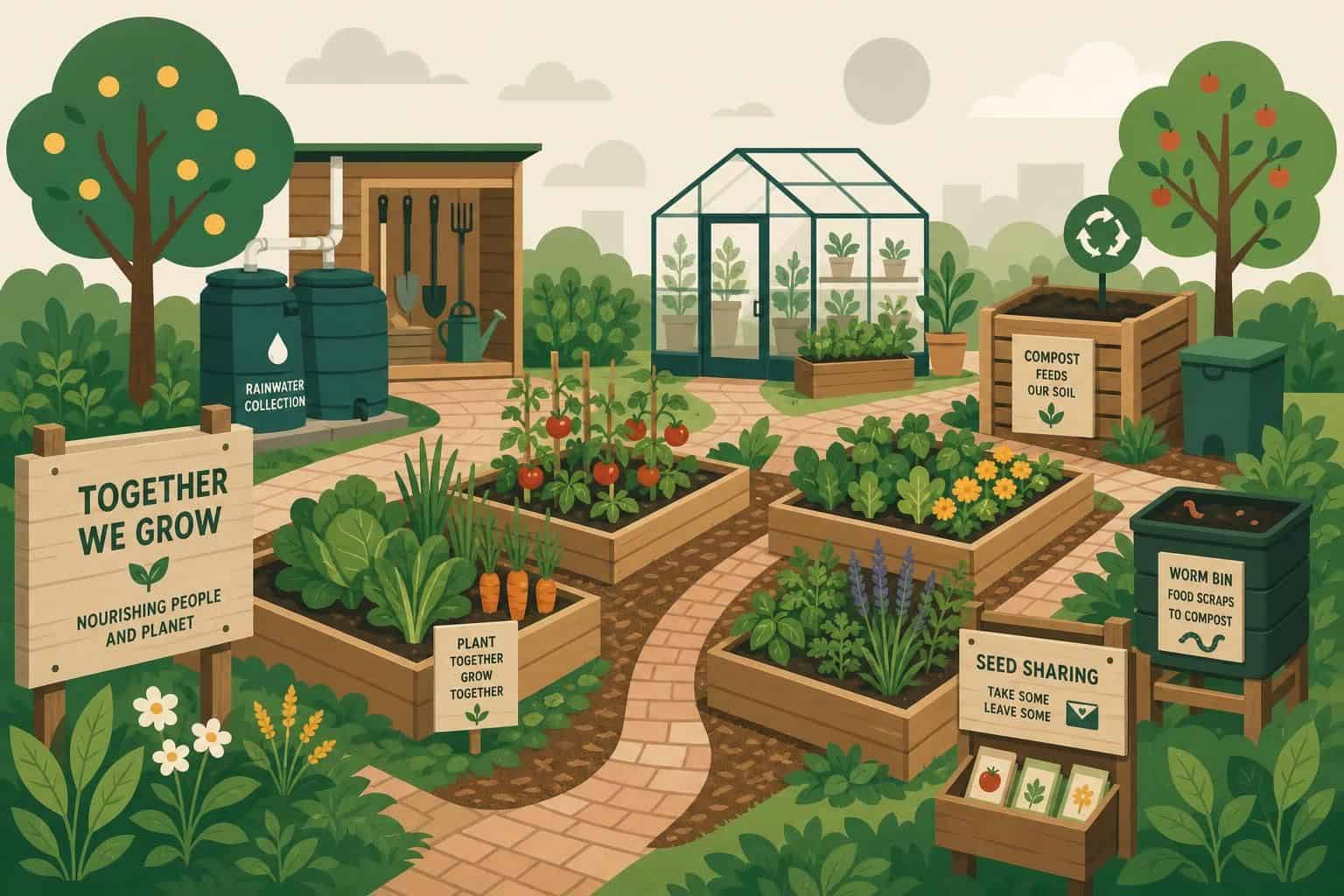
Joining an eco community opens access to sustainable living practices that reduce environmental footprints while connecting residents with people who share similar values. Members gain shared resources, collective skills, and practical knowledge that would take years to develop independently.
Sustainable living and reducing your environmental impact
Eco communities cut carbon footprints through shared resources and collective action. Members pool tools, vehicles, and equipment instead of each household purchasing duplicates — an approach that reduces consumption significantly. 2 A comparative case study from Grand Valley State University analyzing US ecovillages including EcoVillage at Ithaca and Earthaven found that residents reduced their environmental impact by an average of 66% compared to the standard American resident.
Residents also employ permaculture techniques and natural building materials to minimize waste. Communities like O.U.R. Ecovillage and Maitreya Ecovillage demonstrate how on-site food production increases self-sufficiency while eliminating transportation emissions. Greywater and human waste are often recycled safely on-site, and solar and wind power replace grid electricity at many intentional communities.
Related on OGD:Explore solar-powered off-grid stays →
One suburban cohousing cluster that pooled tools and vehicles documented significant consumption changes over a full year: combined annual vehicle miles dropped 42 percent, household tool purchases fell from 8 unique items to 2 shared items, and estimated household material spending decreased by $1,800. These measurable outcomes illustrate how coordinated resource sharing lowers individual consumption in practice.
Arcosanti and La Ecovillage showcase innovative building designs that work with natural systems rather than against them. Members collaborate on conservation projects that strengthen ecological preservation across their land. Transition towns movement participants implement similar strategies in conventional neighborhoods, demonstrating that these methods are not limited to remote settlements.
Building meaningful connections with like-minded people
Joining an eco community puts residents in direct contact with others who share their commitment to sustainable living and environmental stewardship. These connections form the backbone of what makes intentional communities function over the long term.
Members inspire each other through daily interactions, collaborative community projects, and shared meals. People working toward the same ecological goals tend to develop trust quickly, exchanging practical knowledge about homesteading techniques, renewable energy systems, and food preservation. The result is a support network that keeps individuals committed to their environmental goals. 2
Close-knit communities foster lasting friendships and stronger interpersonal bonds. Members tackle challenges together, celebrate shared victories, and build a culture where every voice matters — transforming sustainable living from a personal practice into something genuinely collective.
Access to shared resources and skills
Eco communities pool assets and knowledge in ways that benefit every resident. Members gain hands-on training in farming, bioconstruction, woodworking, and green technology through collaborative workshops. Community-supported agriculture programs deliver fresh produce to households, and educational programs run year-round, covering everything from composting techniques to recycling protocols.
Platforms like ICmatch.org and WWOOF.org connect volunteers with communities that match their values, making it straightforward to find where skills meet needs. 3
The practical payoff comes from tapping into collective expertise. A resident interested in solar installation learns from someone who built their own system. Another member teaches woodworking using reclaimed materials. Communities often host events and tours that generate income for residents while spreading awareness about sustainable living, and disaster preparedness partnerships give members practical experience in self-reliance.
How to Evaluate an Eco Community Before Joining
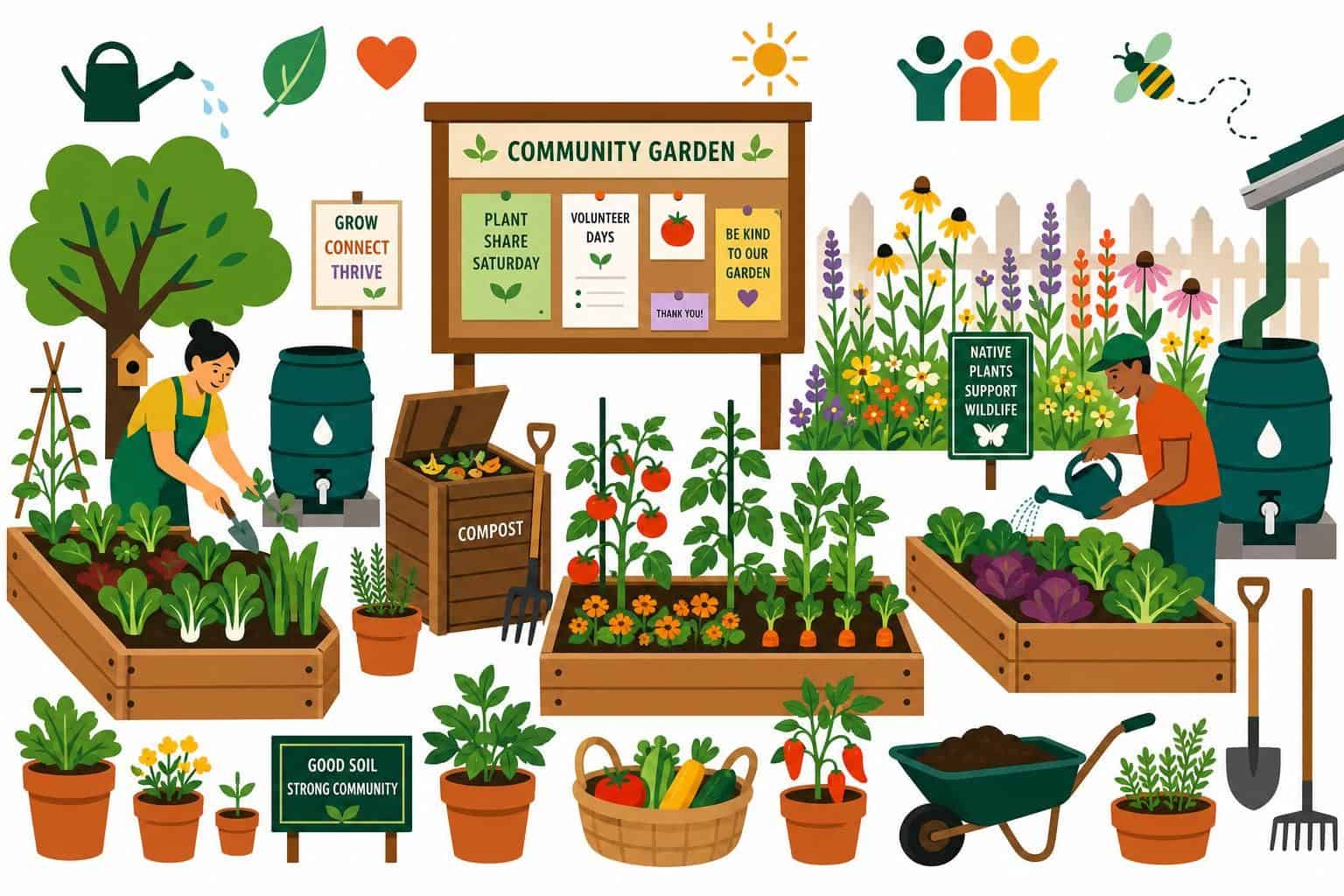
Evaluating an eco community takes careful thought. Prospective members need to examine how decisions get made, what values members hold, and whether the location fits their lifestyle before committing to this kind of move.
Aligning community values with your personal goals
Values alignment forms the foundation of a successful eco community experience. 4 Before joining, a prospective member needs to examine what matters most to them.
Some communities emphasize vegetarian or vegan diets as core practices. Others prioritize holistic approaches like yoga and meditation, or weave spiritual practices and cultural experiences into daily life. The fit between personal beliefs and community standards determines whether someone will thrive or struggle.
Platforms like ICmatch connect people with shared interests and values, making the discovery process more direct. Diverse demographics — including Millennials, Gen X, and Baby Boomers — populate these communities, each bringing different priorities and perspectives.
The sense of belonging flourishes when members share fundamental principles about how to live. A prospective resident should visit potential communities in person, observe how people interact, and ask direct questions about governance and resource sharing. This hands-on approach reveals whether a community’s actual practices match its stated values.
Understanding the governance and decision-making processes
Governance structures in eco communities operate through democratic participation rather than top-down control. 5 Organizations like the Ecovillagers Alliance emphasize equal voting rights for all members, creating systems where residents shape their community’s future.
Leadership teams typically include permaculture practitioners and individuals with deep intentional living experience. Members often hold voting rights and equity shares tied to community land cooperatives, meaning they have a direct stake in the land they inhabit. This cooperative model keeps control in the hands of residents rather than outside investors.
Some land cooperatives use a structured equity model that creates a transparent path from visitor to full member. One example outlines a staged process: newcomers begin with a two-week visitor trial, then move to six-month provisional membership with non-voting status. After six months, provisionals may purchase up to a 5 percent equity share. Full voting rights are granted after 12 months and completion of governance training. Financial commitments in this model include a refundable $250 trial deposit and a $3,500 equity tranche — a clear, staged path from visitor to shareholder that helps prospects assess commitment before joining fully.
Participatory decision-making sits at the heart of how these communities function day to day. Some use consensus-based models where members work toward agreement on major decisions. As noted by the Foundation for Intentional Community and Sociocracy For All, more than 200 US intentional communities have shifted to Sociocracy (also called Dynamic Governance) rather than traditional consensus. This approach relies on “consent” to move forward efficiently rather than requiring 100% agreement — reducing the meeting fatigue that often accompanies pure consensus models.
Prospective members should ask detailed questions about voting procedures, how disputes get resolved, and what happens when disagreements arise. Communities with transparent governance tend to operate more smoothly and retain members longer. Experienced eco-community advocates recommend observing decision-making sessions in person before committing.
Assessing location, climate, and available amenities
Location, climate, and amenities shape daily life in any eco community. 6 Prospective residents should evaluate these factors carefully before committing to arrangements that will define their routines for years ahead.
| Assessment Category | Key Considerations | Real-World Examples |
|---|---|---|
| Proximity to Services | Nearness to hospitals, grocery stores, and schools reduces carbon footprints significantly. Communities positioned close to public transportation cut fuel consumption. Rural isolation appeals to some; others need urban connectivity. | LA Ecovillage operates within Los Angeles, offering walkable access to amenities. Crystal Waters in Queensland balances seclusion with infrastructure access. Kailash Ecovillage in Oregon provides moderate connectivity to Portland services. |
| Climate Suitability | Local weather patterns determine heating and cooling needs. Renewable energy sources work best in regions with consistent sun or wind. Temperature ranges influence crop selection. Rainfall affects water harvesting and irrigation. | Findhorn in Scotland utilizes wind and solar power despite cooler temperatures. EcoVillage in New York adapts to seasonal extremes through passive design. Eco Truly Park in tropical regions leverages consistent warmth for year-round food production. |
| Housing Options | Communities offer eco homes, cabins, shared dorms, private rooms, and tent accommodations. Building materials reflect sustainability commitments. Design features often include green roofs and smart technologies. Housing density affects privacy and community interaction. | The Farm in Tennessee provides diverse housing from traditional cabins to modern sustainable structures. Crystal Waters features permaculture-designed homes integrated with natural landscapes. Urban examples like Kailash Ecovillage maximize space through multi-unit buildings. |
| Community Amenities | Green spaces support recreation and food production. Edible gardens supply organic produce and reduce grocery expenses. Shared kitchens facilitate communal meals. Common areas foster connection. Internet access and dedicated workspaces attract remote workers. | Findhorn operates extensive gardens alongside modern workspaces. EcoVillage in New York combines shared dining with private kitchens. Kailash Ecovillage provides fiber optic internet and coworking spaces. The Farm maintains organic gardens producing food year-round. |
| Air Quality and Resources | Locations away from industrial zones enjoy improved air quality. Communities emphasize renewable energy over fossil fuels. Water sources determine resource independence. Soil quality affects gardening and food security. Biodiversity indicators reveal ecosystem health. | Crystal Waters prioritizes pristine air and water through careful land management. EcoVillage in New York monitors air quality continuously. Eco Truly Park integrates water conservation systems. The Farm maintains clean water sources through natural filtration. |
| Accessibility and Transportation | Road conditions affect vehicle needs and maintenance costs. Public transit reduces personal transportation requirements. Walkability encourages community engagement. Bike paths support alternative transport. Remote properties may require self-sufficiency planning for supply chains. | LA Ecovillage maximizes pedestrian access within urban Los Angeles. Kailash Ecovillage balances car independence with regional connectivity. Rural communities like The Farm develop internal transportation networks. Findhorn maintains shuttle services to regional hubs. |
Prospective residents benefit from visiting communities during different seasons. 7 Spending time on-site reveals how climate impacts daily routines. Walking the grounds shows amenity quality directly. Conversations with current residents uncover practical details that online descriptions miss.
Housing preferences vary by personal circumstance. Single residents often prefer shared dorms or private rooms. Families typically seek eco homes with dedicated outdoor space. Remote workers prioritize internet reliability and quiet workspaces.
Practical Tips for Starting Your Eco Community Journey
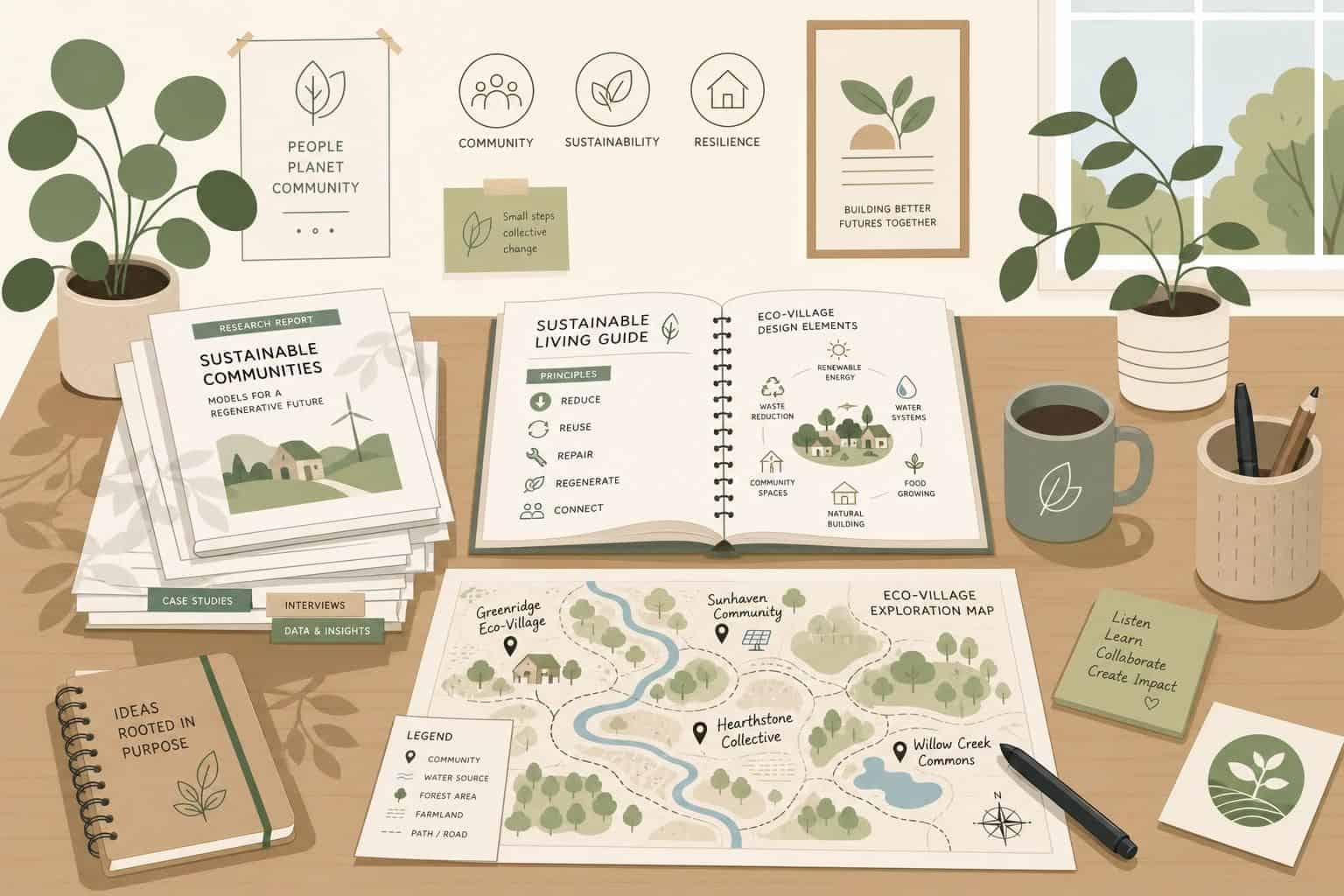
Finding the right eco community takes legwork. The people who do their homework are usually the ones who find communities that actually match their values and lifestyle.
Using online directories and platforms to find communities
Several established platforms catalog eco communities across North America and globally. These directories make the search process more manageable and connect people with intentional living spaces that align with their values.
- IC.org hosts searchable listings of intentional communities focused on self-sufficiency throughout North America. Visitors filter by location, community type, and specific values to narrow results quickly.
- The Foundation for Intentional Community provides directories of visitable ecovillages with available rentals or purchase options, helping prospects experience communities before committing.
- ICmatch.org connects volunteers with projects needing support. The platform works well for those wanting to contribute skills while evaluating community fit.
- Seeds for Eco Communities operates as a worldwide directory listing eco-communities across multiple regions, including international options.
- Agrihood Living showcases neighborhoods and apartments featuring farm-to-table designs and edible gardens, appealing to those seeking sustainable homes with community agriculture.
- The Global Ecovillage Network and NuMundo.org offer international and regional directories for off-grid living spaces.
- Ecobasa.org catalogs eco-communities and sustainable projects worldwide with detailed profiles covering governance, amenities, and membership requirements.
- Facebook groups like the Eco-Village and Intentional Community Discussion Group facilitate project showcasing and skills matching, with members sharing real-time experiences.
- WWOOF.org connects volunteers with agricultural projects and sustainable farms globally — a good option for those wanting to test community living through hands-on work exchanges.
- World Permaculture MAP connects users with permaculture consultants and design courses, useful for building skills while networking with practitioners already embedded in sustainable communities.
Visiting eco communities to experience their lifestyle firsthand
Visiting an eco community before joining gives a realistic picture of daily life that no website or brochure can fully convey. Many ecovillages welcome guests for tours, workshops, and volunteer experiences.
Earthships in Taos, New Mexico, and Sowing Circle Community in California welcome visitors to see how residents actually live. Programs like Worldpackers connect volunteers with host communities across the globe, offering stays in exchange for accommodation and meals. This hands-on approach lets people participate in farming, animal care, teaching, construction, and other community work.
Visitable destinations span Spain, Colombia, Vietnam, Indonesia, the Philippines, and Jordan, each with specific requirements for duration and weekly hours. According to the official visitor guidelines of established US communities like Twin Oaks and Earthaven Ecovillage, major communities require rigorous multi-week trial periods before membership is considered. Twin Oaks requires a strict three-week visitor program; Earthaven requires a two-week trial prior to a two-month minimum resident commitment. 8
Volunteer placements provide hands-on exposure that reveals the daily reality of eco-community life. One rural permaculture site tracked a three-week volunteer exchange: volunteers worked five days per week for five hours daily on mixed tasks ranging from garden maintenance to infrastructure projects, attended six workshops covering permaculture principles, solar basics, and food preservation, and ate community-grown produce roughly four times per week. Notably, 30 percent of volunteers returned for a second stay within six months — a reasonable indicator of genuine fit.
Direct participation reveals what off-grid living actually demands. The Dervaes family urban farm in Los Angeles produces 6,000 pounds of food annually on just one-tenth of an acre, demonstrating what intensive homesteading looks like in practice. Swan Lake in Ontario and other intentional communities show different models and the real challenges residents face daily.
A trial period separates genuine interest from romantic notions about off-grid existence. 9
Stories and Resources from Eco Communities
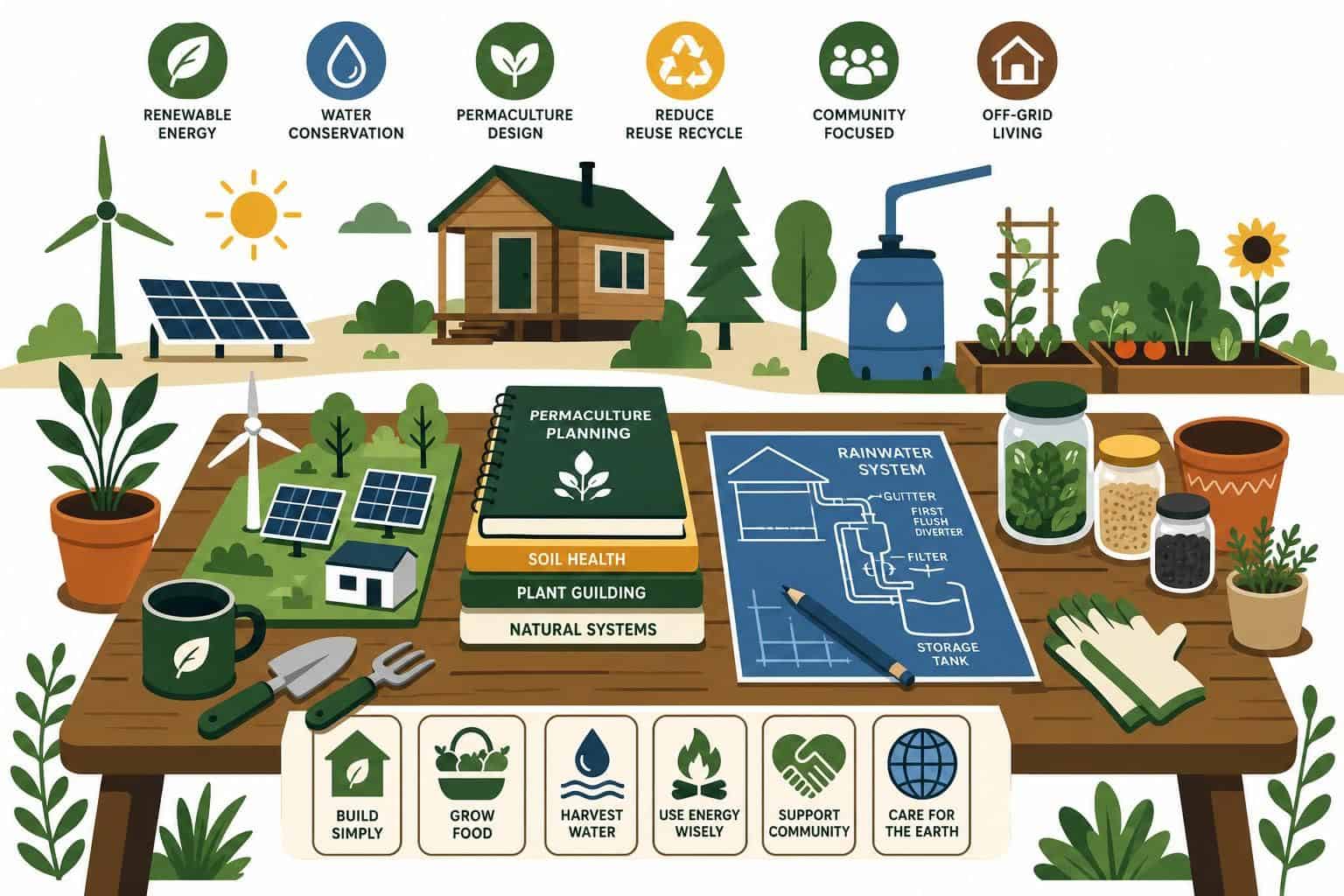
Real accounts from people living in eco communities offer practical lessons that research alone cannot provide. The experiences documented by established ecovillages show how communities solve problems together — and what prospective members should realistically expect.
Lessons from established ecovillages
Terre de la Reunion started as a startup ecovillage with limited funding, yet early community support helped founders navigate the initial obstacles. Sowing Circle Community, formed by seven friends, transformed depleted soil into productive land and has operated successfully for 50 years. Swan Lake in rural Ontario continues to tackle challenges around cohesion and affordable housing while pursuing self-sufficiency goals.
Learning from existing ecovillages helps prospective residents avoid costly mistakes. The Urban Farmer demonstrates how resilience circles convert suburban yards into productive gardens, proving that sustainable homes don’t require remote locations. Podcasts like the Ecovillage Library podcast deliver in-depth interviews with community members, and C. J. Stolz’s research on intentional communities provides evidence that these living arrangements create lasting social impact.
Practical skills and community resilience in off-grid environments
Off-grid communities rely on practical skills and shared knowledge that members pass on to one another. Residents practice sustainable living techniques including permaculture, rainwater harvesting, and composting to reduce their environmental footprint. These intentional communities emphasize solidarity through shared responsibilities and collaboration among all residents.
Building resilience in off-grid environments requires more than equipment. It demands genuine human connection and mutual support. Residents learn from one another through hands-on experience, whether managing renewable energy sources or processing food for long-term storage.
Housing Options Within Eco Communities
Eco communities offer diverse housing options that match different lifestyles and budgets. 11 Prospective residents find everything from private rooms to remote properties designed for sustainable living.
- Private eco homes feature low-impact designs with sustainable building materials throughout. These dwellings provide complete autonomy while maintaining community connection.
- Shared cabins accommodate multiple residents in intentional living spaces that reduce resource consumption. Occupants split utilities and maintenance costs, making this option affordable for many seekers.
- Remote properties within communities often sit on farm-to-table land with edible gardens already established. Residents harvest fresh produce directly from their surroundings year-round.
- Dormitory-style accommodations house guests in equipped spaces with shared kitchens and laundry facilities, fostering immediate social bonds among newcomers.
- Tent camping areas provide temporary or seasonal housing for those testing community fit before committing long-term — off-grid living without major financial investment.
- Smart technology integration in select eco homes combines modern amenities with environmental responsibility. Fast internet access supports digital nomads working remotely.
- Short-term rental options let prospective members stay for weeks or months to evaluate compatibility. Some include all meals, simplifying the transition into community living. 12
- Long-term properties accommodate families and individuals seeking permanent residence within established networks, with access to shared resources and maintained personal privacy.
Roles for guests, hosts, and owners in intentional living spaces
Intentional living spaces offer three distinct roles for people seeking sustainable lifestyles. Guests arrive through platforms like Worldpackers to volunteer on eco properties, trading labor for room and board while gaining hands-on skills in farming, building, or hospitality. Hosts welcome these volunteers and gain practical support for their operations, with higher volunteer approval ratings attracting more applications.
Owners of established eco communities benefit from this exchange model by expanding their workforce, reducing operational costs, and creating vibrant social environments that strengthen their missions. 13
Volunteers gain more than free accommodation. Depending on the host, participants may access language lessons, yoga classes, holistic therapies, or discounted events. After each stay, guests and hosts exchange reviews, building trust and visibility across the network. Hosts with solid track records attract more motivated volunteers — people who genuinely care about sustainable living rather than simply seeking free lodging.
FAQs
1. What should I look for when choosing an eco community?
Look for shared values around sustainability, clear governance structures, and financial transparency. Many successful communities use sociocracy or consensus-based decision-making, which research from the Foundation for Intentional Community associates with higher member retention rates. Visiting during different times of year helps assess how the community actually functions day to day.
2. How do I know if an eco community is legitimate?
Speaking with current residents is essential. Legitimate communities will have documented environmental practices, energy systems, and waste management plans. Communities listed in the Foundation for Intentional Community directory or those with third-party sustainability certifications tend to be more established and transparent.
3. What are the costs involved in joining an eco village?
Most US eco villages require an initial buy-in fee, monthly dues, and work contributions. Some operate on income-sharing models while others function more like traditional neighborhoods. Costs vary considerably between communities, so getting all financial commitments in writing before proceeding is important.
4. Can I visit an eco community before joining?
Yes, and prospective members should take advantage of visitor programs. Many established settlements offer trial periods ranging from one week to one month, and some require multiple visits before making membership decisions.
5. What are the different types of intentional communities?
Intentional communities range from rural ecovillages and off grid communities with full energy independence to urban cohousing arrangements and cooperative housing models. Some prioritise permaculture and food production; others focus on spiritual practice, social justice, or communal living. The Foundation for Intentional Community directory lists over 3,500 active examples across the US alone, covering a wide spectrum of structures and values.
6. What is it actually like living in an intentional community day to day?
Daily life in an intentional community typically involves shared meals, rotating work contributions, and regular group decision-making meetings. New members usually complete a trial period before full membership is granted. Residents gain access to shared resources — tools, gardens, workshops, and skills — while maintaining varying degrees of personal privacy depending on the housing model chosen.
References
- ^https://ecovillage.org/ecovillages/what-is-an-ecovillage/
- ^https://www.researchgate.net/publication/321583129_Becoming_Part_of_an_Eco-Community_Social_and_Environmental_Activism_or_Livelihood_Strategy
- ^https://pmc.ncbi.nlm.nih.gov/articles/PMC12652861/
- ^https://pmc.ncbi.nlm.nih.gov/articles/PMC7068394/
- ^https://pmc.ncbi.nlm.nih.gov/articles/PMC9236804/
- ^https://www.ecoshuttle.com/factors-to-consider-when-moving-to-an-eco-friendly-community/
- ^https://www.sciencedirect.com/science/article/abs/pii/S0048969720334094
- ^https://www.ic.org/my-advice-to-others-planning-to-start-an-ecovillage/
- ^https://icmatch.org/community-types-2/join-or-start-an-ecovillage/
- ^https://www.battlbox.com/blogs/preparedness/how-to-join-an-off-grid-community-your-guide-to-sustainable-living
- ^https://earth.org/ecovillages-from-around-the-world-for-sustainable-living/ (2024-05-14)
- ^https://www.ic.org/directory/off-grid-sustainable-community/
- ^https://www.battlbox.com/blogs/preparedness/how-to-join-an-off-grid-community-your-guide-to-sustainable-living
Off Grid Destinations note: For off-grid stays, cabins, and remote properties, the best choice is usually the one that fits the real site conditions: guest use, owner maintenance, access, weather, storage, backup systems, and long-term reliability. Bigger or more expensive is not always better. The right setup is the one that works consistently without creating unnecessary upkeep.