Off Grid Greywater Systems for Cabins
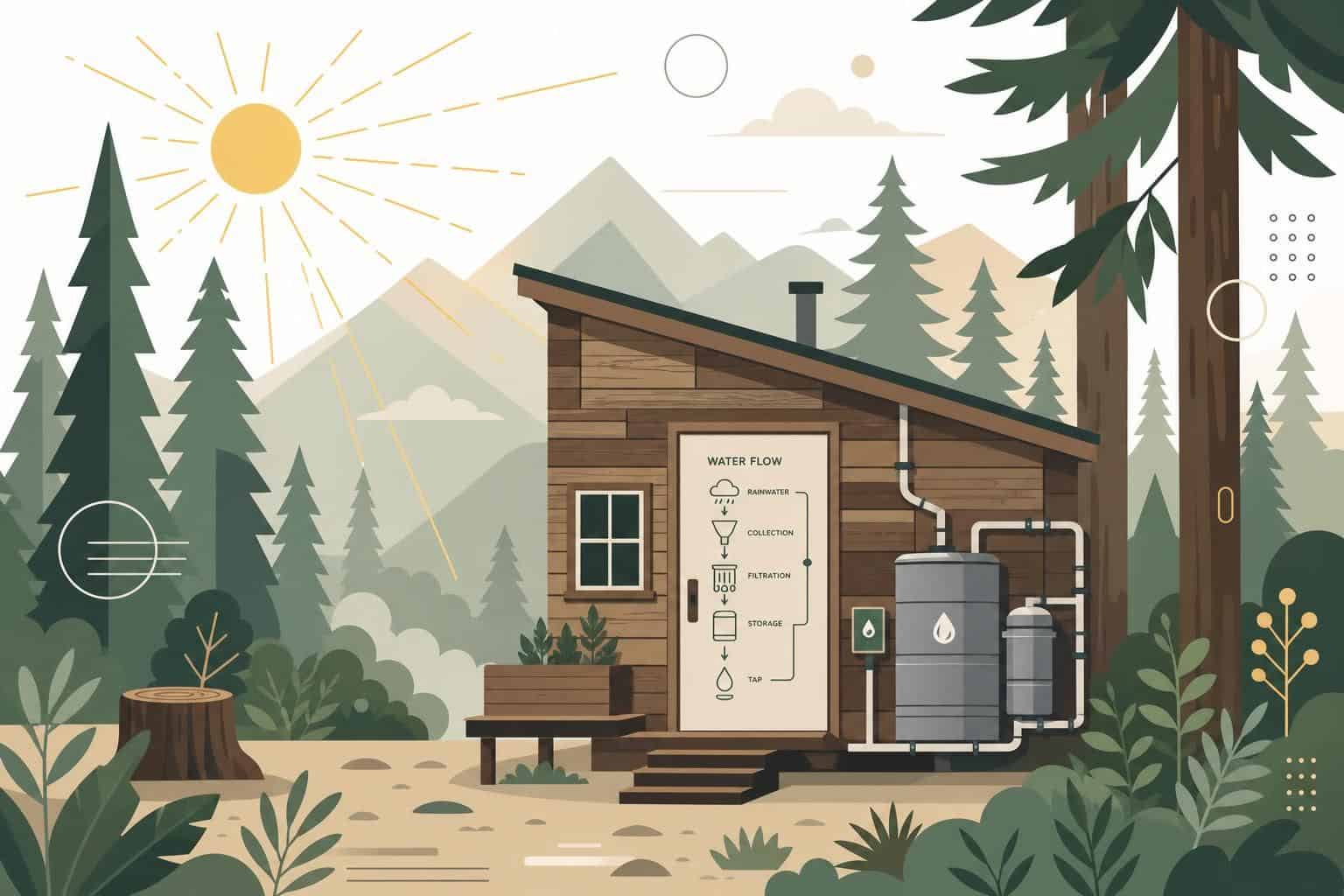
Greywater systems offer a practical answer to one of the more persistent questions in off-grid water management: what do you do with wastewater when there is no municipal hookup and no appetite for a full septic installation?
These setups capture water from sinks, showers, and laundry instead of letting it drain away unused. Off-grid households that adopt greywater recycling can reduce freshwater demand by 20 to 30 percent — a meaningful reduction that eases pressure on local aquifers and on-site water storage alike.
This guide covers how these systems work, which components do the heavy lifting, and what cabin owners need to know before installation. The mechanics are simpler than most people expect.
Key Takeaways
- Greywater systems capture wastewater from sinks, showers, and laundry, reducing freshwater demand by 20 to 30 percent for off-grid cabins.
- Three main components — filtration units, drainage setups, and pumps with storage tanks — work together to treat and distribute recycled greywater.
- Greywater recycling cuts potable water demand by 27 percent in single-family homes and 38 percent in multifamily residences, with most systems paying for themselves within five to ten years.
- Local regulations vary significantly by state; property owners must contact their local authority or public health department before installing any greywater system.
- Proper maintenance includes monthly filter inspections, automatic back-flushing where available, and using biodegradable soaps to keep systems functioning reliably.
What Is a Greywater System?
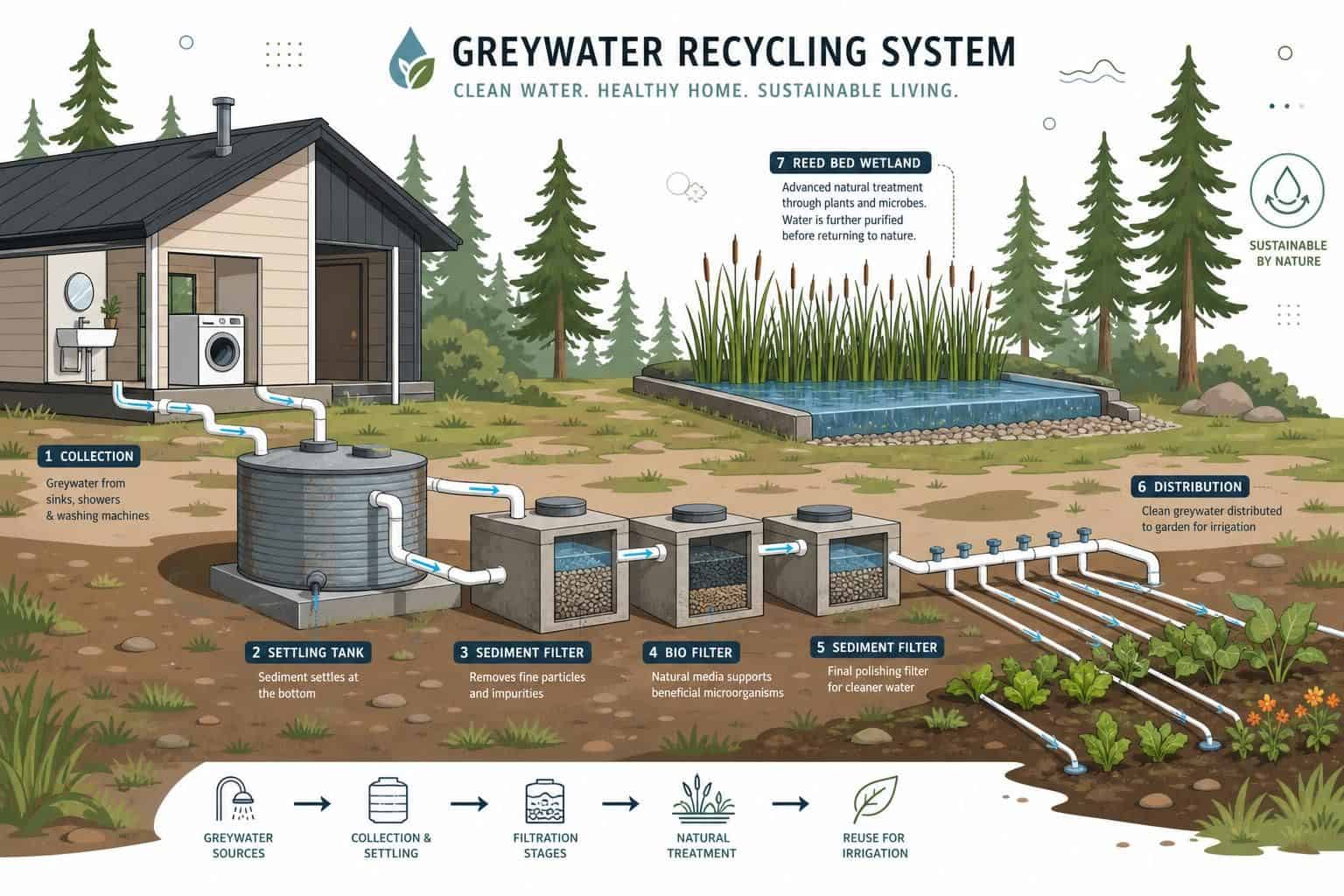
A greywater system captures wastewater from household activities — showers, sinks, laundry, and dishwashing. 1 This water differs from blackwater, which contains human waste from toilets and requires separate, more intensive treatment.
The average household generates approximately 50 to 80 gallons of greywater daily. 2 Rather than sending that volume to a sewer or septic tank, a greywater system diverts it for practical reuse — typically landscape irrigation, toilet flushing, or other non-potable applications.
The water typically contains non-toxic residuals such as dirt, hair, and grease. Filtration removes these before the water reaches its next use. Off-grid cabin owners benefit because greywater systems reduce dependence on both municipal supply and on-site septic infrastructure. According to EPA guidance on well water conservation, recycling greywater can cut well water demand by up to 25 percent, which matters considerably during drought conditions.
Proper management of what goes down the drain is essential. Residents must use biodegradable soaps and avoid harsh chemicals to keep greywater suitable for reuse.
Branched drain systems and constructed wetlands allow water to move through multiple filtration stages before reaching storage or irrigation zones. French drains and reed beds provide natural treatment that works well in remote locations with limited infrastructure.
This approach aligns with permaculture principles and sustainable water management practices that prioritize resource conservation over single-use disposal.
Key Components of an Off-Grid Greywater System
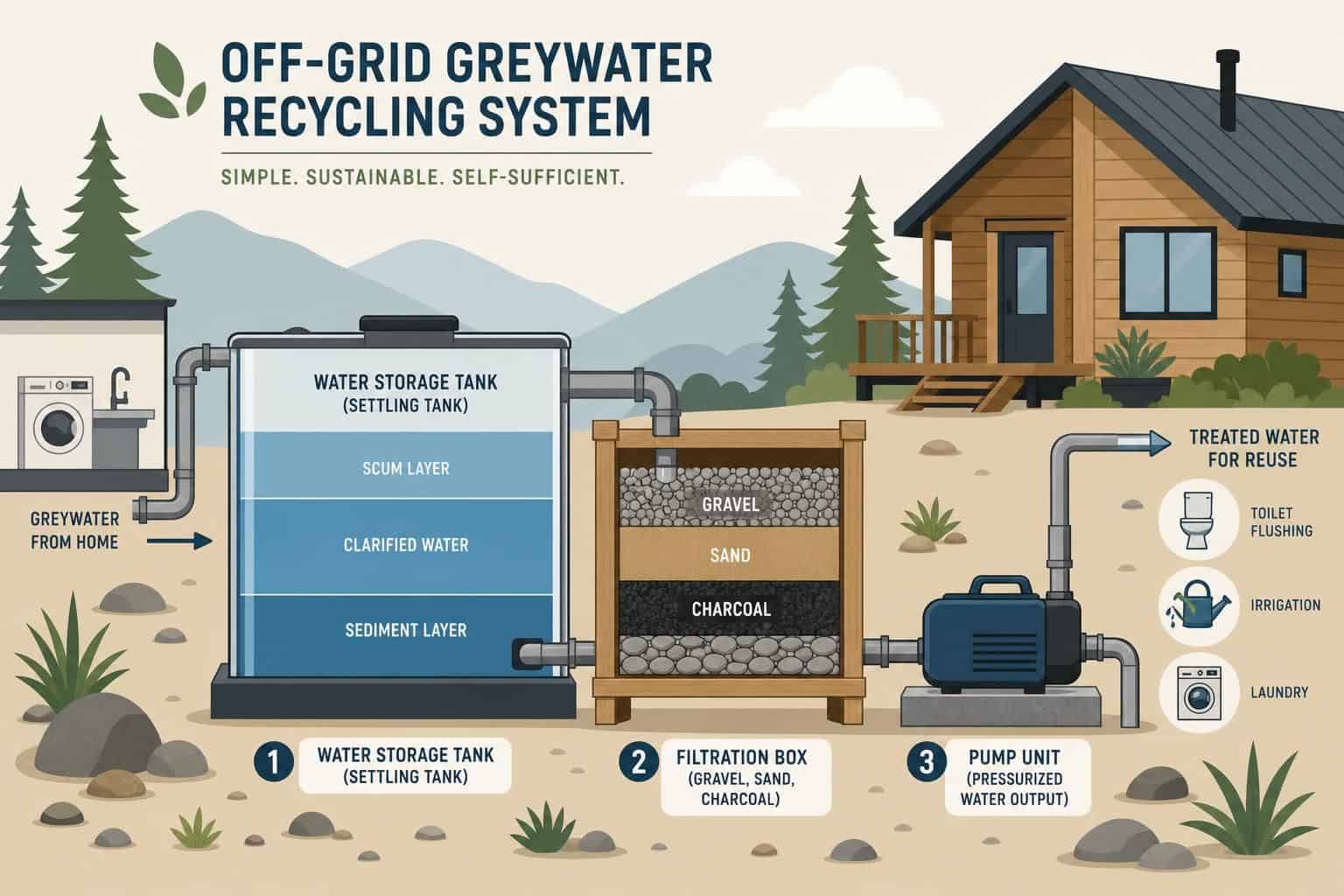
Off-grid cabins need three main working parts to handle greywater effectively. These components work together to filter water, store it safely, and move it where it needs to go.
Filtration Units
Filtration units form the backbone of any off-grid greywater system. 3 These devices catch food particles, hair, and soap residue before they clog pipes or damage downstream components.
Cabin owners can choose from several filtration options depending on their needs and budget:
- Filter bags offer the simplest approach for basic water treatment
- Inline water filters work well for smaller cabins with minimal water usage
- Settling tanks let solids drop to the bottom while cleaner water flows through
- Constructed wetlands and reed beds provide natural filtration using plants and soil drainage 1
More advanced units handle complex filtration needs at higher price points — systems such as the Aqua2use GWDD and Aqua2use Pro are typically listed in the $599 to $2,795 range, though prices vary by retailer and availability. Filter boxes using wood chips, rocks, or paper filters deliver cost-effective results for those on tighter budgets.
Automatic filter back-flushing systems reduce manual labor by reversing water flow through the filter to clear trapped debris. Regular inspection remains necessary regardless — dirty filters slow water flow and strain pumps, shortening equipment lifespan. Cabin residents should inspect filters monthly during heavy-use seasons.
Drainage Setup
Solid PVC pipe carries water from cabin fixtures into a network of perforated pipes buried underground. This transition marks the shift from collection to dispersal.
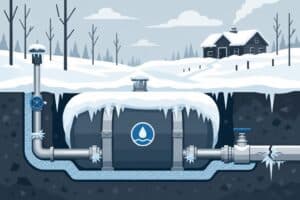
The buried perforated pipes direct greywater into French drains or greywater gardens, where soil and plants filter the liquid naturally. 2 Ditches must reach below the frost line to prevent freezing and system failure during winter months.
Gravel trenches or pits should measure at least 3 feet deep, with a 1-foot layer of crushed stones at the bottom to support proper drainage. Drain lines should extend at least 30 feet from the cabin to protect the structure’s foundation and reduce moisture risk.
Site selection is critical. The drainage area should sit downhill from the property, away from water bodies, and at least one foot deep. This placement prevents contaminated water from flowing back toward living spaces or reaching groundwater sources.
A basic French drain with filter typically costs between $300 and $600. 4 Professional French drain materials generally run $10 to $65 per linear foot based on national pricing data, allowing property owners who handle their own excavation to install a standard 50-foot system for under $500. Backhoe rental for trenching adds $200 to $400 where manual digging is not practical.
Pumps and Storage Tanks
Pumps move greywater from collection points to treatment areas or holding vessels. 4 Without adequate pressure or elevation, gravity alone cannot always reach the intended destination.
Two main pump configurations are common: gravity-fed systems with lower upfront costs, and powered pumps that offer more flexibility on flat or uphill sites. The Aqua2use GWDD, for example, is available in both gravity-fed and pump-assisted versions — the pump-assisted model is generally required where the yard does not slope away from the cabin. Prices vary, so checking current retailer listings is advisable.
Surge tanks hold treated or temporarily stored greywater and manage volume spikes during heavy use. Sizing matters: a tank that is too small fails to handle peak demand, while one that is oversized wastes valuable space. Off-grid households should calculate daily water usage patterns before specifying tank capacity.
Storage tanks also create buffer capacity between water generation and water use. A cabin where residents shower in the morning and run laundry at night generates uneven flow patterns. Tanks absorb those fluctuations without stressing the system.
Positioning tanks on slightly elevated ground allows gravity to assist downstream distribution to gardens or permaculture zones. This reduces pump dependency and simplifies long-term maintenance.
Benefits of Greywater Systems for Off-Grid Cabins
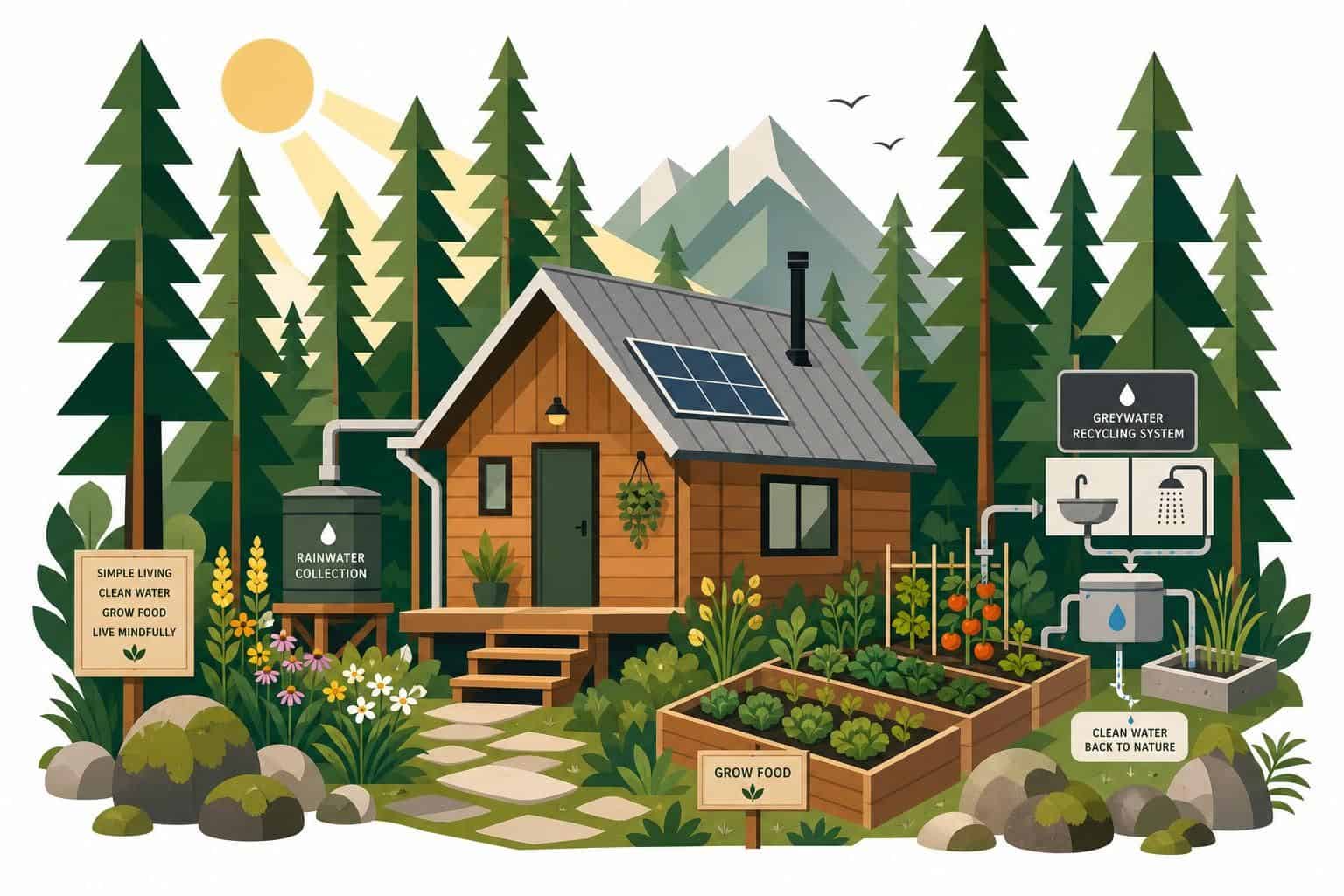
Greywater systems reduce water waste, lower operating costs, and protect the land around a property. For remote cabin owners without access to municipal infrastructure, these are practical advantages rather than aspirational ones.
Sustainable Water Reuse
Recycling water from showers, laundry, and dishwashing cuts consumption at the source. A greywater system captures water that would otherwise drain away and redirects it toward irrigation and toilet flushing — after filtering out soap, hair, and debris.
Permaculture guides to reed beds show how natural filtration through plants can also recharge aquifers, keeping water resources in circulation rather than depleting them. Off-grid residents who pair greywater systems with rainwater catchment setups can maximize garden water availability year-round. 4
Composting toilets handle human waste separately, which means a greywater system focuses solely on shower and sink water. This separation makes the entire setup more efficient and easier to manage safely.
Decentralized systems reduce strain on centralized wastewater infrastructure — which remote locations cannot access anyway. According to water conservation tracking by Greeninch, a single household can capture and reuse up to 40,000 gallons of water per year by diverting greywater from laundry and showers alone. Tiny house residents and yurt dwellers find greywater solutions particularly practical given their compact footprints.
Reduced Environmental Impact
Greywater systems cut pollution at its source. Property owners who treat greywater responsibly prevent untreated waste from reaching local waterways and underground aquifers.
The Water Wise Group notes that adoption of greywater systems significantly decreases wastewater discharge from off-grid properties. Researchers including Art Ludwig and Sam Wilhoit have documented how greywater treatment reduces overall consumption and environmental strain. 4 Fewer contaminants reach sensitive ecosystems. Soil and groundwater stay cleaner.
These systems work like a scaled-down version of nature’s own filtration process — the same principles that permaculture reed beds apply in larger agricultural settings. Cabin dwellers who reuse water for irrigation and landscaping reduce their environmental footprint in a measurable, practical way rather than a theoretical one.
Cost-Efficient Water Management
Onsite greywater recycling cuts potable water demand by 27 percent in single-family homes and 38 percent in multifamily residences. 5 For off-grid households paying to haul water or running a well pump on solar, that reduction has a direct financial value.
Installation costs range from $6,000 to $13,000 for complete systems, though DIY French drain setups with basic filters typically cost $300 to $600. Annual maintenance runs between $200 and $900, with most systems paying for themselves within five to ten years.
| DIY French Drain Cost Breakdown | Amount |
|---|---|
| Perforated PVC pipe | $75 |
| One cubic yard crushed stone | $85 |
| Filter fabric | $25 |
| One-day backhoe rental | $280 |
| Total | $465 |
Recycled greywater can replace around 50 percent of irrigation water in single-family homes, turning landscape watering from a recurring cost into a closed-loop process. 3 Commercial options such as the Aqua2use GWDD are typically listed in the $599 to $950 range, with the Aqua2use Pro running higher for those seeking advanced filtration. Prices vary by retailer.
How to Choose the Right Greywater System for Your Cabin
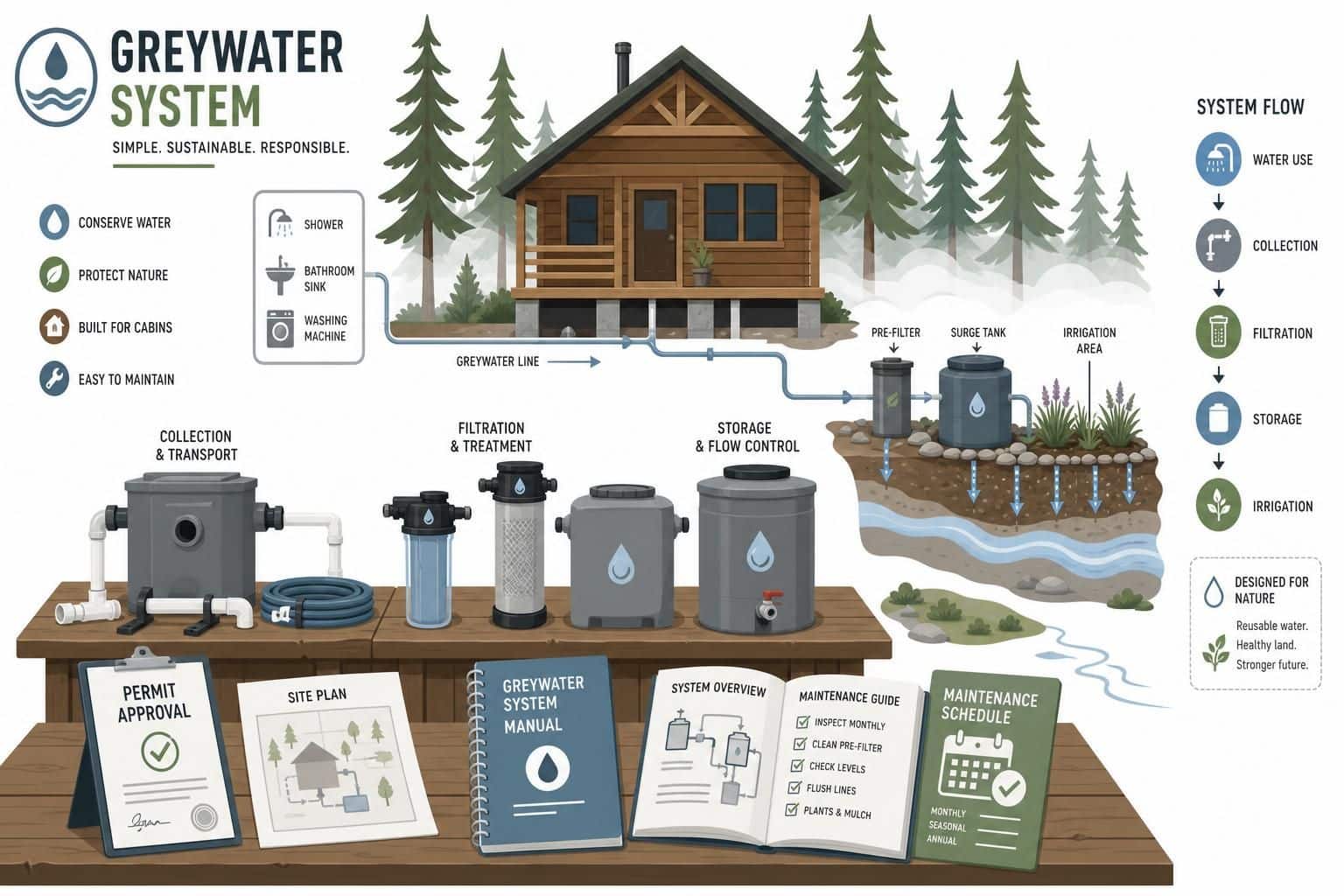
Selecting the right greywater system requires matching the property’s water flow to the system’s capacity, understanding what local authorities permit, and honestly assessing how much maintenance the owner can realistically handle.
Property Size and Water Usage
Cabin owners must calculate actual water consumption before specifying a greywater system. The average American uses around 82 gallons of water daily, though off-grid cabin dwellers often consume considerably less. 6
A 300-square-foot cabin typically generates 30 to 50 gallons of greywater per day from sinks, showers, and washing machines — not including toilet waste, which remains separate. Multiplying expected daily usage by 1.25 provides a reasonable safety buffer and prevents system overload during peak periods.
A family of four in a small cabin might generate 120 to 200 gallons of greywater daily. The EPA notes that the average American household loses roughly 180 gallons of water per week to plumbing leaks alone — a reminder that baseline plumbing maintenance is critical before adding any greywater system on top.
Property dimensions directly influence storage tank capacity and filtration unit selection. Smaller properties need compact equipment. A cabin on five acres can accommodate larger storage tanks and more extensive drain line networks extending at least 30 feet from the home. Sloped terrain simplifies gravity-fed systems; flat land may require additional pumps.
Outdoor irrigation needs vary by climate, soil type, and vegetation. Desert properties with sparse landscaping require less greywater volume than humid regions with extensive gardens. Assessing topography before specifying the system saves significant rework later.
Local Regulations and Permits
Greywater regulations vary significantly across the United States, making it essential to check local rules before installing any system. 7 California implemented greywater reuse guidelines in the early 1990s that continue to shape how residents approach water recycling, with Title 24 building code updates pushing more rural builds toward greywater integration as a standard feature.
Arizona allows greywater systems under 400 gallons per day without permits or inspections. Many states treat greywater like blackwater, which complicates permitting considerably. Florida permits greywater for toilet flushing but prohibits outdoor use. Georgia allows carrying greywater in buckets but bans using it in irrigation systems. These contradictions make it clear that one state’s rules do not transfer to another.
Property owners must contact their local city hall or public health department to understand building codes and zoning laws specific to their area. 8 Greywater Action provides useful resources on legal guidelines and water rights for landowners navigating this landscape. Obtaining proper permits protects both the property and surrounding groundwater, and avoids costly fines or forced system removal later.
Maintenance Requirements
Cabin owners who install greywater systems should plan for regular upkeep. The pump, filters, irrigation lines, and diversion valve all need attention throughout the year.
Most systems require less intensive maintenance than a residential swimming pool, making them manageable for residents committed to self-reliance. 9 Inspecting the dripline system for leaks and clogged drippers should happen monthly during growing seasons.
Common avoidable problems include using non-biodegradable detergent — which causes biofilm buildup within a few months — and skipping lint traps on washing machine lines, which leads to dripline clogs. Installing drain lines too close to the foundation is another frequent error that creates moisture issues over time. Choosing the right products and following installation guidelines from the outset prevents most of these problems.
Automatic filter back-flushing systems reduce manual cleaning. Wearing gloves and washing hands after any maintenance work is a basic but important precaution. Soil rest periods between irrigation cycles minimize negative impacts on the surrounding landscape.
Selecting greywater-compatible, biodegradable detergents protects both the system and the soil. An experienced greywater installer should handle the initial system design to avoid costly mistakes. Annual professional inspections catch problems before they become expensive repairs.
Conclusion
Off-grid greywater systems give cabin owners a practical way to manage water resources without a municipal connection or a full septic installation.
These setups capture water from sinks, showers, and laundry to irrigate gardens and reduce freshwater demand by 20 to 30 percent. Property owners who install them protect local aquifers while cutting water costs over the long term.
Check local building codes, test soil permeability, and switch to biodegradable soaps before installation. Done right, a greywater system is one of the more straightforward steps toward genuine water independence at a remote property.
FAQs
1. What is a greywater system for off-grid cabins?
A greywater system collects wastewater from sinks, showers, and washing machines at a cabin. It filters and reuses this water for irrigation or toilet flushing instead of letting it go to waste. Greywater typically makes up 50 to 80 percent of residential wastewater, making it a valuable resource for off grid living.
2. How does an off grid greywater system work?
Water flows from the cabin’s drains into a collection tank, gets filtered to remove soap and debris, then moves to the garden or landscape. Many off grid households choose gravity-fed systems like Laundry to Landscape kits because they require no pumps or electricity.
3. Can I install a greywater system myself at my cabin?
Most basic greywater systems are DIY-friendly for anyone comfortable with basic plumbing. A simple setup typically costs between $500 and $2,000 in materials, depending on the components chosen.
4. What are the benefits of using greywater at an off grid cabin?
Cabin owners can cut water usage by 30 to 50 percent — which matters considerably when hauling water or relying on a well. Plants get regular watering without drawing from fresh water supplies, and nutrients stay out of septic systems where they can cause problems.
5. What is the difference between grey water and black water?
Grey water comes from sinks, showers, bathroom sinks, and washing machines — it contains soap and light organic matter but no sewage. Black water comes from toilets and carries pathogens that require a septic tank or composting toilet system to handle safely. Keeping the two waste streams separate is the foundation of any off grid greywater setup.
6. Are grey water disposal systems legal for off grid cabins?
Legality varies significantly by state, province, and local authority. Many jurisdictions now permit simple grey water disposal systems — particularly Laundry to Landscape diversion — but require permits for anything more complex. Always check local regulations before installing a greywater system, especially if a reed bed or subsurface irrigation drain is involved.
References
- ^https://www.researchgate.net/publication/371187397_Greywater_treatment_technologies_a_comprehensive_review
- ^https://pmc.ncbi.nlm.nih.gov/articles/PMC6133124/
- ^https://pmc.ncbi.nlm.nih.gov/articles/PMC10188637/
- ^https://www.researchgate.net/publication/389391263_Off-grid_rainwater_and_greywater_treatment_and_reuse_on_household_level_conceptual_approach_and_pilot_operation_at_the_KREIS-Haus_demonstration_case_Switzerland
- ^https://innovation.luskin.ucla.edu/wp-content/uploads/2019/03/Cost-Benefit_Analysis_of_Onsite_Residential_Graywater_Recycling.pdf
- ^https://elemental.green/complete-beginner-guide-to-greywater-systems/
- ^https://greywateraction.org/greywater-codes-and-policy/
- ^https://myrainplan.com/blog/greywater-system/
- ^https://gwig.org/greywater-installation-and-maintenance/
Off Grid Destinations note: For off-grid stays, cabins, and remote properties, the best choice is usually the one that fits the real site conditions: guest use, owner maintenance, access, weather, storage, backup systems, and long-term reliability. Bigger or more expensive is not always better. The right setup is the one that works consistently without creating unnecessary upkeep.