How to Keep an Off Grid Water System From Freezing in Winter
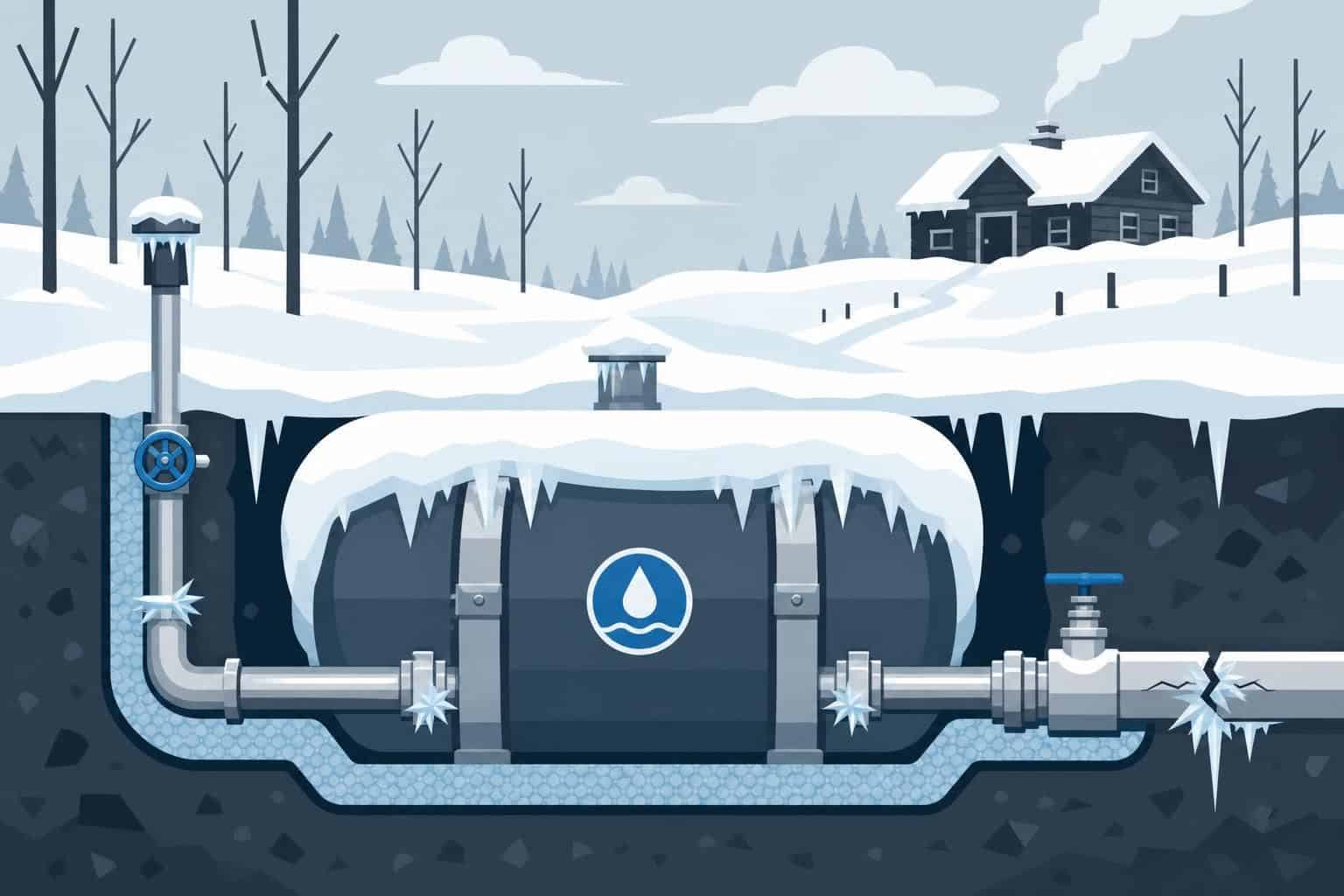
Off grid water system freezing is one of the most disruptive problems a property owner can face in winter. Frozen tanks crack. Pipes burst. Repairs cost thousands. The good news is that straightforward prevention steps can keep water flowing reliably when temperatures drop below freezing. 3
This guide covers practical strategies for protecting tanks, pipes, and lines throughout the winter months — without breaking the bank. 1 2
Key Takeaways
- Combining insulation, heat sources, and proper tank burial below the frost line prevents expensive freeze damage in off-grid water systems.
- Large plastic tanks with round shapes and complete insulation provide thermal mass that resists freezing better than small metal containers.
- Keeping water moving through circulation and conducting weekly maintenance checks during winter prevents stagnation and ice formation in pipes.
- Remote cabins, eco homes, and intentional communities all require winterization planning to maintain water access through harsh seasons without costly emergency repairs.
Key Strategies to Prevent Off Grid Water System Freezing
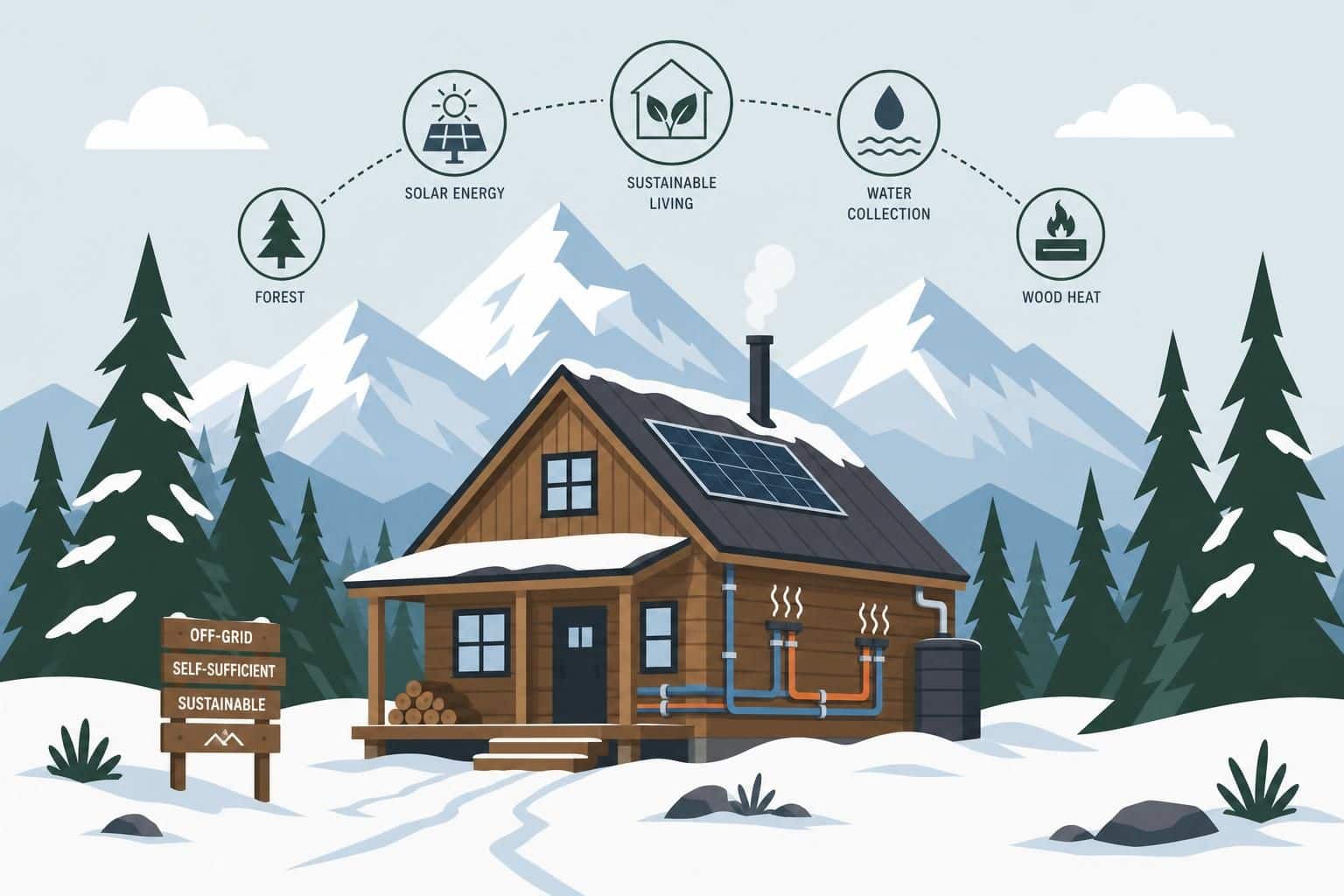
Off-grid water systems face their toughest conditions when temperatures drop below freezing. Acting early with proven methods is what keeps water flowing all winter.
Insulate pipes, tanks, and exposed lines
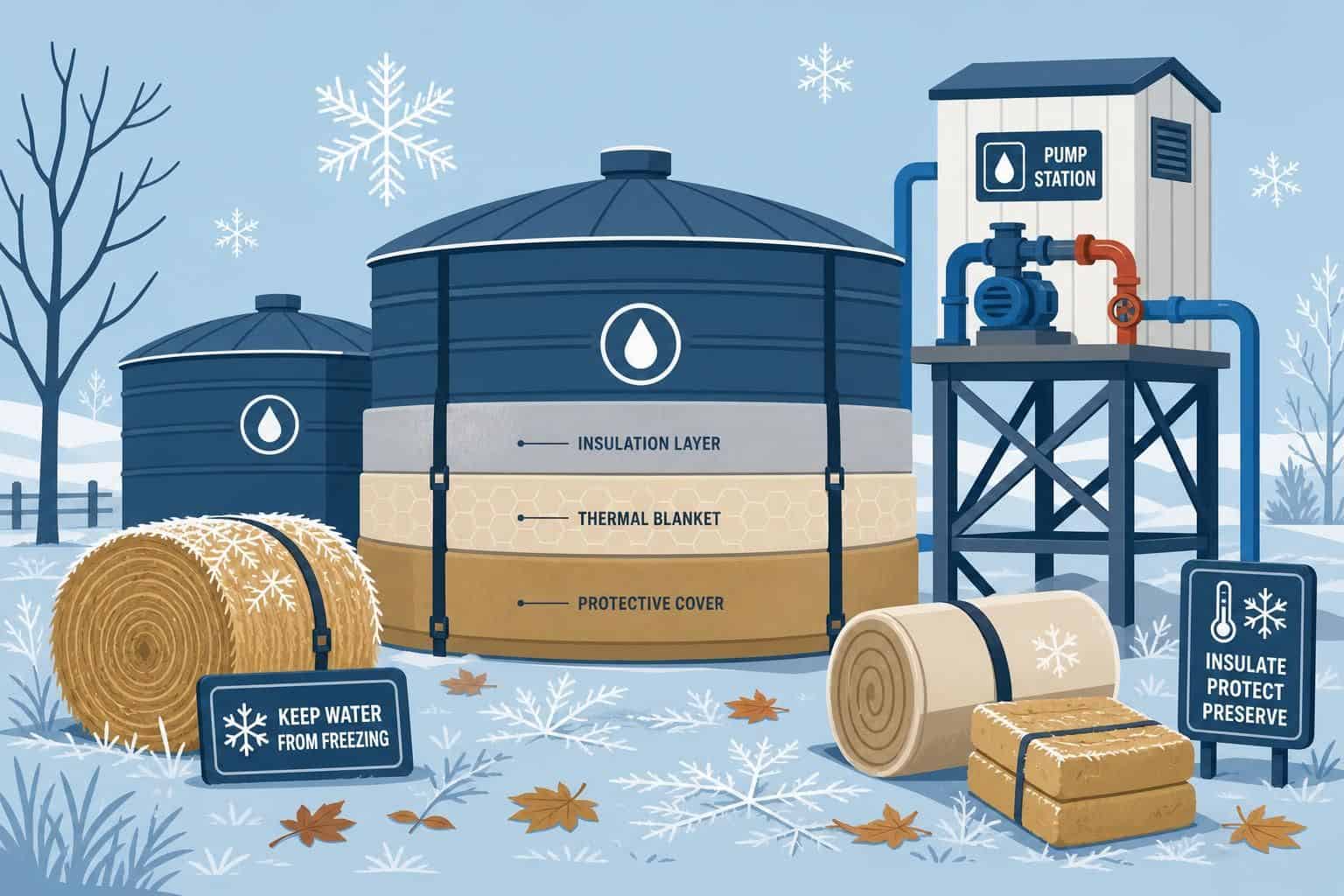
Insulation is the first line of defense against freezing temperatures. Homesteaders and eco-community residents should prioritise this step before winter arrives.
- Wrap water tanks with commercial insulation jackets designed to maximise heat retention during cold months.
- Apply closed-cell foam directly to exposed pipes, ensuring complete coverage on all sides.
- Cover holding tanks with hay bales or blankets on all sides except the bottom, allowing rising heat to circulate naturally.
- Install heat tape along vulnerable pipe sections, cut to exact length and secured with waterproof fasteners. 1
- Inspect insulation regularly throughout winter, checking for gaps where heat escapes.
- Layer foam boards around tank exteriors to create an air-tight thermal barrier.
Commercial insulation jackets deliver measurable protection during extended cold periods. Insulated tanks consistently outperform unwrapped ones — surface ice can form on unprotected tanks within 48 hours of sustained freezing temperatures, while well-insulated tanks can maintain liquid conditions for significantly longer under the same conditions.
| Tank Setup | Ice Formation Timeline | Internal Freeze Risk |
|---|---|---|
| Insulated tanks | Significantly delayed or no ice formation | Low to zero internal freeze |
| Unwrapped tanks | Surface ice within 48 hours | Partial internal freeze within days |
Positioning tanks below the frost line combines with insulation layers for maximum protection. Sealing openings around pipes with foam sealant eliminates air gaps where freezing typically begins. 2
Combining multiple insulation methods on critical components creates redundant thermal protection in extreme cold.
Use heat sources like heat tape, blankets, or small heaters
Strategic heat sources protect water systems from costly damage and service interruptions. Heat tape designed for pipes maintains consistent warmth along exposed or above-ground piping, preventing ice formation without complex installation.
Submersible heaters placed directly inside small tanks offer effective protection for off-grid water storage. These electrical heating elements work best in well-insulated containers to conserve power.
- Blanket heaters surround tanks and maintain warmth with minimal energy usage — ideal for remote properties with limited battery capacity.
- Heat tracing runs a heating cable along the tank’s exterior, providing consistent warmth throughout cold seasons.
- Small heaters positioned inside a well-insulated pump house protect both pumps and plumbing simultaneously.
- Heated hoses for RV or temporary systems prevent pipe and hose freezing in extreme conditions.
Electrical heating elements require careful energy planning in off-grid setups. Power sources may be limited, so property owners should calculate battery drain before selecting heat tape or submersible heater options.
Combining different heat sources generally produces better results than relying on a single method. For solar-and-battery-powered properties, pairing heat tape with lightweight blanket heaters tends to offer reliable freeze protection without excessive overnight battery draw — typically in the range of 3 to 4 Ah per night depending on setup size and insulation quality.
| Heat Setup | Freeze Risk | Approximate Battery Draw |
|---|---|---|
| Heat tape only | Moderate — vulnerable points may still freeze | Varies |
| Heat tape + blanket heaters | Low — layered protection | ~3–4 Ah per night |
| Blanket heaters only | Moderate — gaps possible in extreme cold | Varies |
Layered heating strategies consistently outperform single-source approaches in real cold-weather conditions.
Bury pipes and tanks below the frost line
Burying water pipes and storage tanks below the frost line is one of the most reliable long-term defences against freezing. 3 The earth itself acts as an insulator, maintaining temperatures above freezing even during sustained cold spells.
Frost line depths vary significantly across regions. According to NOAA and US building codes, southern states like South Carolina may require less than 12 inches of burial depth, while northern states like Minnesota and Maine require 60 to 80 inches or more. Property owners should confirm local frost line requirements before installation.
Soil temperature stays relatively stable below the surface, protecting main water lines and reserve tanks from ice damage year-round. Well lines should include an elbow below the frost line to prevent freezing at vulnerable connection points.
The initial excavation costs more upfront, but the long-term reliability makes it worthwhile for anyone serious about off-grid water infrastructure. Completely burying storage tanks remains the gold standard for extremely cold climates. Where full burial depth isn’t achievable, supplementing with heat tape or insulation blankets can compensate. 4
Seasonal blowout of lines with compressed air protects systems that sit dormant during warmer months. Proper burial depth during the initial installation phase eliminates most maintenance headaches and emergency repairs down the line.
Practical Tips for Cold Weather Adaptation
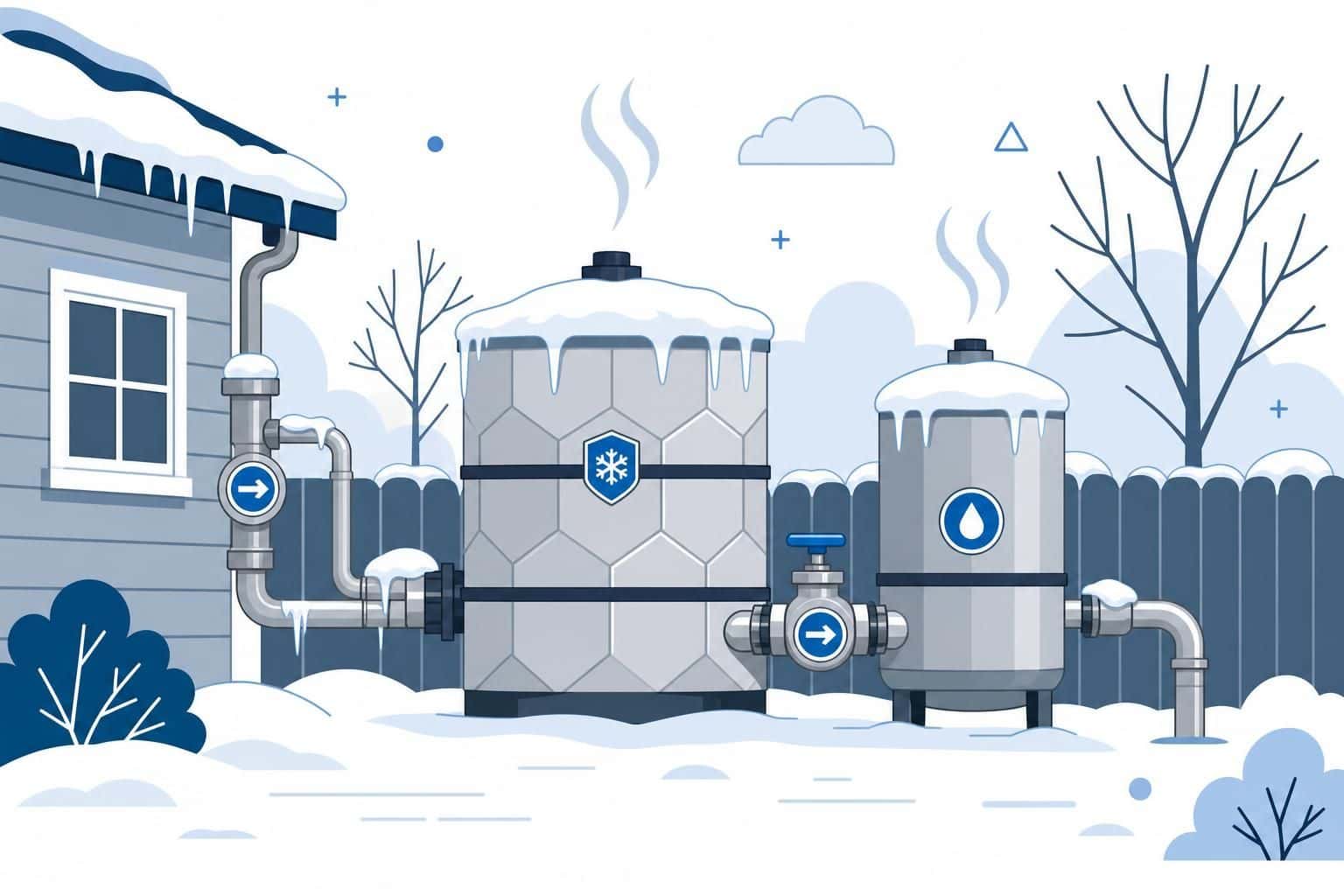
Water movement prevents ice from forming inside pipes and tanks during harsh winters. Thermal mass from large, insulated storage containers keeps systems running when temperatures drop. These practical methods work in real-world conditions.
Keep water moving to prevent stagnation
Moving water resists freezing far better than still water sitting idle. Continuous or intermittent flow creates a natural defence against ice formation throughout the entire system.
A pencil-lead-thick drip from a faucet consumes roughly 3 gallons of water per hour — around 72 gallons per day. An off-grid well pump with a standard pressure tank typically cycles on for just a few minutes every few hours to sustain this kind of flow. Even a slow pump cycle can dramatically reduce freeze risk across the entire network.
Gravity-fed systems with elevated tanks facilitate drainage and movement without extra energy costs. Intermittent pump schedules offer practical freeze protection without excessive energy consumption. Short, scheduled circulations — such as a 5-minute cycle every 3 hours — can meaningfully reduce pipe ice formation events while adding only modest energy use compared to continuous pumping.
Installing a small submersible pump positioned one foot below the water surface helps prevent ice from forming on the top layer where cold air hits hardest. 5
Property owners can use simple timers to automate pump cycles, balancing freeze protection with realistic power budgets for battery-based systems. Flow monitoring during winter months helps catch stagnation before it becomes a costly problem.
Several practical methods maintain circulation:
- Intermittent pumping cycles — even brief bursts every few hours — keep the system active without wasting resources.
- Enclosed structures and covered tanks reduce evaporation while supporting continuous water movement.
- Strategic use of warm water at critical points reduces ice accumulation where it matters most.
The principle applies across all off-grid applications, from remote cabins to eco homes and intentional communities. Stagnant water crystallises; moving water survives.
Use large, insulated tanks for thermal mass
Large tanks act like thermal batteries for off-grid water systems. A bigger tank requires significantly more energy to reach freezing temperatures compared to a small container — a straightforward physics advantage that pays off through harsh winters. 6
Round tanks perform better than rectangular ones because they have less surface area, reducing heat loss. Plastic tanks outperform metal options in cold climates because they flex and expand under freezing pressure rather than crack.
According to engineering data from the Plastics Pipe Institute and leading manufacturers, cross-linked polyethylene (PEX) pipe is significantly superior to traditional PVC in cold climates. Its flexible structure allows it to expand as ice forms, safely withstanding high internal pressures. Rigid PVC becomes brittle and can shatter under the same conditions.
Keeping tanks completely full minimises air space inside, which helps prevent cold air from cooling the water down faster.
Small metal tanks in exposed or uninsulated locations carry real risk. Repeated freeze-thaw cycles can cause stress fractures at seam welds — a common failure point in uninsulated metal tanks exposed to sustained sub-zero temperatures. Replacing a failed metal tank with a larger plastic insulated alternative typically eliminates repeat failures in subsequent winters.
| Setup | Result | Temperature Exposure |
|---|---|---|
| Small metal tank (uninsulated) | Stress fractures at seam welds after repeated freeze cycles | Sustained sub-zero lows |
| Large plastic insulated tank (replacement) | No failures in subsequent winters | Same conditions |
Tank level monitors help residents maintain optimal water levels and catch problems before partial freezing occurs. Closed-cell foam insulation and insulated wraps dramatically improve how long water stays above freezing. These approaches also support the broader transition to renewable energy by strengthening off-grid water system resilience. 7
The combination of large volume, round shape, plastic construction, and proper insulation creates a strong defence against freezing in vulnerable installations.
Off-Grid Applications
Remote cabins, eco homes, and intentional communities
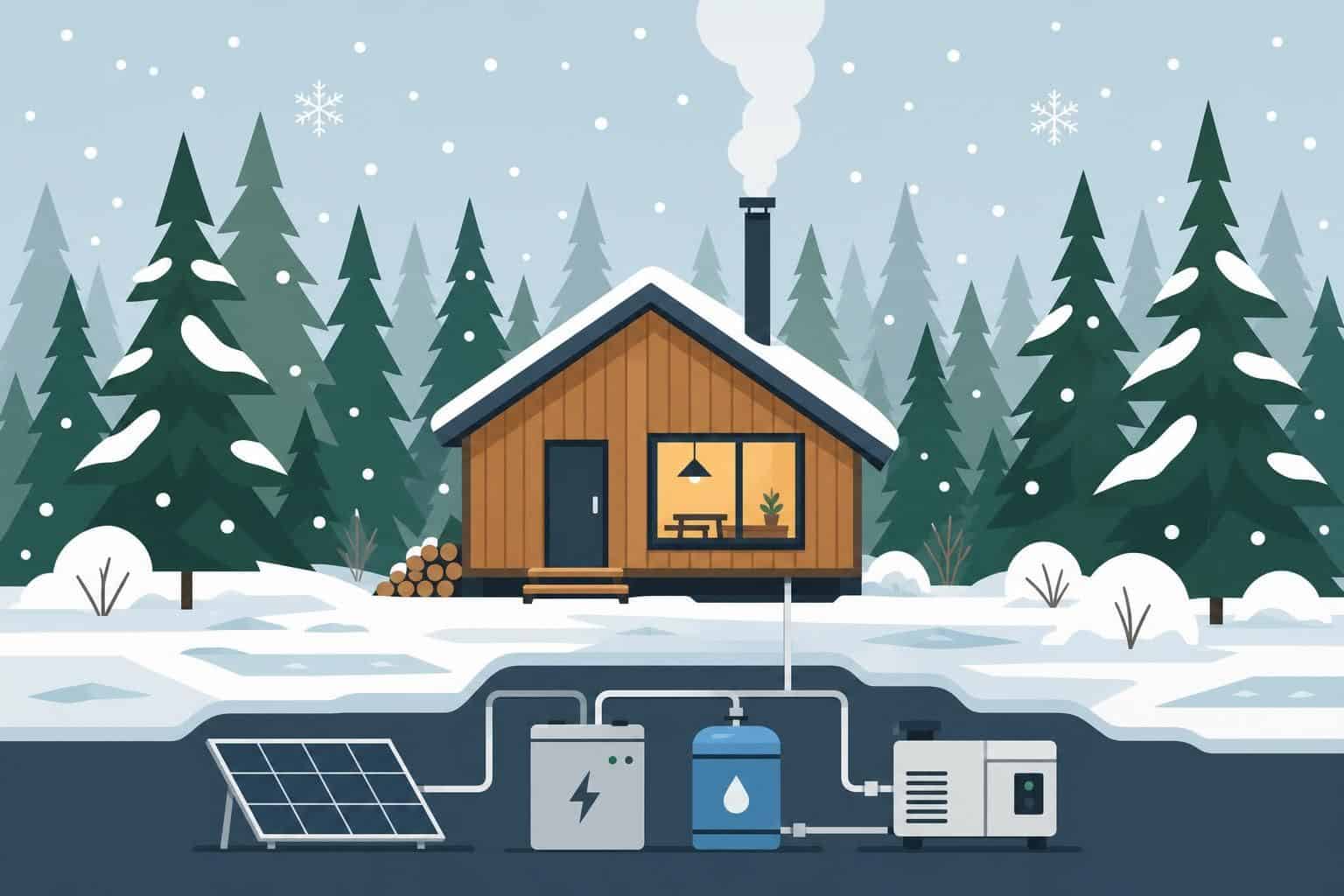
Remote cabins in mountain terrain face brutal winters. Eco homes designed for sustainable living must handle frozen pipes and blocked water lines. Intentional communities built on shared land depend on reliable water systems year-round — and these properties cannot call a city plumber when temperatures drop below freezing.
Winterising water systems is non-negotiable for anyone committed to off-grid life. Without flowing water, daily routines collapse fast. A frozen water heater creates expensive repairs and dangerous downtime.
Heat trace cables wrap around vulnerable pipes and deliver consistent warmth. Insulated tanks store water like thermal batteries, holding heat through cold nights. Burying pipes below the frost line protects them from surface temperature swings.
Modern design frameworks increasingly integrate Passive House insulation standards with renewable energy systems, showing how thoughtful planning strengthens off-grid water infrastructure from the ground up.
Homesteaders and eco-conscious residents who combine multiple prevention methods — insulation, heat sources, burial depth, and circulation — maintain reliable water access through the harshest seasons.
Supporting hosts and owners managing winterised off-grid properties
Hosts running eco homes, remote cabins, and intentional communities cannot afford frozen water systems that halt operations. A solid winterisation plan protects both the investment and the guest experience.
Owners should conduct maintenance checks at least once weekly during cold months. This routine catches leaks or freezing issues early, before they become costly. 8
Practical tools make winterisation manageable:
- Bringing water filters indoors is critical — freezing damages ceramic filter elements found in systems like gravity filters and reverse osmosis units.
- RV system adaptations work well for cabin applications, including heated hoses, skirting for heat retention, and open cabinet doors that expose pipes to interior warmth.
- Positioning tanks in direct sunlight and using natural insulation like hay or straw retains heat effectively in milder cold climates.
For seasonal storage situations, food-grade propylene glycol-based RV antifreeze — rated for very low temperatures — is appropriate for winterising pipes and tanks. Based on US Food and Drug Administration (FDA) safety classifications, propylene glycol is classified as “Generally Recognised as Safe” (GRAS) for use in potable water lines. Ethylene glycol, used in automotive antifreeze, must never be used in drinking water systems.
Flexible PEX pipe outperforms rigid PVC in cold climates since it resists cracking when freezing occurs. Pipe freeze kits are also worth keeping on hand for properties that need repairs without draining entire systems.
Off-grid property operators who prepare water systems in advance gain reliable service — and peace of mind — through harsh winters.
For more off-grid living guidance, visit the Off Grid Destinations Journal
The Off Grid Destinations Journal covers practical winterisation strategies for remote cabins, homesteads, and intentional communities — including guidance on protecting water systems, maintaining filtration setups, and managing off-grid properties through cold seasons.
Topics include stock tank heaters, floating insulation techniques, strategic tank placement, windbreak design, and early intervention approaches that prevent costly system failures. Readers also find community-contributed tips from people managing water systems across a range of climates.
Whether managing a personal homestead or running an off-grid hosting property, the Journal is a practical resource for keeping water flowing all season long.
Keeping Your Off-Grid Water System Winter-Ready
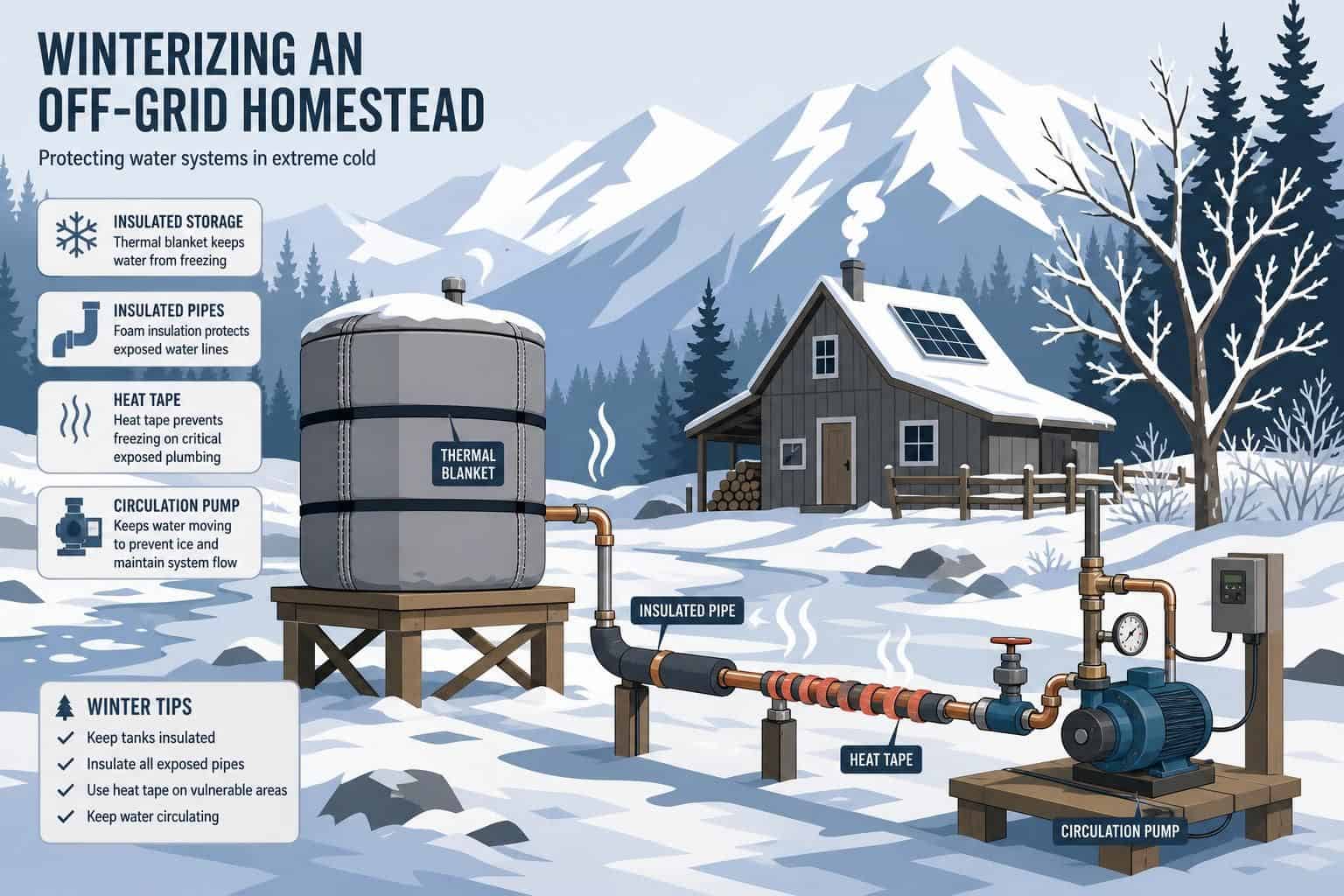
Protecting an off-grid water system from freezing comes down to layering the right strategies before winter arrives. Insulation, heat sources, proper burial depth, and keeping water moving all work together — no single method is enough on its own.
Larger plastic tanks, regular maintenance checks, and thoughtful system design make the difference between a reliable winter water supply and an expensive emergency repair. Remote cabins, eco homes, and intentional communities that apply these approaches consistently tend to come through even the coldest months without major disruption.
For more practical guidance, explore the Off Grid Destinations Journal.
FAQs
1. What’s the biggest threat to off-grid water systems in winter?
Freezing temperatures below 32°F can turn water lines into solid ice within hours, causing burst pipes and damaged filtration equipment. The key is keeping water moving and well insulated. Water softeners, iron filters, and ceramic filters all need protection from freezing conditions.
2. How do I protect my water filtration setup during cold snaps?
Heat tape rated for outdoor use and foam pipe insulation around filters and water softeners are essential for winter protection. Many off-grid homesteaders run systems year-round using this combination, particularly when equipment is housed in insulated enclosures.
3. Should I drain my system when temperatures drop?
Draining is recommended if the system will be unused for more than 48 hours in freezing conditions. This prevents ice damage to ceramic filters, water lines, and pump components.
4. What emergency supplies should I keep on hand?
Backup water containers holding at least 14 gallons per person are a sensible precaution. Basic plumbing repair tools, pipe insulation tape, and propylene glycol-based RV antifreeze are also worth keeping accessible during winter months.
5. Can I use my system year-round in freezing climates?
Systems can run year-round if water softeners and filters are installed in spaces maintained above 40°F, or in insulated enclosures with supplemental heat sources. Many off-grid homesteaders successfully operate filtration systems throughout the winter months with proper winterisation in place.
6. How do I keep an off-grid water tank from freezing?
Keeping an off-grid water tank from freezing typically involves a combination of insulation, thermal mass, and a low-wattage heater or heat tape where grid power or a small solar setup allows. Above-ground water tanks are most vulnerable — burying storage below the frost line is the most reliable long-term solution where site conditions permit. Larger holding tanks also retain heat longer, giving more buffer during cold snaps.