Off Grid Composting Toilets: Types, Costs, and Realities
Traditional plumbing and septic systems don’t exist in most remote locations. Off-grid composting toilets solve this directly: they manage human waste through natural decomposition, without water, electricity, or chemicals.
Cabin owners, tiny home residents, RV travellers, and homesteaders all face the same question. Which system actually works for their specific situation? This guide covers the main types available, the real costs involved, and what daily use actually looks like.
Key Takeaways
- Off-grid composting toilets operate without water, electricity, or chemicals, separating liquid and solid waste to control odors and produce usable compost.
- Four main types exist: batch composting, continuous composting, urine-diverting, and incineration toilets, each suited to different household sizes and usage patterns.
- Costs range from $129 for DIY kits to over $4,400 for premium incineration models, with ongoing expenses for consumables and replacement parts.
- These systems can reduce household water consumption by around 30% and divert significant waste volume from sewage systems annually.
- Reliable operation requires daily litter coverage, proper ventilation, liquid container emptying every few days, and solid waste removal every one to three weeks.
What is an Off-Grid Composting Toilet?
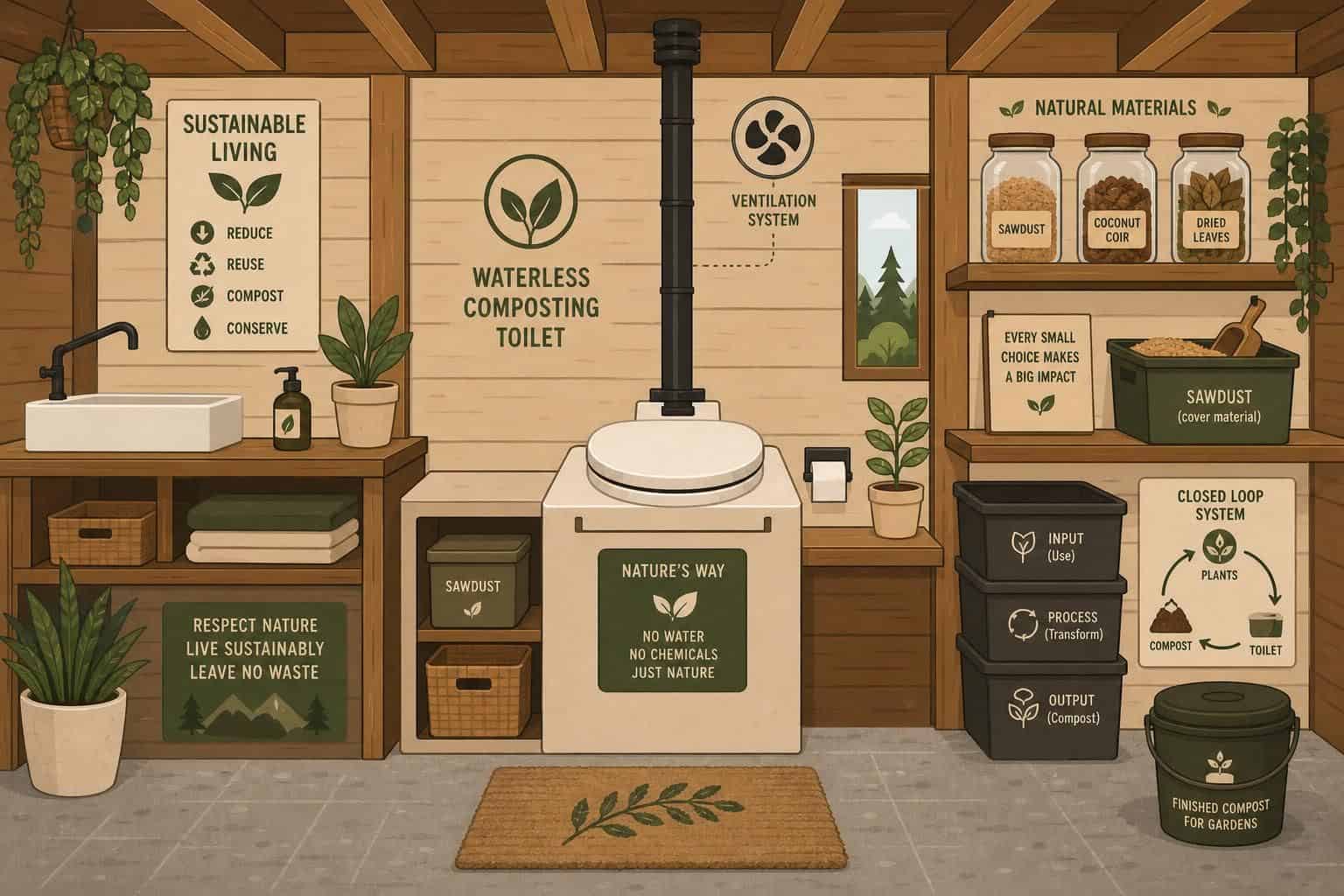
An off-grid composting toilet is a sanitation system that operates entirely independently of public utilities. It connects to no centralised sewer, piped water supply, or external electrical grid. According to the US EPA’s WaterSense program, the average American household flushes more than 30 gallons of clean drinking water every day. Composting toilets eliminate that consumption entirely.
The system manages waste through aerobic decomposition. Organic material breaks down at the source without requiring water, chemicals, or electricity, removing the need for conventional plumbing infrastructure.
Popular models serve a range of settings. The Nature’s Head composting toilet, Cuddy Lite portable composting toilet, and Trobolo WandaGO are established options for cabin owners, RV travellers, boat owners, and remote property residents.
Urine-diverting designs separate liquid from solid waste, improving composting results and reducing odors. Waste that would otherwise be flushed away becomes nutrient-rich material suitable for soil enrichment — a practical outcome that also reduces dependence on conventional flush toilets and septic tank systems.
Types of Off-Grid Composting Toilets
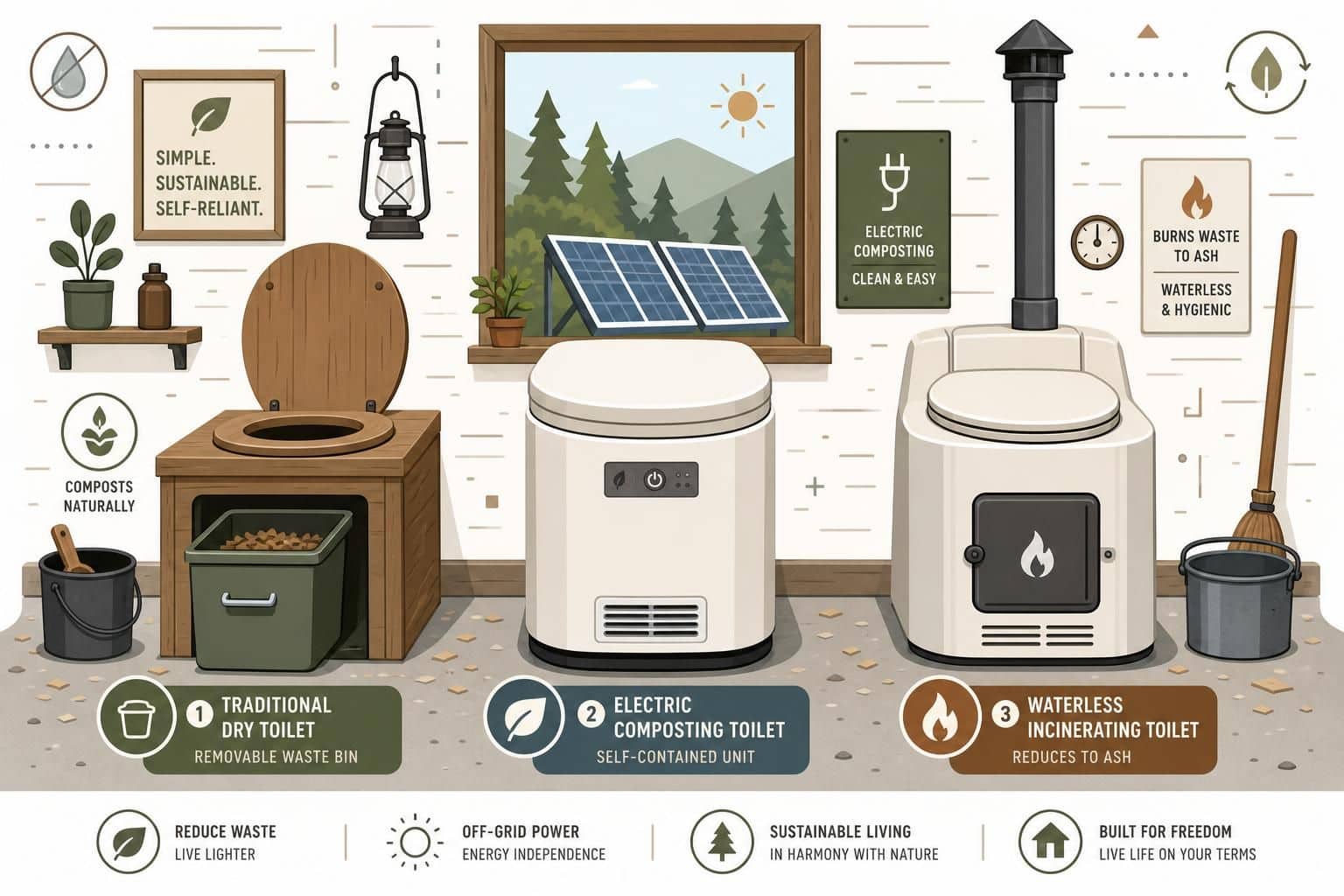
Each composting toilet type operates differently and suits distinct household needs. Choosing the wrong one for a property’s usage pattern is one of the more avoidable mistakes in off-grid sanitation planning.
Batch Composting Toilets
Batch composting toilets collect urine and solid waste together in a single container until it reaches capacity. The full bin is then swapped out for an empty one, and the waste is left to decompose separately.
Cold climate performance is a notable advantage. The composting process continues slowly through winter, extending the interval between emptying cycles.
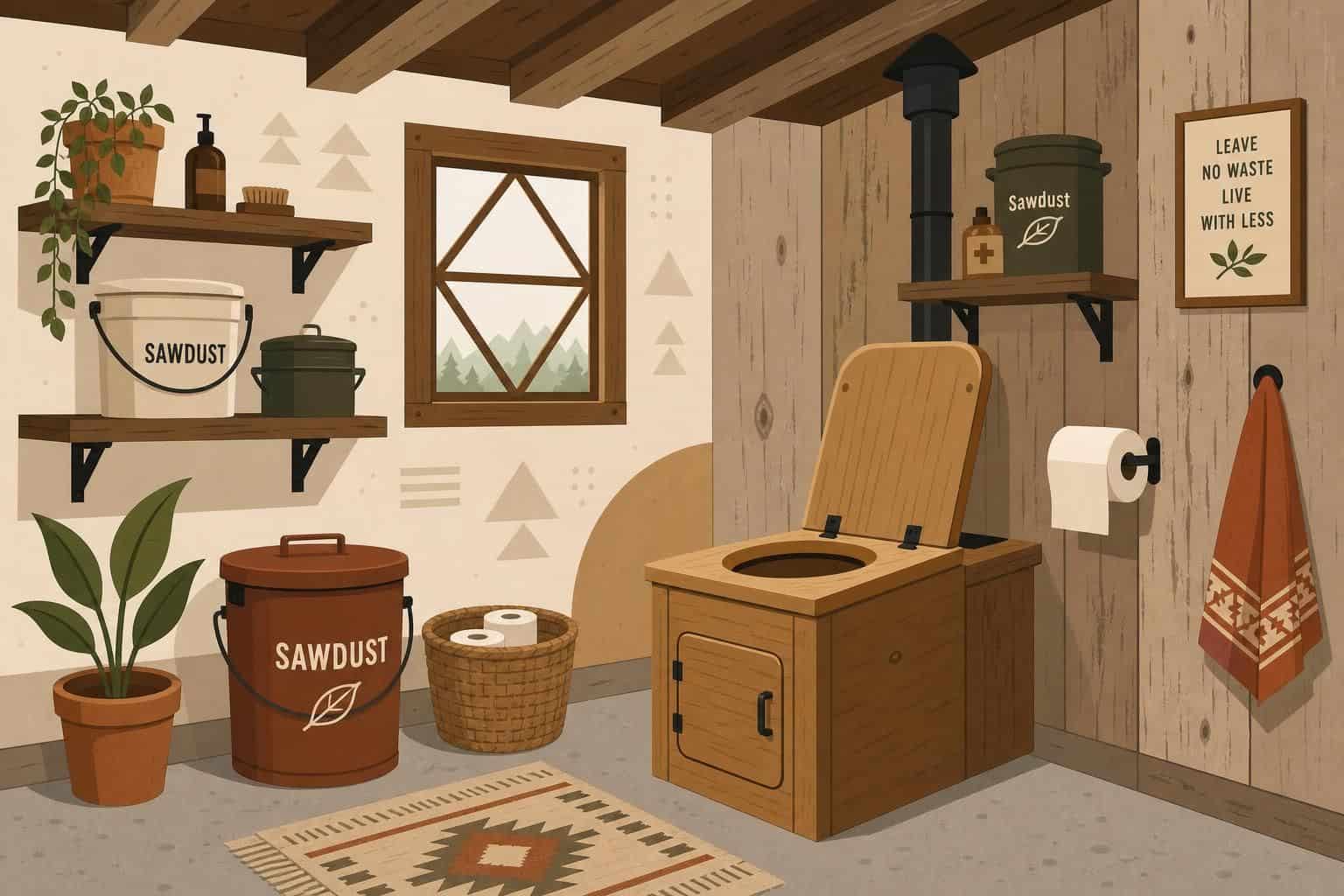
Models like the Cuddy use carbon-rich materials such as leaves or sawdust to accelerate decomposition and control odors. 2 The batch approach suits seasonal properties like vacation cabins, where intermittent use prevents the system from being overwhelmed.
Capacity can be extended through spare composting bins, supporting uninterrupted operation across seasons. DIY enthusiasts can build batch systems using kits like TROBOLO’s DIY Set Small and Large, each priced at $129.00 — a practical entry point for budget-conscious property owners.
Solids require six to twelve months of rest for proper breakdown, so adequate space for multiple rotating bins is necessary. This design is particularly well suited to rural or remote locations without sewage infrastructure, and requires no water, electricity, or mechanical components to function.
Continuous Composting Toilets
Continuous composting toilets accept waste on an ongoing basis without interrupting operation. 3 Composted material is extracted from the bottom of the unit for use as fertiliser, making these systems practical for tiny homes, parks, and higher-traffic settings.
High-capacity models like the TROBOLO SilvaBlœm ($529.00, available in grey or white) serve both personal and public applications. Many continuous systems require servicing only once or twice yearly.
Effective liquid-solid separation drives odor control. Proper ventilation — often supported by solar fans or whirlybirds — keeps unpleasant smells from developing. The TROBOLO SafeShell System provides additional odor protection and enables easy relocation between sites.
Many high-capacity continuous composting toilets are approved under US state regulations for off-grid homes and public facilities, removing a common legal barrier to installation. 4
Compact options include the Separett Tiny 1270 and Separett Tiny 1271. Unlike portable or RV toilets that demand constant attention, continuous systems operate quietly in the background. Manual emptying or container rotation keeps maintenance manageable for full-time residents and eco-community households alike.
Urine-Diverting Toilets
Urine-diverting toilets separate liquid waste from solid waste using two distinct containers. This design reduces odors significantly and simplifies maintenance compared to combined-waste systems.
The Separett Tiny 1271 and Villa 9215 are established waterless, eco-friendly options using this approach, priced at $999.00 and $989.00 respectively. The Cuddy toilet extends the concept further with a solids-agitating design: contents stay dry and odor-free, with an indicator light alerting users to liquid levels.
Cabin Depot stocks 16 urine-diverting toilet models, giving off-grid residents meaningful choice. The TROBOLO urine diverter is a key component for effective waste separation, odor reduction, and easier cleaning.
Liquid waste collected in these systems can serve several purposes:
- Directed to a conventional toilet for disposal
- Diluted and used as fertiliser for ornamental plants
- Managed without chemical additives
- Reduced environmental impact and lower operational costs
Models like the Separett Rescue 25 camping toilet and Separett Privy 500 outhouse kit perform reliably in both temporary and permanent installations. For off-grid households managing both waste streams, a dry flush sealing toilet or similar waterless option prevents overflow and keeps the system functioning cleanly.
Incineration Toilets
Incineration toilets burn waste at high temperatures, reducing it to sterile ash that requires minimal disposal. 5 These systems use electric or fuel-powered heating chambers and can reduce waste volume by up to 90%.
The Cinderella Comfort Incineration Toilet — a 240V electric model manufactured in Norway — is a well-regarded option, noted for low emissions and consistent performance. Cabin Depot stocks 98 Cinderella incineration toilet models.
| Model | Price | Rating | Includes |
|---|---|---|---|
| Cinderella Travel | $3,449.00 (was $4,449.00) | N/A | 100 travel bowl liners |
| Cinderella Freedom | $4,410.00 | 4.72 / 5.0 (67 reviews) | 100 bowl liners |
| Cinderella Comfort | $4,122.00 | 4.72 / 5.0 | 100 bowl liners |
Initial costs are higher than composting alternatives, but the trade-off — minimal waste handling, odor-free operation, and near-zero residue — appeals to property owners who prioritise simplicity over low upfront cost.
Ongoing supplies include the Cinderella Maintenance Kit at $145.99 and 500 plastic bowl liners at $66.99. These systems work best where reliable electricity or fuel supply is available. Remote cabins and eco-homes without consistent power access should factor that dependency into the decision.
Cost Overview of Off-Grid Composting Toilets
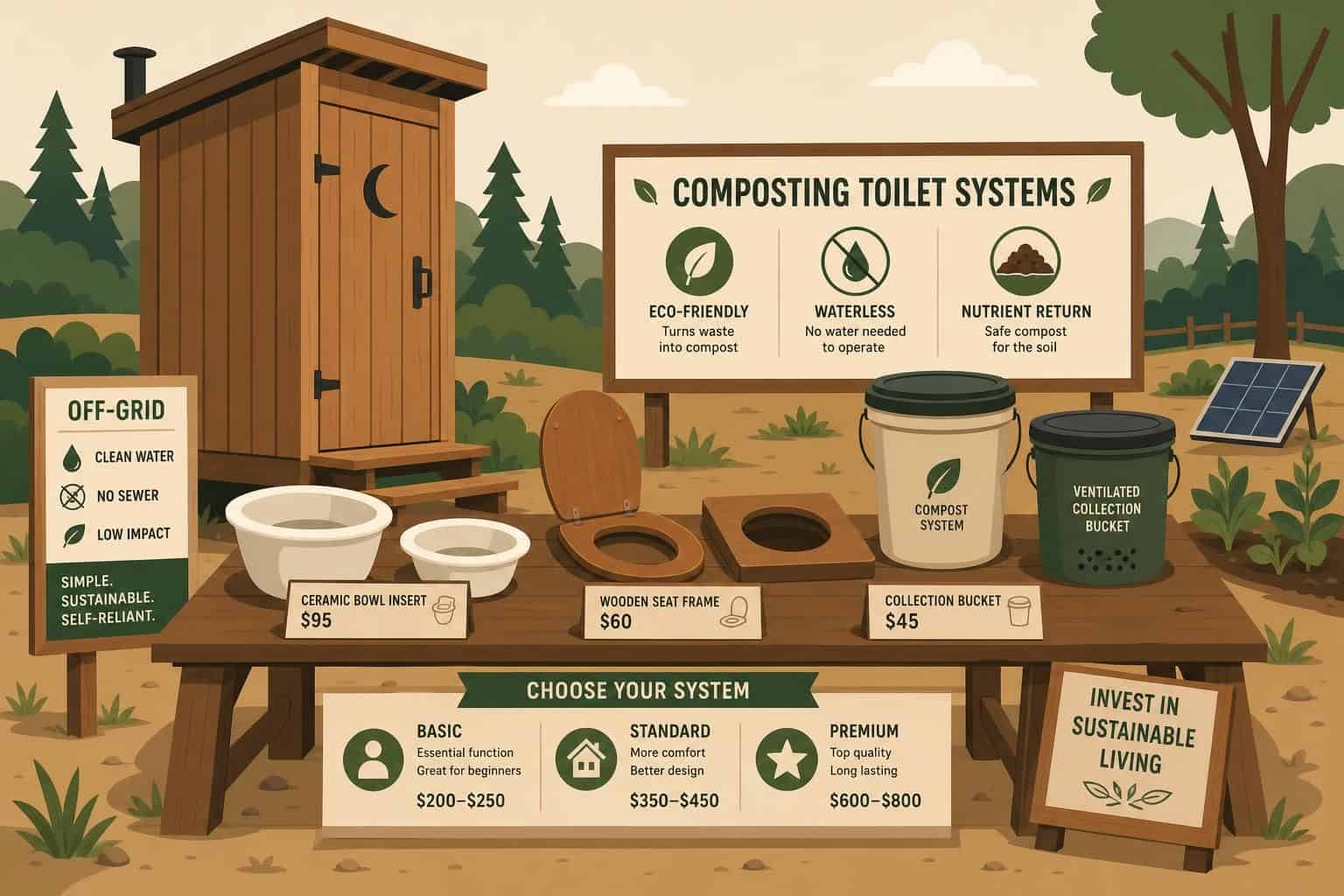
Off-grid toilet systems span a wide price range. Understanding what each tier actually includes — and what it doesn’t — matters before committing to a purchase.
Initial Purchase Costs
Composting toilet prices vary considerably depending on features, capacity, and build quality.
Budget options include the Separett Rescue 25 Camping Toilet at $134.99, suitable for RVs, cabins, and campsites. Mid-range choices like the TROBOLO WandaGO Lite ($229.00) and TROBOLO WandaGO ($249.00) cover compact composting needs. The Separett Privy 500 Outhouse Kit with blue seat sits at $139.99, and TROBOLO DIY Sets start at $129.00 for those building their own waterless toilet system.
Premium models carry higher price tags but include more advanced features:
- Nature’s Head Composting Toilet: $1,035.00 (4.59/5.0 rating, 22 reviews)
- Separett Tiny 1271 Toilet: $999.00 (4.7/5.0 rating, 30 reviews)
- S1 Dry Flush Sealing Toilet: $1,500.00 (suited to both short-term and full-time use)
- TROBOLO TeraBlœm wooden kit: $449.00
- TROBOLO SilvaBlœm modern wooden model: $529.00
At the top end, the Cinderella Travel Incineration Toilet — currently discounted from $4,449.00 to $3,449.00 — represents the premium tier of the off-grid toilet market.
Installation Costs
Installation costs depend on the toilet type and the complexity of the setup.
Basic waterless models require minimal installation: positioning and connecting ventilation is often sufficient. Incineration toilets like the Cinderella Travel and Freedom models include installation manuals, making DIY setup straightforward for most property owners.
More complex systems require professional input. Urine-diverting toilets such as the Separett 50L ejector tank need plumbing connections for drain-away systems, which adds labour costs.
Common installation accessories include:
- Separett rubber roof flashing: $99.90 (for sealed installation in tarred or tiled roofs)
- Separett waterseal: $44.90 (for greywater system components)
- Cuddy external venting kits and urine drain-away kits (prices vary by model)
- Nature’s Head 110V AC adapter: $15.00 (for house power connections)
- Cinderella bag holders: $39.99 (steel, 500 bags) or $30.99 (plastic)
Professional installation for systems like the TROBOLO TeraBlœm or Biolet models typically ranges from several hundred to over a thousand dollars, depending on location and site conditions. As outlined in US onsite wastewater permitting guidelines and NSF International standards, many US health departments require composting toilets to meet NSF/ANSI Standard 41 certification before approving an installation permit. Confirming certification before purchase avoids the risk of investing in a system that local building inspectors won’t approve.
Cabin owners and eco-home residents should also budget for ventilation ductwork running through walls or roofs, which generally requires skilled labour.
The TROBOLO SafeShell system included with WandaGO and WandaGO Lite models simplifies installation through its odor-free, spill-proof design. Properties with existing plumbing infrastructure will typically see lower installation costs than remote sites requiring new drainage solutions.
Getting multiple quotes from installers familiar with composting toilet systems is advisable before committing. Installation timing can also affect cost — spring and autumn often bring lower labour rates than peak summer months.
Maintenance and Operational Costs
Off-grid toilet systems carry ongoing costs beyond the initial purchase. Replacement parts are a routine part of maintaining dry flush and composting models.
Common replacement parts include:
- Nature’s Head Optional Lid for Solids Bin: $35.00 (vented design for transport)
- Stainless Steel Spider Handle: $39.00 (for worn components)
- Separett Solid Waste Container with Lid: $39.99 (4.7/5.0 rating, 30 reviews)
Incineration toilet owners face different ongoing expenses. Cinderella 500 plastic bowl liners cost $66.99 per set (4.7/5.0 rating, 52 reviews). The Cinderella Maintenance Kit is currently $145.99, reduced from $160.00.
Compostable inlays and recycled plastic alternatives each run $4.90 per unit. Separett Compostable Waste Bags in 10-packs sell for $19.90 with strong 4.7/5.0 ratings.
According to pricing and usage data from off-grid lifestyle resource Simple Joyful Journey, a single compressed brick of coconut coir costs between $15 and $20 and provides enough medium for six to eight full chamber changes — a useful baseline for annual budgeting.
Incineration toilets require electricity or propane to operate, adding utility costs that batch composting systems avoid entirely. Off-grid households should calculate yearly consumable costs — compostable waste bags, replacement liners, odor control materials — before committing to any system. Ordering supplies in advance prevents gaps in functionality, particularly during winter months when delivery times to remote properties can extend.
Practical Realities of Using Off-Grid Composting Toilets
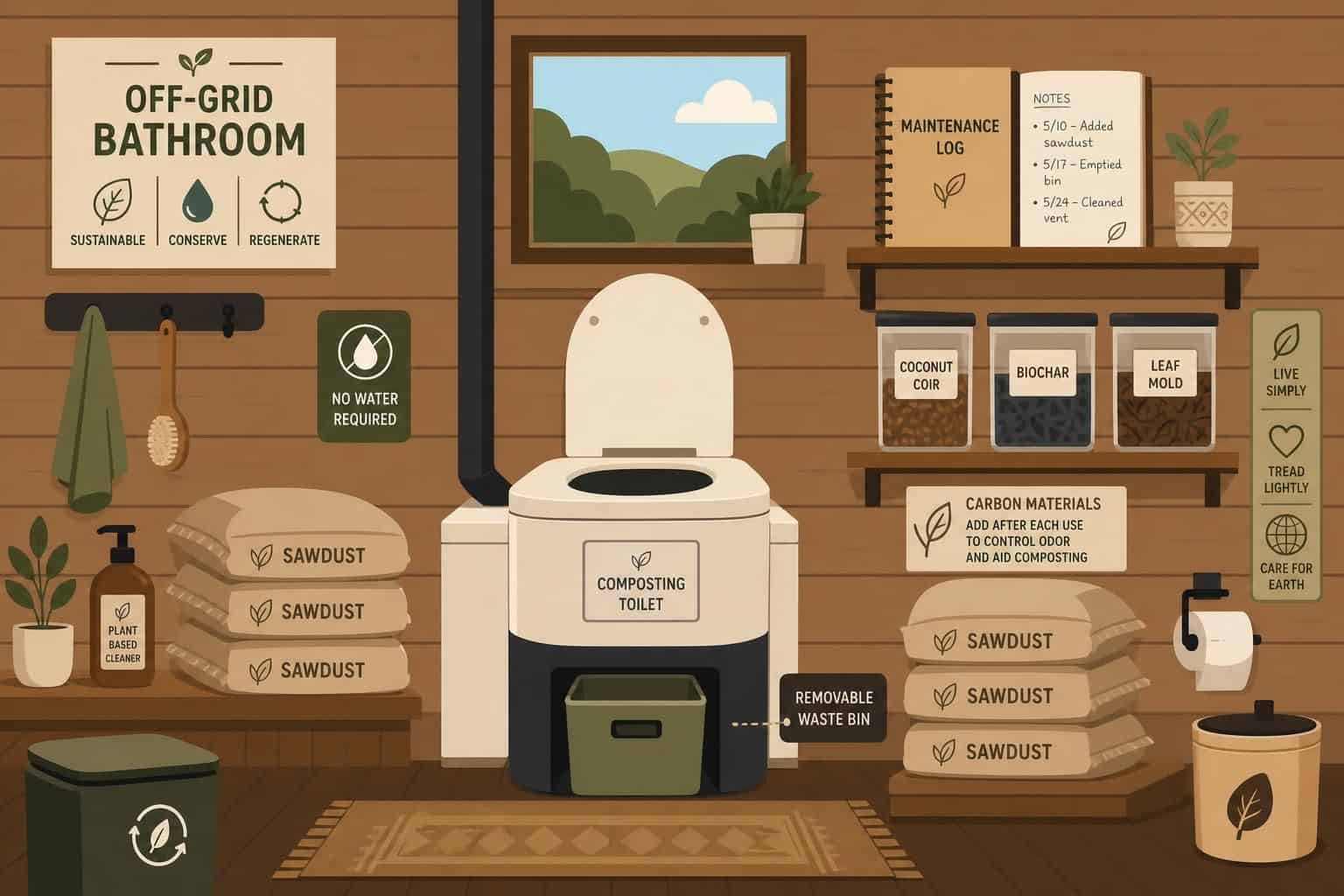
Composting toilets work well when users understand their actual capacity limits and maintenance schedules. They work considerably less well when those limits are ignored.
Daily Capacity and Waste Management
Composting toilets handle waste in two separate streams, and that separation determines how often containers need emptying.
Solid waste collects in one chamber; liquid waste in another. The TROBOLO WandaGO and WandaGO Lite models accommodate 8 to 12 uses before the solids container requires emptying — typically every 5 to 10 days. Liquid containers handle 10 to 20 uses before attention is needed, giving households flexibility to plan maintenance around their schedules.
Reported evaluations of the WandaGO under realistic three-user conditions found the solids container reached service threshold every 6 to 9 days on average, with liquids requiring attention every 3 to 5 days. Users applied roughly 200 grams of sawdust after each use, with no odor complaints recorded under normal conditions. Minor ventilation blockages appeared twice during a 30-day period and cleared quickly. This pattern reflects how regular litter covering and routine emptying keep mid-capacity systems functioning reliably for small households.
High-capacity composting toilets may need servicing only once or twice yearly, making them practical for full-time residents seeking minimal intervention.
Solid waste can be composted or disposed of with household waste. Liquid waste, when diluted, can serve as fertiliser for ornamental plants or be directed into a sewage system. The Separett 50L ejector tank and similar products manage both waste streams simultaneously to prevent overflow.
Covering solids with litter after each use is essential. 6 According to evaluations by off-grid sanitation retailers including Wild Oak Trail, coconut coir is the preferred daily litter material: it absorbs up to ten times its weight in water and resists fruit flies, whereas peat moss tends to compact and restrict airflow after three to four weeks.
The Separett Rescue 25 Camping Toilet includes compostable bags for convenient disposal. Liquid waste should be emptied every few days to prevent overflow and maintain hygiene — a straightforward routine that keeps the system odorless and clean without direct contact with waste.
Ventilation and Odor Control
Modern off-grid toilet systems manage odors through ventilation and moisture separation. 7
The Nature’s Head Composting Toilet includes a built-in fan that connects to 12-volt off-grid power systems, pulling air through the waste chamber and venting it outside. Active airflow prevents the stagnant conditions that produce foul smells.
Reported performance data from a Nature’s Head unit in an unheated cabin setting found that before fan installation, perceived odor levels averaged 7 out of 10, with internal chamber humidity at 78%. After adding a dedicated 12-volt vent fan drawing 1.8 watts continuously, odor scores dropped to an average of 2 out of 10 and chamber humidity fell to 46%. The findings indicate that active ventilation has a significant impact on both moisture and odor control, particularly during cold months when natural airflow is reduced.
Urine-diverting toilets like the Separett Tiny 1271 separate liquids from solids at the source, cutting odor problems substantially. The TROBOLO SafeShell System maintains an odor-free liquids container through sealed design and effective separation.
Adding litter or sawdust over solid waste creates a carbon layer that absorbs moisture and suppresses odor. Without adequate ventilation, even well-designed composting systems will struggle.
Daily habits have a direct impact on odor outcomes:
- Avoid placing food scraps in the solid waste chamber
- Do not add paper products beyond toilet paper
- Keep waste dry through consistent litter application
- Maintain ventilation to prevent moisture buildup
Pest issues also diminish when waste stays dry and properly managed. The principle is straightforward: moisture separation combined with effective ventilation produces a functional, odor-controlled bathroom — regardless of how remote the property.
Seasonal vs. Continuous Use
Off-grid toilet systems divide broadly into two categories: those designed for seasonal use and those built for year-round operation.
Seasonal setups suit cabins, vacation properties, or temporary retreats that sit dormant for months. The Cuddy Lite composting toilet is a practical example — it requires no external power, making it well suited to short-term use without maintenance demands between visits.
Batch composting toilets also perform well in cold climates, since spare composting bins extend capacity during peak usage periods. 8 Full bins can be stored while decomposition continues naturally, even as temperatures drop — a useful feature for properties with heavy summer use and quiet winters.
Continuous-use systems operate on a different basis. High-capacity models like the TROBOLO WandaGO and WandaGO Lite are built for year-round use, with weatherproof construction that withstands freezing conditions. Cold temperatures slow decomposition but do not stop it.
Many high-capacity composting toilets serving full-time residents need servicing only once or twice annually. The S1 Dry Flush Sealing Toilet handles both short-term and full-time scenarios through its battery-powered sealing and bagging method.
The choice between seasonal and continuous use comes down to occupancy patterns, climate, and whether residents are planning permanent settlement or occasional use.
Decision Criteria for Choosing the Right Composting Toilet
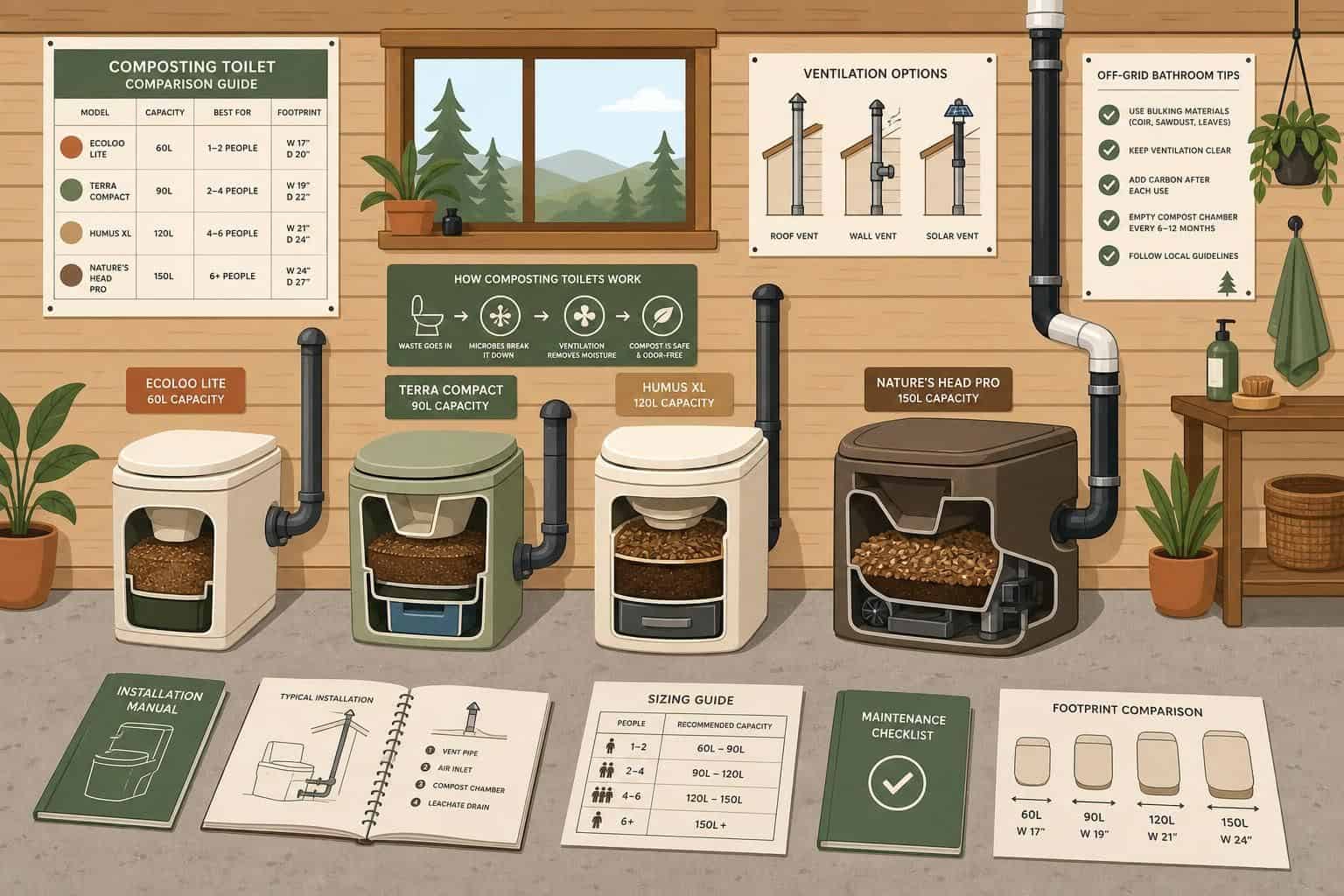
Selecting the right off-grid toilet means matching household-specific needs with what each system can realistically handle.
Number of Users
Household size is one of the most direct factors in choosing a composting toilet model.
Most self-contained composting toilets are designed for two to three daily users. Models like the TROBOLO WandaGO and WandaGO Lite allow 8 to 12 uses before the solids container needs emptying, with liquid containers accommodating 10 to 20 uses.
Larger households should look toward high-capacity continuous composting toilets, which typically need servicing only once or twice yearly depending on user numbers.
The Nature’s Head Composting Toilet holds a 4.59/5.0 rating from 22 reviews, reflecting consistent satisfaction among small user groups. The Separett Tiny 1271, rated 4.7/5.0 from 30 reviews, is well suited to limited-user settings. 9
A cabin hosting occasional guests has different capacity requirements than a permanent residence. Households of four or five should calculate realistic daily waste volume before selecting a system. The Separett 50L ejector tank provides reliable liquid storage for properties with multiple occupants.
Matching toilet capacity to actual household demand — rather than optimistic projections — determines how often containers need emptying and whether heated models make sense in colder climates.
Frequency of Use
How often a toilet is used directly shapes maintenance schedules and system selection.
Light use — weekend cabin visits, for example — demands far less attention than daily household operation. The TROBOLO WandaGO series requires solids emptying every 5 to 10 days under regular use. The S1 Dry Flush Sealing Toilet needs more frequent bag disposal due to its sealed system design. Liquids typically require emptying every few days regardless of usage frequency.
Properties with multiple residents generate waste faster than single-occupant situations. Continuous-use systems handle daily demands more reliably, while batch composting toilets are better suited to intermittent applications.
Some high-capacity models need servicing only once or twice yearly under consistent use, making them practical for permanent off-grid homes. 10 Solids require a 6 to 12 month resting period for proper breakdown if composted on-site, so storage space for rotating bins needs to be factored into the setup.
The Cuddy toilet includes an indicator light for liquid levels, removing guesswork from the emptying schedule. Casual weekend users can stretch maintenance intervals further than full-time residents — a meaningful difference when calculating long-term costs for part-time off-grid arrangements.
Space and Installation Requirements
Space constraints often determine which composting toilet model is practical for a given property.
The Separett Tiny 1271 fits well in small cabins and RVs. TROBOLO WandaGO and WandaGO Lite models offer compact, lightweight designs suited to confined spaces. The Cuddy toilet’s small footprint allows placement in a corner of a shed or inside a tiny house without requiring a dedicated bathroom.
Cabin Depot ships the Separett Tiny 1271 with free shipping, which reduces one barrier for remote property owners.
Installation flexibility varies by model:
- TROBOLO SilvaBlœm (wood construction, grey or white) installs indoors or outdoors
- Optional exhaust systems allow sealed roof installation or portable placement
- Separett Rubber Roof Flashing ($99.90) creates weatherproof seals for permanent installations
- TROBOLO toilets are weatherproof and functional outdoors
TROBOLO models can be relocated between a garden, camper, or tiny house as needs change. The Separett Solid Waste Container with Lid ($39.99) handles transport and disposal hygienically, simplifying the maintenance side of any installation.
Environmental Considerations
Composting toilets offer genuine environmental benefits for off-grid households and communities.
These systems can divert up to 1,000 gallons of waste per year from municipal sewage systems, reducing strain on shared infrastructure. Water consumption drops by up to 30% compared to conventional flush toilets — a meaningful reduction for residents managing limited water sources.
According to the US EPA’s WaterSense program, replacing an inefficient flush toilet with a composting system can save an average household roughly 13,000 gallons of water per year.
Dry composting methods eliminate the need for constant water flow, making them well suited to remote cabins and properties where water scarcity is a practical constraint. Households using these systems return nutrients to soil rather than treating waste as a disposal problem — a closed-loop approach that aligns with sustainable land management.
That said, performance gaps are real. Some systems have been decommissioned within 10 to 20 years due to systematic failures. 11 Daily maintenance is critical for environmental viability, particularly under heavy use at eco communities with multiple residents. Systems that receive consistent care genuinely support self-reliance goals and reduce ecological footprint. Those that don’t tend to become a problem rather than a solution.
Off-Grid Destinations: Real-Life Usefulness of Composting Toilets
Composting toilets make off-grid living workable across cabins, homesteads, and eco-communities. They handle waste management without municipal sewers or septic tanks, which is the baseline requirement for making remote properties genuinely livable.
Ideal for Cabins and Remote Properties
Off-grid toilet systems remove the need for expensive septic infrastructure at remote properties.
Cabin owners who install composting toilets avoid the cost and complexity of septic system installation or municipal connections. 12 TROBOLO SilvaBlœm and TeraBlœm models feature wooden construction that suits cabin aesthetics while handling waste reliably in harsh weather conditions.
Remote property owners can reduce water use by up to 30% compared to conventional toilets — significant when water sources are limited or require pumping. The Separett Tiny 1271 is a practical choice for small cabin spaces at $999.00, with a compact design that doesn’t compromise functionality.
TROBOLO composting toilets serve across garden, tiny house, and emergency toilet applications. Urine diversion improves compost quality and reduces odors, addressing the concern most cabin residents raise first about off-grid toilet performance.
DIY kits from TROBOLO allow property owners to build custom solutions suited to their specific cabin layouts and soil conditions. For isolated locations where conventional sanitation fails during winter freezes or summer droughts, a well-maintained composting system removes that uncertainty.
Suited to Eco Homes and Intentional Communities
Eco homes and intentional communities have adopted composting toilets as a practical component of sustainable living.
A standard composting toilet system handles waste for two to three people daily, making it workable for shared housing and collaborative living arrangements. 13 Residents benefit from reduced maintenance demands and reliable odor control, which TROBOLO composting toilets achieve through durable, resource-efficient design.
The compact, lightweight construction of these systems fits a range of eco housing configurations — from converted barns to purpose-built sustainable dwellings. Organic fertiliser produced as a byproduct can be used directly in community gardens and agricultural projects, closing the nutrient loop on-site.
Composting toilet systems operate without water, chemicals, or electricity, which aligns with the practical independence most eco-conscious communities are working toward. Households using these systems can divert up to 1,000 gallons of waste per year from sewage systems — a tangible contribution to the environmental goals that draw people to this way of living.
Long-term water and maintenance savings can exceed $500 annually for committed households, a figure that compounds meaningfully when shared across several residents in a community setting.
Solutions for Hosts and Guests in Off-Grid Stays
Hosts operating off-grid properties face a practical challenge: providing guests with functional facilities that don’t depend on municipal infrastructure.
Composting toilets address this directly — no water, electricity, or chemicals required. 14 Popular models like the Nature’s Head and Separett Tiny deliver reliable performance in compact cabins and remote retreats. Guests generally find these systems straightforward to use, requiring minimal explanation.
Portable composting toilets add flexibility for properties with varied layouts, allowing hosts to accommodate different visitor needs without extensive renovation.
Minimal maintenance requirements make composting toilets genuinely manageable for property managers. Accessories extend equipment lifespan and reduce replacement costs over time. When properly ventilated and maintained, these systems operate without odor — which is the detail that most directly shapes guest experience and repeat bookings.
Off-grid stays featuring composting toilet solutions tend to attract guests who value authentic sustainable living, and who are unlikely to be put off by a system that requires a handful of sawdust rather than a flush handle.
Read more real-life experiences in our Off-Grid Destinations Journal
The Off-Grid Destinations Journal covers composting toilet experiences from homesteaders, eco-community members, and remote property owners — documenting what actually works in daily use across different climates and property types.
Coverage includes cold-weather performance, high-traffic guest handling, and integration into sustainable homes. Readers find practical detail that product listings rarely include: which models require less maintenance, how to troubleshoot odor problems in specific conditions, and what long-term ownership actually costs. 15
FAQs on Off-Grid Composting Toilets
How does a composting toilet work?
A composting toilet breaks down human waste into usable compost through natural biological processes, without water, chemicals, or electricity. 16 The system separates liquid waste from solid waste to keep the chamber dry and minimise odors. Solid waste drops into a collection bin where it mixes with carbon-rich materials — sawdust, coconut coir, or peat moss — creating conditions where beneficial microorganisms decompose the organic matter over time.
What maintenance is required?
Liquids need emptying every few days to prevent overflow and odors. 17 Solids require emptying every one to three weeks, depending on household size and usage frequency. Adding carbon-rich material like sawdust after each use accelerates decomposition and controls odor effectively.
Are composting toilets eco-friendly?
Composting toilets recycle waste into compost without requiring water, chemicals, or electricity. 18 They eliminate common plumbing dependencies while significantly reducing water consumption. 12 By separating liquid from solid waste, they reduce odors, accelerate decomposition, and allow each waste stream to be managed in a way that minimises environmental impact.
What types of off-grid composting toilets are available?
The main types are self-contained units, central composting systems, and batch or bucket-style toilets. Self-contained models like the Nature’s Head work well for tiny homes and RVs. Central systems handle waste from multiple bathrooms and suit larger properties. Urine-diverting and incineration toilets offer additional options depending on usage patterns and site conditions.
How much do off-grid composting toilets cost?
Entry-level options start around $129 to $135 for DIY kits and basic camping models. Mid-range self-contained units like the Nature’s Head cost around $1,000. Incineration toilets sit at the premium end, from $3,449 to over $4,400. Installation, ventilation, and ongoing consumables add to the total cost of ownership.
Do composting toilets smell?
A well-maintained composting toilet with proper ventilation should not produce noticeable odors. Adding a small amount of carbon material — sawdust or coconut coir — after each use is the most effective way to keep smells under control. Poor ventilation or neglected maintenance are the most common causes of odor problems.
Conclusion
Off-grid composting toilets are a practical sanitation solution for remote properties, sustainable homes, and intentional communities. They reduce water consumption, eliminate dependence on sewage infrastructure, and produce usable compost — outcomes that hold up across a range of climates and usage patterns.
The range of available systems means property owners can match a toilet to their specific needs and budget, from a $129 DIY batch kit to a premium incineration model. The investment pays off through reduced maintenance demands and independence from municipal systems — provided the chosen system is maintained consistently.
Waterless sanitation is not a compromise. For off-grid households that approach it practically, it works.
References
- ^https://www.homebiogas.com/blog/off-grid-toilets-the-ultimate-guide/?srsltid=AfmBOoqbBwPXKVXOspQIZqCVQ6PN_xKGYSTjcfxfHSEww2G-GVRJj5ZI (2024-01-15)
- ^https://wasted.earth/blog/the-ultimate-guide-to-off-grid-toilets/?srsltid=AfmBOopSeC4NOeUSP0TgyLMbY3nf5SRBVtKu6UL_YCJ-bdQG6Avnu_Sf
- ^https://waterlesstoiletshop.com/off-grid-toilets-a-comprehensive-overview/?srsltid=AfmBOopTerAsWVeGrpg9Pno2LiMjS0UPXdXb061yqfwk0bBYTch6waEm
- ^https://wasted.earth/blog/the-ultimate-guide-to-off-grid-toilets/?srsltid=AfmBOorzkb-xWm_rntHc0Du_oEb-Npupr690vzeyn028obZSbCqUopMD
- ^https://wasted.earth/blog/the-ultimate-guide-to-off-grid-toilets/?srsltid=AfmBOorucKNq0wIzaIVMOwXJOz3ad3RD2wINO7UMsVOlz5yqxKCSIHaP
- ^https://pubmed.ncbi.nlm.nih.gov/24268916/
- ^https://waterlesstoiletshop.com/do-composting-toilets-actually-work-myths-vs-facts-revealed/?srsltid=AfmBOooVeeFlBQWKYHPq7nYuVrHvgPJkGy28UDQhPI3EQr3jeWYm3Erj
- ^https://waterlesstoiletshop.com/do-composting-toilets-actually-work-myths-vs-facts-revealed/?srsltid=AfmBOorX0rii0XfcVEyMGCXoyBgu7rjKZMxxggDhqrj7pZ1Iq6krm8dt
- ^https://offgriddwellings.com/the-ultimate-buyers-guide-to-best-composting-toilets-for-container-homes-top-picks-for-2025?srsltid=AfmBOoqAWxkETDp4sz3XH4UAD6PxA00J-uCCYTKSwaVNQaFgAWO8U5ZD
- ^https://pubmed.ncbi.nlm.nih.gov/35951726/
- ^https://greenflushrestrooms.com/blog/considering-composting-toilet/ (2014-02-28)
- ^https://en.wikipedia.org/wiki/Composting_toilet
- ^https://offgriddwellings.com/the-best-composting-toilets-for-container-homes-real-installs-cost-breakdowns-and-mistakes-to-avoid-when-going-off-grid?srsltid=AfmBOorgRP0R2VtN_j5UJljS3-8JIR5e1OOnjzolc-qyst5rjpEfiEb0
- ^https://www.homebiogas.com/blog/off-grid-toilets-the-ultimate-guide/?srsltid=AfmBOop6nA4CgMt7Xh3Lt38zZCA2kKMwZhMKRd1ihqytuvYO5bAEDVuz (2024-01-15)
- ^https://www.facebook.com/groups/2630510197220996/posts/3953489591589710/
- ^https://horow.com/blogs/news/how-does-a-composting-toilet-work?srsltid=AfmBOoqfcx84sIFwD3p700Ovm-d9e0rcmJQey_AOa13BPFbnXfsgaJrG (2025-02-22)
- ^https://www.homebiogas.com/blog/off-grid-toilets-the-ultimate-guide/?srsltid=AfmBOopEsJZO9GE1LQTfuF9SvuBKx-CGfHFz9VDxyHqZ0DOGVsq-QfhO (2024-01-15)
- ^https://www.researchgate.net/publication/258852961_Composting_toilets_as_a_sustainable_alternative_to_urban_sanitation_-_A_review (2013-11-21)
Off Grid Destinations note: For off-grid stays, cabins, and remote properties, the best choice is usually the one that fits the real site conditions: guest use, owner maintenance, access, weather, storage, backup systems, and long-term reliability. Bigger or more expensive is not always better. The right setup is the one that works consistently without creating unnecessary upkeep.
FAQs
What is the best composting toilet for off grid use?
The best composting toilet for off grid use depends on your setup — self-contained units like the Nature’s Head composting toilet suit cabins and tiny homes with limited space, while central or continuous systems work better for permanent off grid properties with higher daily use. Urine-diverting models are widely regarded as low-odour and low-maintenance for year-round living.
Do composting toilets smell?
A properly installed composting toilet with adequate ventilation produces very little odour. Most units use a fan-driven vent pipe to draw air through the composting chamber and exhaust it outside, keeping the bathroom fresh. Odour problems usually point to a ventilation fault, excess liquid, or an overloaded system rather than a flaw in the composting process itself.
Are composting toilets legal in the UK and US?
Composting toilets are legal in most US states and across the UK, though local regulations vary significantly. Some jurisdictions require a conventional sewage or septic backup alongside a composting toilet system; others permit them as a standalone sanitation solution. Always check with your local authority or building control before installation.
How often do you need to empty a composting toilet?
Most self-contained composting toilets need emptying every four to six weeks for a single full-time user, though this varies by model, usage frequency, and whether urine is diverted separately. Liquid tanks typically need emptying more often — sometimes every few days — while solid waste breaks down significantly in volume through the composting process.
Can a composting toilet be used in a cabin or tiny home?
Yes — composting toilets are one of the most practical waterless toilet options for cabins, tiny homes, and remote properties without access to mains sewage. Compact self-contained models are designed specifically for small spaces and can be installed without plumbing, making them a popular eco-friendly choice for off grid builds and seasonal retreats.
What is the difference between a batch and a continuous composting toilet?
A batch composting toilet uses interchangeable containers that are rotated out and left to finish composting separately, so one chamber is always in active use while another completes the process. A continuous composting toilet has a single chamber where waste moves gradually from the top to a finished compost tray at the bottom — simpler in operation but requiring more careful management of moisture and solid waste balance.